


Sex and relationship expert Dr Caroline West writes about the ancient festival of Saturnalia, which kicked off on 17 December, and how celebrations back then compare to our Christmas celebrations today.
For many people, the days before Christmas are a hectic mix of parties, hangovers, present buying, and preparing for a feast. Over 2,000 years ago, however, this time period marked an equally joyous time: the celebration of the Roman festival Saturnalia.
Saturnalia has often been perceived as a carnival of decadence and debauchery, and was held from the 17 to the 23 December to pay tribute to Saturn, the God of agriculture, fertility and rebirth.
To get a rather timely glimpse at what Saturnalia was like, imagine the joy of going to your work Christmas party, with the news of a great bonus or team achievement, boosting your mood.
The boss puts their credit card behind the bar, announcing all drinks are on them, so don't be shy. You've got no work for the rest of the week, the office Kris Kringle is actually decent, ties get wrapped around foreheads, grudges are temporarily forgotten, and alcohol fuelled flirtations abound.
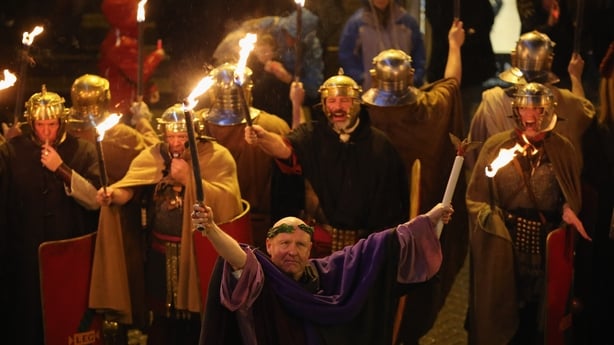
Someone organised it all and even brought crackers that included games and rude jokes. The boss turns a blind eye to the shenanigans. The night ends with a gluttonous feast in a space where all walks of life congregate: the fast food restaurant.
In ancient Rome, this type of celebration became so popular at Saturnalia that the party was extended from one day to seven, putting our after-work celebrations to shame.
The aim of Saturnalia was to celebrate the end of harvest season and the god, Saturn, by letting loose and indulging in a carnivalesque atmosphere full of eating to excess and drinking copious amounts of mulled wine, not to mention embodying a liberal approach to sex.
Special events occurred at this time, such as concerts and celebratory gatherings. Gifts were exchanged as a symbol of abundance, and it was a time to be joyful while marking the change in season and stage of the agricultural process. Games and gambling were socially acceptable instead of being seen as immoral. Everything outside of the celebration ground to a halt, while the singers were often naked this time.
The Roman poet Catullus referred to Saturnalia as 'the best of days’, since the festival was an opportunity to reverse social norms and rules. Masters served slaves, and all classes of society mingled together outside the restrictive social norms about a person's assigned status in ancient Roman society.
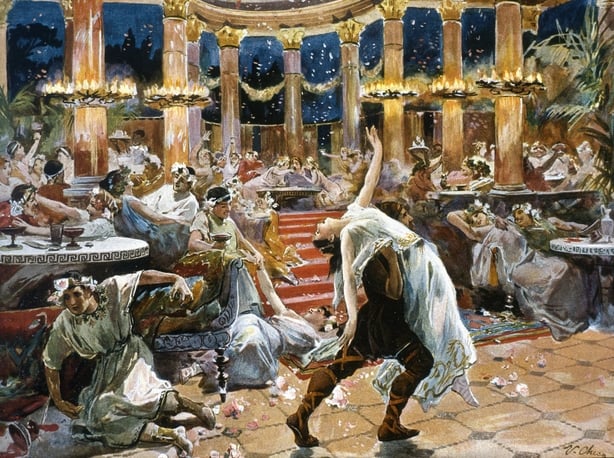
There were plenty of people more than happy to take advantage of the temporary relaxing of social rules and indulge in debauched behaviour in order to blow off steam from a hard harvest season. Orgies were a standard part of the activities, while gender roles were reversed in this window of tolerance. Cross-dressing was seen as acceptable and an established part of the merrymaking.
Anthropologist Susan Lanigan describes the necessary elements of successful revelry:
"Saturnalia was all about emulating the social freedom integral to Greek culture. Hence, drag was openly encouraged. We have more than one record from the period describing boys running naked through the streets, men dressed as women, women dressed as men, masters of the house waiting on slaves, and an overabundance of wine, cunnilingus, and fruitcake. In that order."
The master of ceremonies during the festivities was known as a ‘Saturnalicius princeps’, sometimes translated as a Lord of Mischief, or Misrule. This person was chosen to rule over their group for the week, making them participate in silly pranks and games and telling risqué jokes, before ordering a nude musical performance.
Guests could refuse, but many were keen to join in all aspects of the fun. Competitive bake-offs involved creating penis shaped cakes - the cake of choice for the occasion- which sounds like it would be quite fun to watch on The Great British Bake Off.
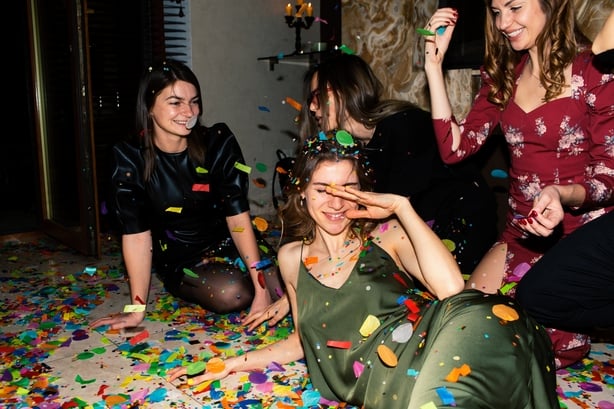
So what was the appeal of this unabashed enthusiasm for activities many of us would probably never consider doing alone, much less with your boss and neighbours around?
In exploring why humans enjoy these short bursts of wild indulgence, authors Gary Cross and John K. Walton explain how communal festivity can lead to an animalistic release that satisfies the human urge for base, depraved desires.
The experience was one of ‘liberating frivolity’, a release from everyday life that helped make the rest of life manageable.
It wasn't all alcohol-fuelled naked activities. Saturnalia was also broken up into a collection of smaller celebrations and worship of various gods, goddesses, and deities. One such festival was Opalia, which celebrated the goddess of fertility and prosperity, Ops. She was said by some to be a wife or consort to Saturn.
Those paying tribute to Ops to ensure a good harvest usually prayed while sitting on the ground in order to be connected with the earth. Their respect for Mother Earth and all the abundance she provided.

Saturnalia declined over the first few centuries AD with the changes in the Roman Empire, exposure to other cultures and festivals, and the rise of Christianity. It did not disappear completely. Instead, it was blended with pagan and Christian doctrines to become part of what we know as Christmas today.
The name has survived today: authors Gary Cross and John K. Walton describe the amusement parks of Blackpool and Coney Island as ‘industrial saturnalia’. We could add Las Vegas to this list, too, with its catchphrase of ‘what happens in Vegas, stays in Vegas’ and a culture of encouraged excess in all its forms.
Of course, we're not advocating for wild drinking and orgies in the street, but more so the attitude of shrugging off your worries and letting loose in whatever way appeals to you.
This 17 December, mark Saturnalia in your own way as we begin to reflect on the end of the year, and look forward to a fresh new start in 2026.
The views expressed here are those of the author and do not represent or reflect the views of RTÉ
