


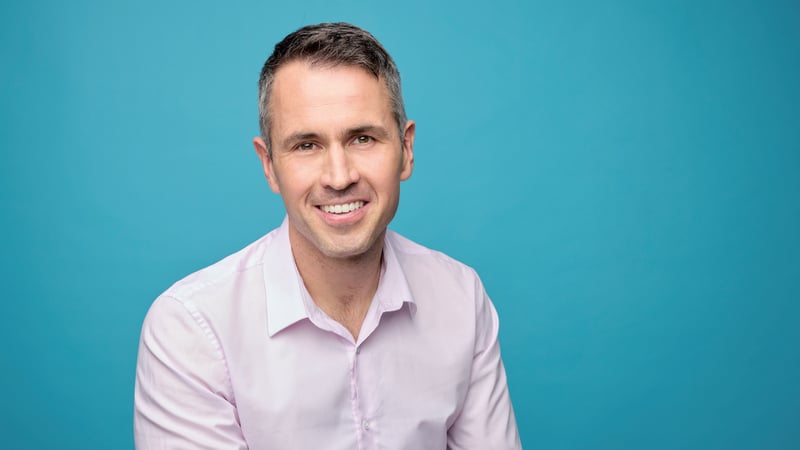

Following in the footsteps of Marian Finucane and Joe Duffy, Liveline's new host, Kieran Cuddihy, is already making the show his own. He talks to Claire O’Mahony about the show’s enduring appeal, his busy home life in Kilkenny and why you might see him talking to himself on his drive home.
"How’s your week been so far?" is usually standard small talk, but not when you’re asking Kieran Cuddihy, just two days into one of the most high-profile broadcasting jobs in the country. Sitting in the Liveline chair, he is aware of the history, the scrutiny and the expectations.
"I’m feeling good now. On Monday, there was excitement and just relief to getting the first show done. Now, I’m looking forward to getting into it properly over the next few days," the radio host says.
That sense of relief came after an intense period of public focus he hadn’t quite anticipated. "It was strange," he admits. "When the story broke on the Thursday evening, from then on, over the next few days, it was just in the paper every day. I wouldn’t be used to that side of things."
He continues: "Actually, I said that to my wife last night. I was like, 'These are the first shows. All of that stuff, all that noise, is over. It’s put to bed.’ Now it’s just a job."
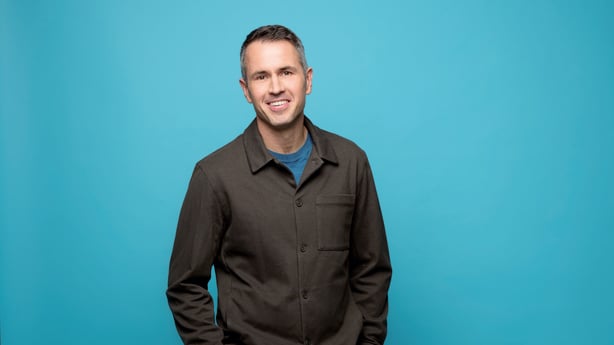
The job of presenting Liveline follows Joe Duffy’s retirement from the gig he did for 27 years. For Kieran, it caps a steady rise through Irish broadcasting.
Originally from Kilkenny, Cuddihy trained as a solicitor, having studied law in UCC before training at Blackhall Place and qualifying in 2009. After a year in Canada, where he had a stint working in local radio, he returned home and joined Newstalk in 2011, starting out as a reporter before moving into current affairs presenting.
In 2018, he was appointed co-host of Newstalk Breakfast, and in 2020, he took over drivetime show The Hard Shoulder, succeeding Ivan Yates in the role. More recently, he has become a familiar face on television, fronting Virgin Media’s The Tonight Show.
This track record means he arrives into the Liveline role with over a decade of experience handling heated debates, complex issues and ordinary people’s stories.
Settling into that job brought its own surprises. Coming from the three-hour Hard Shoulder slot, he expected Liveline’s shorter format to feel breathless. Instead, he has found the pace more exhilarating than overwhelming.
"I thought it would be over in the blink of an eye," he says, "but actually, there can be so much packed into it. To be honest with you, if it was any longer than that, I think you’d be absolutely exhausted trying to do Liveline."
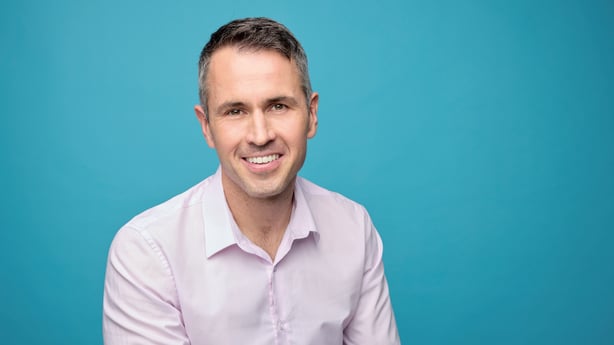
While he anticipated the demands of callers and the show’s often emotive topics, he did not expect the simple kindness of listeners reaching out on day one. "People were getting in touch just to say good luck and fair play and best wishes. That was lovely."
Liveline is known for its unpredictability, and Cuddihy embraces that. "It’s utterly dictated by the people who listen to it and who get in touch," he says. Unlike other programmes built around guests or regular contributors, Liveline belongs to the public. "You’re never quite sure where it’s going to go, if it’s going to stray into slightly dangerous territory that you have to steer it back from. But it can also stray into unexpected territory that’s really interesting."
For him, the challenge is balancing safety with freedom. "You’ve got to embrace the spontaneity. You can’t be too cautious. You’ve got to give the callers a bit of leeway to express themselves, because often when you go off into uncharted territory, the best things happen."
He is clear-eyed about following Joe Duffy, who fronted the programme for 27 years. "I’m not going to try and be Joe Duffy because there’s no point," he says. "You’re never going to be a better version of Joe Duffy than Joe Duffy."
His approach is shaped by what he calls a "changing changelessness": the programme remains Liveline, but each presenter – beginning with Marian Finucane, followed by Duffy and now Cuddihy – inevitably brings their own tone. "You can only be yourself. Then the show, the tone, will change to reflect you a little bit."
He might be swapping his former Newstalk home at Digges Lane, Dublin 2 for Dublin 4, but Cuddihy will continue to commute daily from Kilkenny – a routine that began in 2017. At the time, he was working as a reporter with Newstalk, and he and his wife Natasha were facing the familiar pressures of Dublin rental prices with a young family.
"We were going to have to move out of where we were living in Dublin," he recalls. Instead, they relocated to Kilkenny, his home county, and he quietly tested whether the commute would work in practice before mentioning it at work. "After six months, I went to them and said, ‘I’ve been commuting from Kilkenny for six months, and nobody’s even noticed, so it’s not an issue.’ I’ve been doing it ever since."
He acknowledges the drive would "drive some people mad", but he has made it work. Mornings involve dropping his two children, Sam (10) and Grace (8) to school, listening to David McCullagh, and then a production call with Liveline’s producer. "You use the time that way on the way up," he says. "Then the way home is just time to yourself."
That quiet time often turns into conversation – mainly with himself. "I’m a terrible person to talk to myself in the car," he laughs. "I could drive all the way to Kilkenny talking to myself, which maybe is a sign of madness. But the real sign of madness is, I talk to myself sometimes when there’s other people in the car with me. My wife will say, ‘You’re talking to yourself,’ and I’ll say, ‘All right, fine.’"
Sometimes there’s radio, sometimes a podcast, but often it’s simply space to decompress after a heavy day of callers and current affairs.
Home life offers no shortage of activity. His wife co-runs a mediation service in Kilkenny, and with two children, weekends revolve around sport and lifts. "Sunday morning is camogie, and then straight after is hurling," he says. "Then home for lunch, and then they do pony riding after lunch. At this time of year, they might have cross-country running as well on a Saturday. On Sunday, she has hockey, and he might have hockey as well."
These days, his main outlet is endurance sport. "This is very middle-aged man territory now, but I’m training for a half Ironman," he smiles. He completed one earlier this year in Athlone and is lining up another just before Christmas. Before that, there were triathlons and marathons, although an ankle injury paused the long-distance running for a while. "Exercise is just so good for everything," he says. "It’s so good for your head as well."
Cuddihy believes that part of Liveline’s power comes from something fundamental in Irish culture. "We have a really strong sense of community in Ireland," he says. "We all like the idea of listening to broadly the same things at the same time. It’s a communal experience."
He recalls a description from Seán Moncrieff that resonated with him deeply: radio as "an invisible thread" that ties people together. "That’s a lovely way of thinking about the impact of radio," he says. "I think that’s possibly why it’s so popular in Ireland."
Looking ahead in his new role, he is cautious about defining a grand vision, but he knows exactly what makes a great Liveline moment.
"What you always want on every show is that caller who causes somebody to sit in the car park knowing they’re meant to be inside," he says. "But they’re sitting there because they can’t turn it off. They want to hear the end of the person’s story. That’s the call you’re always after. That’s Liveline at its best."
