


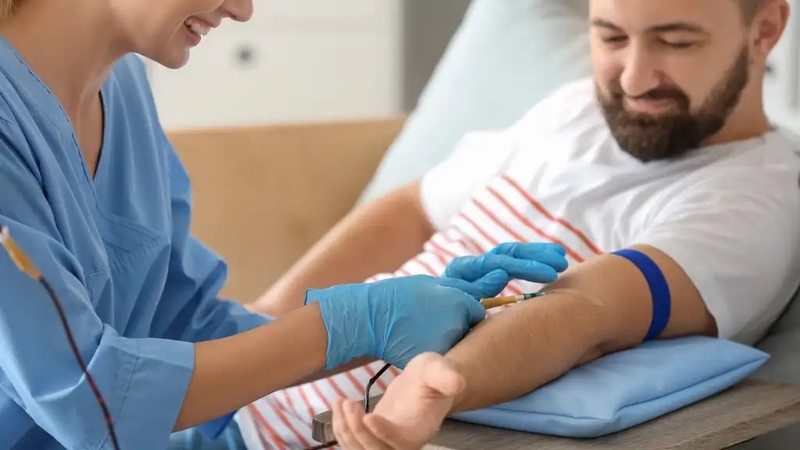
Giving blood is a selfless act that saves lives. But if you’ve got needle phobia, giving blood is much easier said than done.
This World Blood Donor Day on June 14, blood donation services are appealing for hundreds more new donors every day, to meet demand throughout the UK and Ireland and help treat patients with cancer, blood disorders, suffering medical trauma or undergoing surgery.
Just one person’s blood donation can save or massively improve up to three lives – and donation is really quick and easy.
This #WorldBloodDonorDay we have spoken with donors from #Vodafone, our long-standing partner, to share their experience of being a donor & their motivation to #giveblood. Blood donor story from Aisling Dalton, @vodafoneireland employee & blood donor. https://t.co/e4p1cHNItb. pic.twitter.com/vI4x6Ol0Uo
— Giveblood (@Giveblood_ie) June 14, 2022
For people with needle phobia though, and those who just can’t stand the sight of blood, five to 10 minutes might still sound daunting, however worthwhile the end result. But, while anyone with a particularly severe needle phobia would be discouraged from donating, milder fears can be overcome.
"There are many myths associated with giving blood, but it really isn’t scary," assures Donna Batty, NHSBT donor acquisition and planning manager in the UK. "People usually describe the needle as a ‘sharp scratch’. If you’re nervous, distraction is key – you could bring a book to read or listen to some music while you donate."
Want to donate blood but too nervous? Here’s how to overcome a fear of needles so you can help save lives…
1. Tense your muscles
It’s perfectly normal to feel nervous before donating, and some people may feel faint before or during the process – because fear of the needle, or because seeing blood makes their heart rate and blood pressure rise and then rapidly drop, which can cause fainting.
A simple technique to help with this is applied muscle tension (AMT), which involves tensing and relaxing the body’s major muscles during the donation process.
Hold the tension for 10-15 seconds, release it, and after about 20-30 seconds do it again, repeating about five times, but being careful not to tense the face and head muscles. Practice the technique quite a few times in the week before you donate.

2. Deep breathing
Another relaxation technique, which ideally needs practising regularly in the week before donation, is deep breathing. Simply try to relax and sit comfortably, with one hand low on your tummy, before taking a long, slow, deep breath in through your nose and then out through your mouth, as deeply as you can, for five breaths. This can instantly help you relax.
3. Write a ‘fear list’ and tackle those fears
People with a needle phobia can write a ‘hierarchy’ of fears – a list of all of the situations related to needles which you’re frightened of, in the order of how much you fear them. So having an injection or giving blood might be top of the list, while looking at a picture of a needle might be near the bottom.
Then, starting at the bottom, use AMT or deep breathing to help you deal with the situation. Once you’ve mastered the easiest point on your list, use the techniques to help you deal with the next on the list, and so on.

4. Enjoy the free drinks and snacks
Remember that after you’ve finished donating, there’s a choice of free drinks and snacks like chocolate biscuits and crisps. There can surely be no better excuse to guzzle on choccy biscuits than having selflessly given blood to save someone’s life, and now needing to restore your depleted blood sugar!
