



Let's talk about antibodies!
Because of COVID-19, the whole world is now becoming aware of the fascinating capabilities of antibodies, the incredible biology behind them and how antibody medicines can be critical to the treatment of cancers, diseases and viruses. But how much do we really know about the science that's transforming medicine for millions of people or the brains behind this approach?
While antibody medicines are now standard treatments for many diseases, the science behind them is not new. In fact, the use of antibodies for disease prevention was first proposed by English physician Edward Jenner in 1796, when the smallpox virus was causing widespread death. Over the subsequent centuries, advances in this area have been incredible and scientists like those at Regeneron have discovered ways to further harness the power of antibodies to fight serious diseases.
Let's get down to basics - what are antibodies?
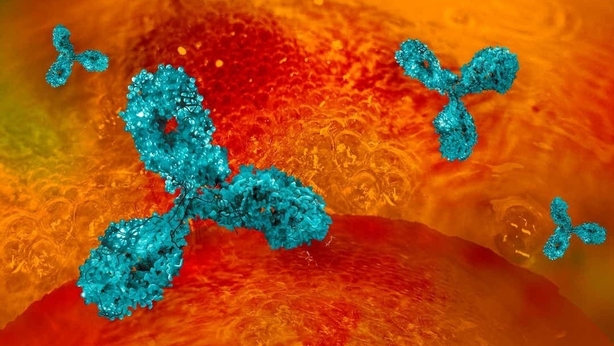
Antibodies are Y-shaped proteins produced by the human body as part of a normal immune response to foreign molecules, such as viruses, bacteria and other harmful organisms. These harmful visitors are called "antigens" and prompt the body's B-cells to make protective antibodies by the billions. Each antibody has two antigen-binding sites (one on each arm of the Y) that work to fight off these invaders.
"Antibodies block or kill the dangerous invading antigens. Scientists have learned how to mimic this natural defense by creating potent antibody medicines outside the body and delivering them to people," explains Drew Murphy, Ph.D., Executive Vice President of Research at Regeneron.
Unlike small molecule pills which are usually made from synthetic materials or chemicals, antibody medicines replicate your body's natural defense. Antibodies are large molecules, which means they must be administered by injection or infusion but are typically long-lasting, working for weeks to months in the body. "They’re designed to only lock onto a specific target antigen – so if there is no virus in your body, for instance, the virus-targeted antibody won’t accidentally attach to something else," Murphy adds, which is what makes them so effective and potentially helps reduce side effects. The work that’s carried out in labs like Regeneron is with the goal of replicating what the human body does on its own but on a larger, quicker and sometimes more advanced scale.
The big question? What's the difference between vaccines and antibody medicines?
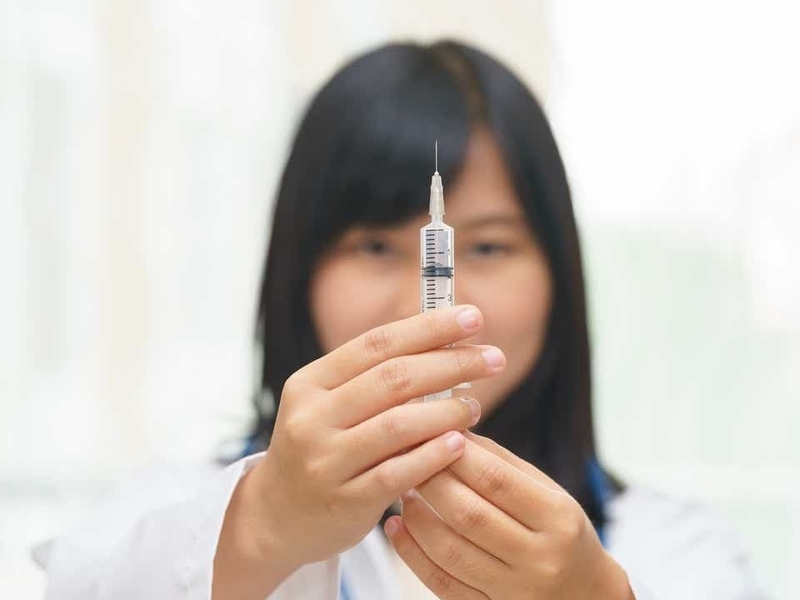
The simple answer to this is vaccines are introduced to trigger the body’s immune system to develop antibodies, while antibody medicines are produced outside the body and delivered by injection or infusion to fight antigens.
When a virus enters your body, it takes over and proliferates in cells. A healthy immune system will typically create antibodies to fight the virus. A vaccine introduces a 'dead’ or weakened virus to the body to trigger an immune response – essentially tricking it into thinking you are sick. It will take several weeks for the immune response to mount, but your body will remember this reaction, and if you encounter the same virus again, it will typically spring back into action. This is known as active immunity.
According to Murphy, "Both antibody medicines and vaccines take advantage of the body’s natural immune process. Vaccines deliver ‘active’ immunity, by tricking your body into thinking it has been exposed to the virus and creating its own protective antibodies. Antibody medicines deliver ‘passive’ immunity, by injecting the best pre-selected protective antibodies right into your body. With vaccines, it may take a few weeks for your body to make enough antibodies, but the protection should be long-lasting. With antibody medicines, immunity is provided instantly but will only last as long as the delivered antibodies remain in your body – perhaps a month or two."
Murphy says "ultimately, we may need both these approaches against COVID-19. Antibody medicines can provide a ‘bridge’ to widespread vaccine availability since vaccines generally take longer to develop, and can also help people who may not be suitable for or responsive to the vaccine approach later on. We hope that antibody medicines will effectively treat people who are already infected with the SARS-CoV-2 virus.
What does the future hold for antibody medicine?
Vaccines have effectively eliminated some of the deadliest infectious diseases we've encountered over the decades, and now companies like Regeneron are exploring that same potential for antibody medicines.
Antibody medicines are widely used for diseases like asthma, cancer, heart disease, rheumatoid arthritis and severe eczema. Regeneron has conducted research and development into the area of Ebola virus infection and it is an area of expertise which has informed additional research efforts in other infectious disease areas such as COVID-19. Regeneron is currently researching the use of antibodies in the potential prevention and treatment of COVID-19. In addition to their COVID-19 response efforts, the company continues to push the frontiers of genetics research and antibody science. Regeneron is researching new ways to adapt and harness the special properties of antibodies to fight cancer, such as through a bispecifics approach where the antibody's two arms grab different targets to help enhance elements of a natural immune response.
"Your body has a remarkable capacity to heal itself," Murphy concludes. "The better we can mimic nature’s ability for the body to treat itself, be it from infections or cancer, the better off we’ll be."
Regeneron is hiring at their Industrial Operations and Product Supply facility in Limerick, the largest biologics production facility in Ireland. Visit Regeneron.ie to learn why Regeneron has been named a Best Workplace in Ireland for the last four consecutive years to view open positions.
