


With fewer of us out and about our fair isle, we might be missing the things we took for granted. One of those things is undoubtedly Ireland's incredible architecture, but as Building Ireland returns for its third season, we have a chance to get to know the beautiful buildings dotting the country.
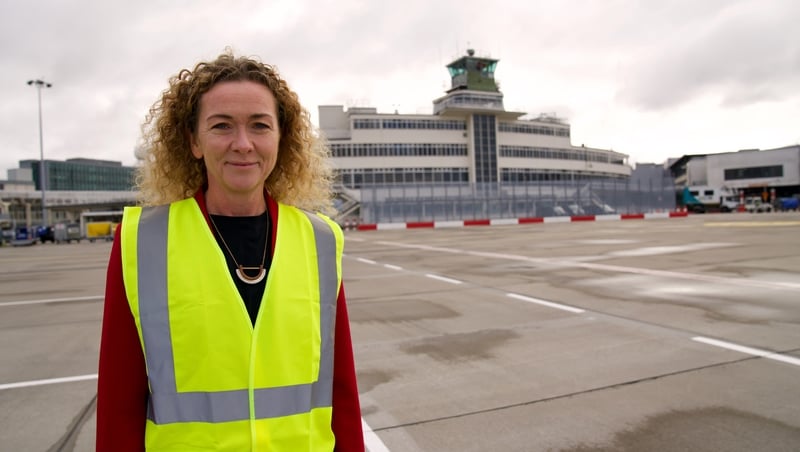
The newest season kicks off with the building of Dublin Airport's first terminal, as architect Orla Murphy explores this gem of modernist architecture. Built in the late 1930s, the impressive building heralded the birth of modernist Irish architecture, and was the gateway to an era of international air travel for an island nation.
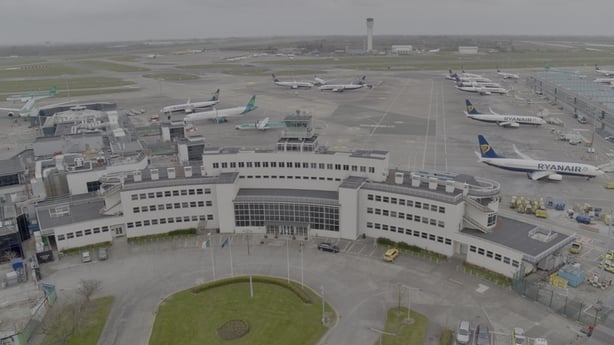
Now 80 years old, the terminal building embodies a spirit of innovation and ambition still evident at Dublin Airport.
Elsewhere this season, we'll delve into the history of the transatlantic telegraph cable project at Valentia, Co. Kerry, copper mining on the Beara Peninsula, the hydro-station at Turlough Hill and the development at Shannon Newtown in Co. Clare.
We caught up with Murphy to chat about the show, Dublin airport's ballroom and whether we appreciate our architecture in Ireland.

What defines Irish buildings and architecture?
I don't think there is a single style that you could say defines Irish architecture, but all architecture is defined by the people who make it and use it, and by the place in which it exists. So for example, the robust detailing of the telegraph engineers' housing on Valentia Island is defined by the place, its topography, orientation, climate and weather.
But it is also defined by the people for whom it was designed, in this case, the telegraph engineers, who expected to live in a certain degree of luxury and as a community, distinct from, but connected to the larger island community. So the three terraces of houses are grouped together around a shared garden that provided communal amenity and a sense of neighbourhood.
Do you think we appreciate our architectural heritage?
There is a significant appreciation of older built heritage in Ireland, and this is well supported by the Heritage Council, the Civic Trust, An Taisce and a really incredible network of local historians. There is probably less appreciation of 20th century and contemporary architecture.
Perhaps we are not quite sure where the discourse around it should happen – architecture is recognised by the Arts Council as an art form, and yet it is also a professional discipline. So do we discuss it as a visual art or on the property pages?
If you think about it, every citizen encounters architecture every day: our schools, hospitals, housing, public buildings and public spaces are all opportunities to engage with architecture, which is why we should celebrate quality architecture and public spaces, and conversely be critical of poor quality design.
Did you learn anything surprising during this series of the show?
I’m constantly learning surprising things in making Building Ireland. One of the real privileges of being involved in a programme like this is the chance to meet people who know so much about their particular area of interest and the opportunity to gain access to places that you might not ordinarily be able to get to.
I loved learning about how the "graffers", or telegraph engineers, lived and worked on Valentia Island. I’ve holidayed with my family on Valentia for years and was always curious about the Telegraph Station, so it was wonderful to be able to see the original living quarters, which remain pretty much intact.

And in Shannon, it was an eye-opener to visit multi-storey housing at Drumgeely Hill, which built in what was then a remote and rural part of Clare, to house workers in the Shannon Free Zone. All the projects we explore in the programme share an ambition of vision and bravery in their execution, which I always find surprising and inspirational.
What's the most unusual or surprising thing about Dublin airport's first terminal building?
I was really surprised to find that the original building had a ballroom and cocktail lounge. It was a glamorous social destination for important family occasions. Dubliners would go there specifically to eat, dine and dance, as well as to watch the arrival and departure of planes. The restaurant had an elaborate menu of dishes, including Sole Aer Lingus.
It’s also terrific that despite the pressures to expand the airport over the last 80 years, this gem of a building still exists and functions at the heart of what is now a huge complex of buildings, mostly intact and as it was when it was first designed.
Watch Building Ireland on Thursdays at 8pm on RTÉ One.
