


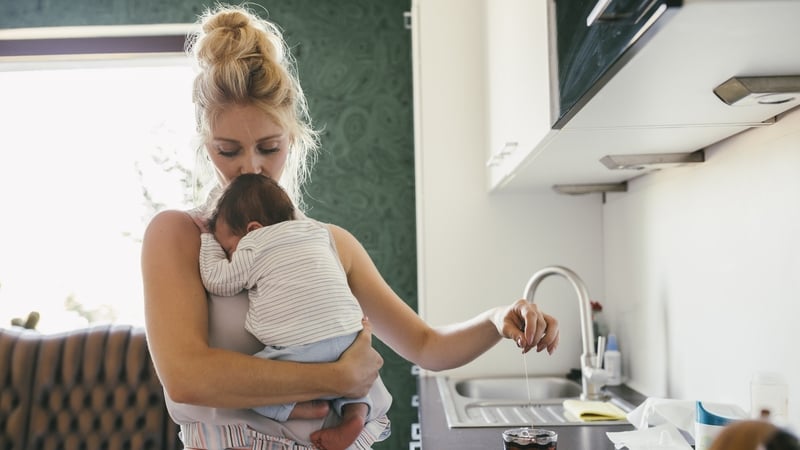
Sinéad Harrington, a mum of girls - currently surviving on cold tea, warm hugs and hope - shares her experience of pregnancy as well as some top tips for first-time mums.
Congratulations! After 40 weeks, give or take, the wait for the arrival of your bundle of joy is finally over.
Every pregnancy is different and it's totally natural to not have the experience that you expected or that all your friends or sisters had. However, I wanted to share some tips from what I've learned from my own experiences.
If you’re like me, nothing will beat seeing your baby for the first time. That overwhelming rush of love, the skin on skin, the cuddles and gurgles, the sweet baby smell that you wish you could bottle.
The natural high from finally having my baby in my arms was indescribable. But these highs in the first few days, weeks and months are likely to come hand in hand with the lows of struggling with a newborn, the fear that you’re making mistakes and exhaustion from sleepless nights which can lead to frustration.
For me, being a parent is rewarding, demanding, draining, and fulfilling all at the same time. Welcome to the parent club!

One week in the bed, one week around the bed, one week in the house
For my first two children, I practically did a tour of the country, we were like the travelling circus, so I wanted to do things differently this time. After my most recent baby was born I loosely took the 'One Week’ approach.
When I read about 'The Fourth Trimester', a period coined by pediatrician Dr. Harvey Karp, it really struck a chord with me. When your baby is born they leave a safe, comfortable and warm place and arrive with a rude shock into a bright, noisy world, where they are hungry, cold and tired.
According to Dr. Karp, for the first three months cuddling and being close to you is all your baby really craves.
A gentle, empathetic approach to your baby's needs can help them adapt. Ways you can incorporate this is feeding on demand (breast and/or bottle), lots of skin on skin time, using a sling or wrap, swaddling, co-sleeping, relaxed bath times and introducing your baby to its new world by getting out and about.
This approach can gradually help them adjust in a calm and gentle manner.

Visitors
When your baby arrives you understandably want to show this precious gift to the world. But don’t forget after months of growing, carrying and then giving birth to your baby you need all the rest you can get.
Your hormones can be all over the place after labour, you may experience the ‘baby blues’ or you’re waiting for your milk to ‘come in’ – whatever the reason, the last thing you may need is to also have the pressure of visitors.
Under normal circumstances, you could stagger the well-meaning arrival of family and friends if you can. This is an important time for you and your partner to bond with your baby. And those who love you will understand that you need to put you and your baby first.
In saying that, be careful not to isolate yourself. According to the HSE, the ‘baby blues’ are so common they are considered normal for new mothers and will usually come into play a few days after giving birth.
As your body returns to normal, these feelings will pass but, in the meantime, reach out to a person close to you for support.
NB: Under the current guidelines, it is recommended that we stay home as much as possible, avoid any unnecessary journeys and keep our households closed off to visitors during the coronavirus outbreak.

Sleep
Let's call a spade a spade - it’s the end of sleep as you know it.
Your baby is growing at an unbelievable rate and needs to feed as well as sleep frequently. As tempting as it is to clean the house, go on social or catch up on laundry try your best to sleep while your baby is sleeping!
According to the HSE, your newborn baby will wake up regularly to be fed. It doesn't matter if it's day time or night time. This can be very hard to cope with but it will get eventually these feeds will extend.
This time around, I’ve embraced the fact I’m not going to get much sleep. At the moment, I’ve averaged about two hours at a time, but the fact that I know that it’s not permanent keeps me going.
My hungry hippo won’t need me at night forever so, while she does, I will be there – for feeds, cuddles and everything else in between.

Growth spurts/leaps
Just when you think you’re getting the hang of your baby with sleep and feeds along comes a growth spurt.
While spurts can happen at any time, they are more than likely to occur around 1-3 weeks, 6-8weeks, 3-4 months and you can expect more spurts around the 6 and 9-month mark.
While many find the 6-week growth spurt the worst, for me it was the 3-month one that nearly had me packing my bags for the Bermuda Triangle.
Signs that your baby is going through a leap is that they are feeding non-stop, up more at night (if that’s possible), doesn’t want to be put down and are extra fussy. This is when you need to call in the troops - whether it be your other half or a family member - to help with the basic day to day.

Food
I have become an expert at one-handed eating and if there was a fast-eating competition I would win it, hands down.
Finding time to prepare food, nevermind eat it, can be hard. But good food is always important but even more so when you have a newborn.
Dr. Paul Hickey says: "Being a parent is demanding – both physically and mentally. Most people are balancing busy hectic schedules and making time to eat properly can seem like a bit of a luxury. However, the importance of maintaining a healthy lifestyle as much as possible cannot be overstated.
"Eating regular and nutritious meals is the mainstay of a healthy diet but there are plenty of 'in-between’ options that are healthy, convenient and appetising in equal measures.
"Options such as cheese and crackers, sliced apple and peanut butter, granola, avocado toast, boiled eggs, yoghurt and raisins can help to keep you going when you need it."
I always have a sweet treat with my tea too – everything in moderation, no?
Try and have the freezer and cupboard stocked in case you can’t get out, and batch cook and freeze if you get the time.
Support
Being a full-time mom can be lonely, especially during the day when you’re on your own. Ask your public health nurse about baby groups or breastfeeding groups - there may be online meetings you can join during the current coronavirus restrictions. You’ll get to meet like-minded moms and may be surprised when you learn they have the same concerns and feelings as you.
When restrictions are lifted, you might find other groups classes of interest – like baby yoga, swimming or music classes and much more. Find something that will interest you, you’ll be glad you got out.
Also, be sure to attend your two and six-week check-ups if advised – both are important. Though the two-week check is technically for your baby, if you have any worries or issues about yourself do say it to your doctor.
You’ve just given birth and need to look after yourself. Even if you feel okay don’t put off going for your six-week check-up.
Also, don’t ignore any worries or niggles, be sure to let your doctor know how you’re feeling.You’re important too.

This Too Shall Pass
For every mom that you think has got it together, there are 10 more that are tired, struggling and frustrated. Being a parent is hard, and having a newborn can be challenging.
Ask for help from your partner, family and friends, sometimes they don’t know if you’re struggling or not. And be sure to watch out for the signs of postnatal depression, the earlier it is recognised, diagnosed and treated, the faster you will recover.
If you can, share the workload with your partner, a friend or a family member – they can change nappies and clothes, feed your baby a bottle, learn how to settle the baby to sleep.
Take a break when you can - for a cup of tea with friends over Facetime, a walk, a bath or even going to another room to read a chapter of a book can help.
Remind yourself that no one is perfect, go easy on yourself and remember this is all temporary. And at the end of the day, one gummy smile from your precious baby makes it all worthwhile.
And while these tips worked for me, they might not suit every parent. Finding your own parenting style can take time, and one size certainly does not fit all!
