


Can you die from a broken heart? Far from the melodramatic scribblings of a 15-year-old post-break-up, this is the question asked by a team of a Swiss research team, which is looking into "broken heart syndrome".
Broken heart syndrome is a rare condition, also known as takotsubo cardiomyopathy and, according to Harvard Health Publishing, more than 90% of reported cases are in women ages 58 to 75.
Similar to what we imagine when we think of a heart breaking, the weakening and failing of the heart happens suddenly, most often after a stressful or emotional event such as bereavement. But research is showing that how the brain responds to stress might be a factor.
While no cause is known, the body's response to adrenaline could also be a factor.
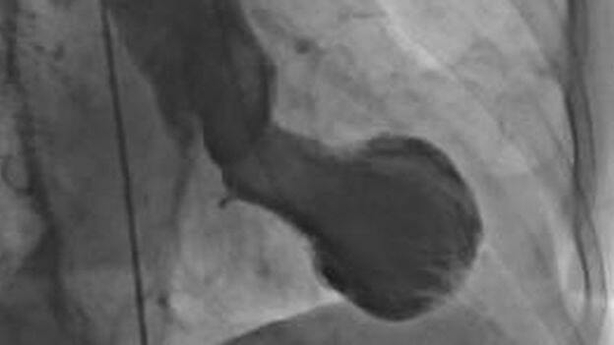
The condition is also known as takotsubo syndrome - a reference to the shape of the heart in people with this condition, which resembles a Japanese pot with the same name - and can be brought on by stressful events such as loss, a new job or even something joyful like a wedding.
The symptoms are said to be similar to those of a heart attack, such as shortness of breath and chest pain, but unlike a heart attack, there are no clogged vessels.
Again, much like the feeling that gives it its name, broken heart syndrome can pass in a matter of weeks or months, or it can be fatal.
Dr. Jelena Ghadri and colleagues at University Hospital Zurich monitored the brains of 15 people suffering with broken heart syndrome, whose scans showed distinct differences when compared with the scans of 39 healthy patients.
They found that there was less communication between brain regions involved with controlling emotions and unconscious or automatic body responses, such as heartbeat, which are also the areas thought to control our response to stress.
More work is needed to fully map out the pathway the researchers are exploring, and scans of the patients' brains before or at the time that they developed the condition were not available, so it's not possible to say whether the lapse in communication in the brain was caused by the condition or vice versa.
Joel Rose, chief executive of Cardiomyopathy UK, was quoted by the BBC as saying: "This is an important piece of research that will help to shape our understanding of a form of cardiomyopathy that is often overlooked and remains something of an enigma.
"The people with takotsubo cardiomyopathy that we support will certainly welcome this new effort to understand the role that the brain plays in this condition and why some people are more susceptible than others. We hope that this research will lead to further focus in this area and greater collaboration between neuroscientists and cardiologists."
