


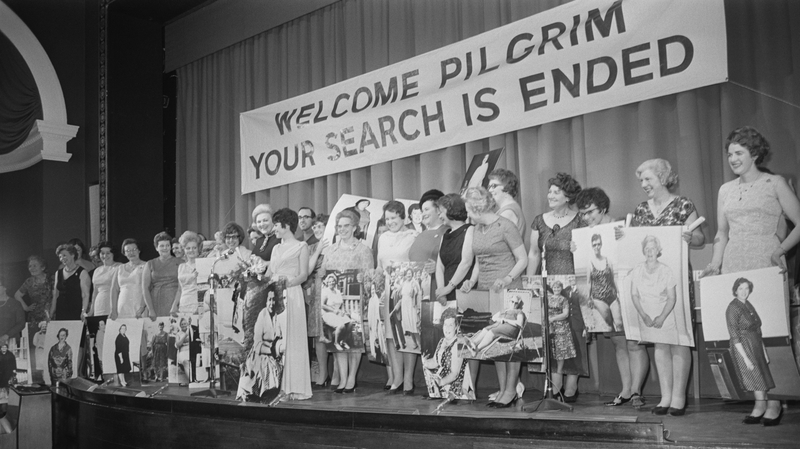

For 55 years it has guided dissatisfied, unhappy, struggling and determined people around the world towards their ideal weight. Now Weight Watchers is experiencing a weight loss of its own.
Three years after Oprah Winfrey invested in the declining company – buying 10 per cent at $43 million – the company has metamorphosed into 'WW'. It has emerged from its Oprah-sanctioned chrysalis with a new slogan, 'Wellness that works'. Its focus is now trained on something more permanent, less tangible and far more difficult than simply dieting.
Marketing Manager and Coach for Weight Watchers Ireland, Margaret Burke, isn’t too hung up on the buzzword of "wellness". It’s semantics, really, and just another way of describing what WW has always done. "Wellness, and this is my interpretation, it’s probably a question of language," she explains. Burke views the rebrand as bringing the company under a new "filter" and "keeping all the science, keeping all the facts that we know and learned over the last 55 years, but pushing it out to other people and saying think of it as your health partner".
Burke says: "If you want to have people see you different, you have to do something different. The essence of us is absolutely the same – how can we help you live a healthier life?"
"WW now wants to make you "well". But when generations of people trust you to help them slim down, how do you sell them wellness?"
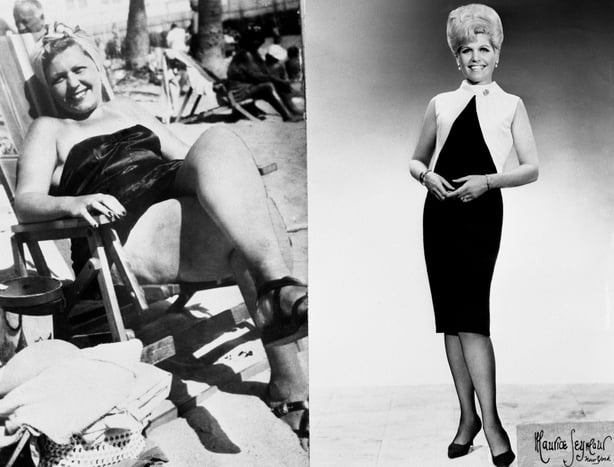
When Weight Watchers was founded in 1963, weight fell into two categories: fat or thin. It was also comparatively easier to spot when you needed help. Jean Nidetch, the company’s founder, weighed 200 pounds and hid her unhealthy eating habits as artfully as she hid cookies in her hamper. She knew she needed help when a neighbour asked when her baby was due. She wasn’t pregnant. She went to an obesity clinic, took the diet they recommended, shed 72 pounds and went on to devote the rest of her life to helping other people get thinner.
That was then. Today we are at a health inflection point, when fitness, weight loss, mindfulness and body positivity jostle for space in an increasingly transparent and, paradoxically, manipulated society. As the roads to self-confidence are endlessly played out online, the impetus to change your body collides with encouragement to love whatever shape it takes naturally. Most perplexing above all is the need to be happy with your body – a maddeningly subjective goal.
Simultaneously, according to the latest WHO figures, global obesity has nearly tripled since 1975, while in Ireland alone the number of people who are overweight or obese is increasing, from 61% in 2015 to 62% in 2017. But hope prevails – the number of Irish people who are overweight and trying to lose weight is steady at 49% between 2015 and 2017. It’s against this backdrop that WW is ambitiously striving for a $2bn revenue by 2020.
For the uninitiated, Weight Watchers offers weekly meetings where members – who purchase a subscription starting at €20 and continuing at €10 per week – attend weigh ins and lectures. Traditionally these meetings were in person, although now you can also interact by app. Food intake is monitored, with food values assigned to certain foods in lieu of calories and a points total assigned to each person, to restrict how much they’re eating. In recent years this has relaxed, to the point that 200 "expensive" foods – foods that were higher in calories, such as beans – have been changed into "zero point foods" because they are healthy.
This points system has long been maligned by many in the health industry. Assistant Professor in Dietetics in the Trinity Centre for Health Sciences, Annemarie Bennett, says certain aspects of WW are healthy, such as portion control and peer support. But she notes that the use of points or branded foods in the company isn’t recommended and "as a dietitian, you want consumers to be empowered to adhere to national healthy eating guidelines as the main way of managing their diet".
Superficially, it seems that dieting is waning in popularity and Weight Watchers’ rebrand could be seen as a confirmation of this. However, Bennett believes that "it's the way in which diets are sold and marketed that has changed". As the conversation about maintaining exercise increases, the marketing of diets become more "holistic", she says.
"If this is the case, it has been a slow burner. To talk about weight and food, and especially our personal relationship with both, requires discussion about the deepest, most vulnerable parts of ourselves."
This steady social reconditioning of how we think about food is drawing from places that are more than skin deep. "It could be related to the increasing number of positive conversations we are having about mental health and wellbeing", Bennett suggests. "Campaigns like the 'Little Things' campaign led by the HSE and Healthy Ireland have been important for linking physical and mental wellbeing and for promoting a more holistic 'big picture' approach to minding ourselves."
Bennett adds: "It's important that we recognise how the elements of our health are connected, and that we can't fixate on one element and forget about the rest. We need to balance the care that we give to our diet, with the care we give to our physical activity and mental health."
One patina of misconception surrounding food is the misunderstanding and, often, bastardisation of diets. For those of us fumbling in the dark (with only the fridge light to guide us sometimes), you can’t go wrong with the national Healthy Eating Guidelines: include fruit and vegetables with every meal; choose brown and high-fibre grains and cereals; choose low-fat dairy; have water as our main drink; limit fats, oils and anything high in sugar, fat and salt; and eat red meat, chicken and fish two days a week with one day vegetarian.
But our appetite for unusual diets is always rampant, and most alluring of all are those apparently sanctioned by some medical authority. We’ve transitioned from pills and diets consisting of only bananas and water, to grasping at any regimented diet that trickles down from hospitals, consultants’ offices and medical journals. This can be incredibly dangerous.
One example is the ketogenic diet. Bennett says: "It is used very specifically as a treatment for some patients who suffer from epilepsy and it must be prescribed and supervised by a dietitian. Unfortunately, this diet was inappropriately marketed as being suitable for cancer patients, which it most certainly isn't, as it only increases the risk of poor outcomes for those patients."
Bennett suggests that given Weight Watcher’s position of influence in society, it would be encouraging to see it take on more qualified professionals, such as dietitians and registered nutritionists, to "enhance the reliability and credibility of the company's message". Certainly, WW has prided itself on its reliance on fact-based scientific practices, something that Burke reinforces here: "We have decades of knowledge and expertise in behaviour science and we don’t do anything that’s not grounded in science."
"However, the company’s revamp includes one telling detail – the appointment of Gary Foster, a psychologist, as Chief Scientific Officer – a position that was formerly held by dieticians. There can be no clearer suggestion as to the company’s ethos now."
Burke says WW will still help people who come to them to lose weight. She says: "We are committed to doing that, we will always do that and we are the best weight management programme on the planet and we will stay there". This is essential, given generations have associated dieting with Weight Watchers. Institutions aren’t easily upended, even if they want to be.
Dieting as a service WW provides is being rebranded too. "I think ‘diet’ used to have the connotation of deprivation", Burke says. The company is now devoted to lifestyle practices with an emphasis on keeping fit and shedding "bad habits". Cooking classes will teach students ways to be healthier, while someone with chronic weight problems may identify and potentially overcome the source of their negative relationship to food.
Burke says wellness is already built into this system, pointing to the "non-scale victories" groups frequently share with one another. Perhaps you walked your dog for an hour longer, or declined a second slice of lemon meringue pie. Burke says: "Those non-scales victories are the foundation of healthy habits. It’s when you’re mindful in the moment and you decide [between] what do I want this minute and what do I want the most?"
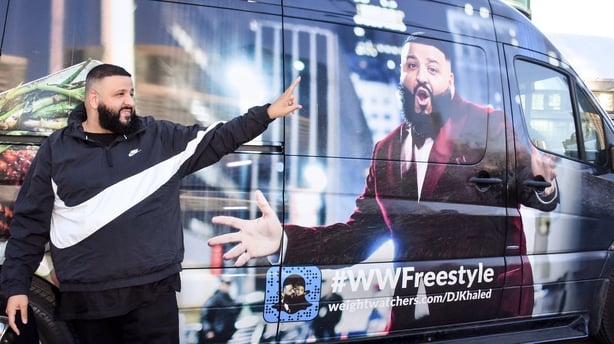
Now, WW’s focus is on the "digital experience", Burke explains, with a range of new online interactions designed to further connect members under the pillowy cloud of wellness. But one innovation points to where the company sees its future – plans to create custom mindfulness resources that users can access directly from the WW app.
Wellness has truly taken over the world, with the definition of self-care now extending from meditation to brushing your hair a specific number of times. It’s perhaps the most obvious salve for the politically fractious times we live in - maybe we just need to make our everyday routines sacrosanct and comforting.
Bennett notes that wellness is an intrinsic part of fitness. She says: "Having a healthy weight is part of being well. It's the road we take to achieving and maintaining a healthy weight that is so important." But with corporations making millions on exploiting that, the clock is ticking on how long we allow it to continue unchecked.
There’s a pernicious malleability to wellness, something that younger people are especially vulnerable to. WW recently came under fire for offering free six-week memberships to teens as young as 13, although Burke clarifies that while they do offer those memberships, teens aged between 13 and 18 require a letter from the their doctor certifying that this is a medical recommendation and that the teen’s parents will attend workshops with them. Nonetheless, it shows how much consideration is needed when trying to reach out to younger members.
So how does a 55-year-old company that built its fortune and reputation on teaching people to restrict diets, assign point values to beans and present themselves to meetings enter a world where self-love is paramount?
It's a tricky conundrum. As long as WW exists to enable weight loss, it supports – rightly or wrongly, using scientific knowledge or not – the argument that there are optimum weights for everyone. In a body positive world there should be no room for improvement, only self-love, and no room for people wanting to get a little leaner and needing support.
