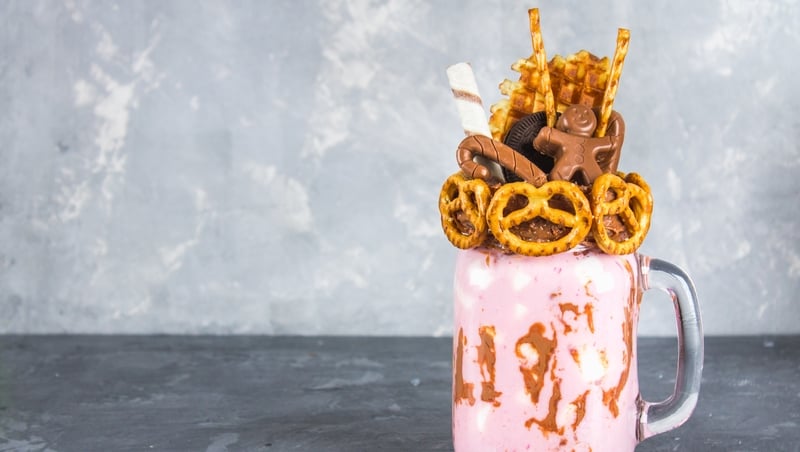

We are truly living in the reckoning of the Instagram age, and the latest monument to crack is the "freakshake" - the Frankenstein-esque revamp of the humble milkshake into a towering sugar sculpture, often served in glass mugs and overflowing with cream, heavy syrups and elaborate sweet decorations.
The shake, originating in Australia, quickly took hold across the world as restaurants and café's tried their hand at their own inventive designs and customers Instagrammed their choices as they would an outfit.
Now, the campaign group Acton On Sugar is calling for a ban on the drinks, as well as on all milkshakes containing more than 300 calories. In a sweeping survey of many of the UK's restaurants and fast food spots, it found that many contained "grotesque levels of sugar and calories".
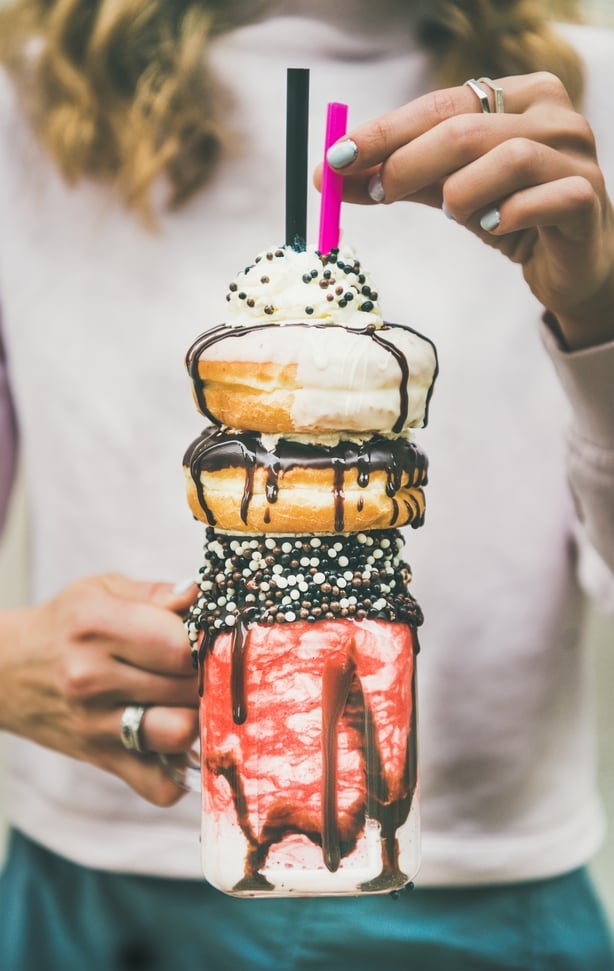
UK franchise Toby Carvery emerged as the worst offender, with two drinks on the list out of 49. It also topped the list with its Unicorn Freakshake, containing 39 teaspoons of sugar and no less than 1,280 calories, more than half the recommended daily calorie intake for an adult.
The confection is made up of grape and raspberry flavoured ice cream, blackcurrant jelly sweets, milk, whipped cream and topped with a large marshmallow, Skittles and macaroons.
More worrying still, it is more than six times the recommended daily amount of sugar for seven to 10-year-olds. While Toby Carvery said in a statement that they do not market their drinks to children, the elaborate, often pastel-coloured drinks are understandably beloved by younger customers.
To put that in perspective, the British Heart Foundation calculates that a 25-year-old would need to jog for three hours or vacuum the house for five to burn off the calories in that one drink.
The top five most sugary drinks included Five Guys' banana and chocolate milkshake with 1,073 calories and 37 teaspoons of sugar, Pizza Hut's salted caramel ice cream shake with 738 calories and 24 teaspoons of sugar and Burger King's Oreo shake with 570 calories and 19 teaspoons of sugar.
The UK introduced a ground-breaking "sugar tax" in April, officially known as the Soft Drinks Industry Levy, in an effort to curb rising obesity levels and a hard-won victory for health campaigners. The tax has two levels: a tax on drinks with more than 5 g of sugar per 100 ml and then a higher tax on drinks with 8 g or more sugar per 100 ml.
Milkshakes are exempt from the price hikes, but with mounting concerns about the level of sugar in them, that gap might close.
Public Health England is also urging businesses to cut sugar by 20% by 2020 and milkshakes are included in that programme.
Action on Sugar is made up of specialists working on sugar consumption and are now calling for traffic light-inspired nutritional labels on food, alerting customers to foods with low, medium and high levels of sugar. Proving that this isn't just a restaurant issue, the group surveyed supermarket milkshakes and found that over 90% would earn a red label for sugar levels.
The worst offenders were Muller Milk Frijj in chocolate, fudge brownie and cookie dough flavour.
While freakshakes aren't as widely available in Irish fast food spots, they are offered in many restaurants around the country. However, it doesn't take a sweet-loaded mug of milk and ice cream to tip your calorie intake into the stratosphere: one Frozen Latte Blend from Krispy Kreme clocks in at 610 calories, and when added to another creamy drink - say, a Starbucks Eggnog Latte clocking in at 470 calories - and you have half your calories for the day before food.