

In 1920 Aodh de Blacam, a leading Sinn Féin propagandist, imagined that the independent state to be made in Ireland would be 'a medieval fragment in the modern world' By 1926 the contest to make real this vision was in full flare - and the immense difficulty in looking to the past for a vision of the future was again revealing itself.
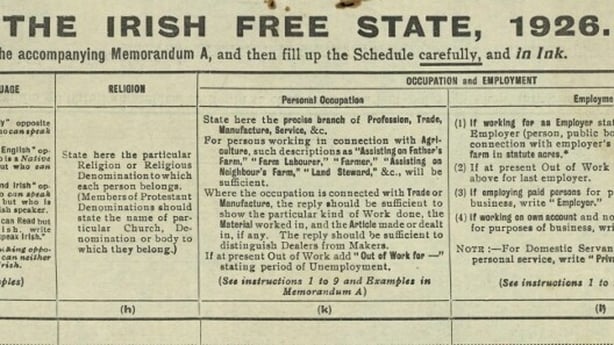
Religion was pervasive in popular culture. On the weekend the census was taken there was a Holy Year Jubilee procession along Westland Row in Dublin, in which the faithful of various parishes on the southside of the city processed through large crowds lining the streets. The idea, or even hope, that popular culture in independent Ireland would be defined by Catholic and ostensibly Gaelic values clashed with the reality that the interconnectedness of the modern world did not permit cultural isolation. All-out resistance to global and modernising influences was impossible. What emerged in the Irish Free State was a complex tapestry of experiences and influences.
Cities and towns across Ireland had skittle alleys and shooting galleries, Turkish baths and swimming pools, and so much else that was recognisably part of the globalised world of the 1920s. Words, images and ideas circulating in books, newspapers and other print media sold on stalls or available in libraries, booksellers, newsagents, reading rooms, and club and society houses, were drawn from across the world. This facilitated cultural change in Ireland, not least through the stunts and thrilling feats of speed undertaken by men and women in recently invented cars, motorcycles and aeroplanes. The continued growth of consumer culture, with developments in advertising and marketing, underlines the desire for material wealth, the consumption of food and drink, and the rise of recreational shopping soaked in increasing American influence.
Powerful new media added more layers of globalising trends. Cinema was increasingly prominent. In April 1926 the Metropole Cinema, formerly a hotel on the corner of O'Connell Street and Princes Street in Dublin, was showing a film called The Home Maker. The La Scala - with a seating capacity of 3,200 - was showing Love of a Patriot, based on the American Civil War. There was an appalling tragedy in Dromcollogher, Co. Limerick, in September 1926 when 48 people lost their lives after a fallen candle set alight the nitrate reels, which held the films that were to be shown in a makeshift cinema.
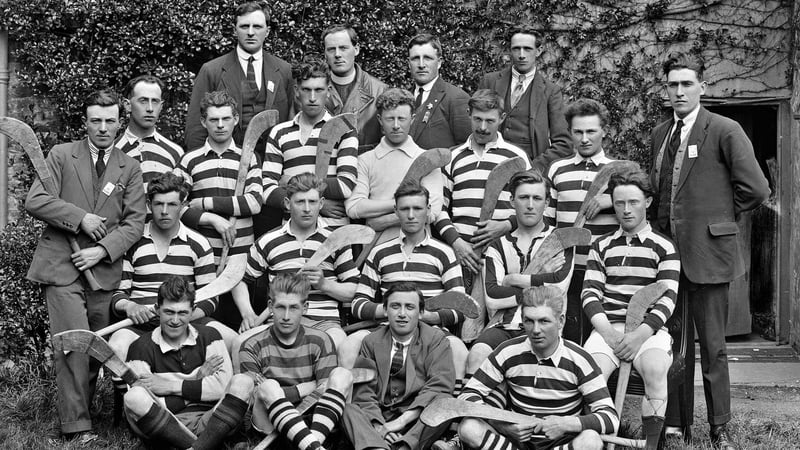
Irish people sought escape from the demands of work and of family - and found such escape in the associational culture of Ireland, where the number of clubs increased decade after decade. This can be seen in the growth of literary, dramatic, choral and debating societies, and can be observed most obviously in the growth of clubs engaged in sport. In the 1920s, hundreds of new clubs were established for numerous sports including hockey, tennis, cycling, boxing, athletics and golf. In Gaelic games, too, the Gaelic Athletic Association (GAA) saw substantial and sustained growth. Between 1924 and 1945, the number of GAA clubs doubled to reach more than 2,000. In 1926 Cork - led by captain Seán Og Murphy from Merchant Street in the city - won the all-Ireland hurling championship, while the football championship was won by Kerry, whose players included Con Brosnan and John Joe Sheehy, who had fought on opposing sides in the Civil War.
The passion for sport was also revealed in the place of soccer in the Irish Free State. For some who had fought for Irish freedom, that what they considered to be the game of English soldiers should now prosper drew frenzied disgust. The imagined Ireland of their struggle for freedom was supposed to cast of anything that was not native, but precisely the opposite happened. In the 1920s a concerted effort was made by those who organised soccer to spread the game outside the cities. The Leinster Football Association noted how their 'propaganda work' in provincial towns had provoked interest to the point where soccer was proving 'immensely popular’.
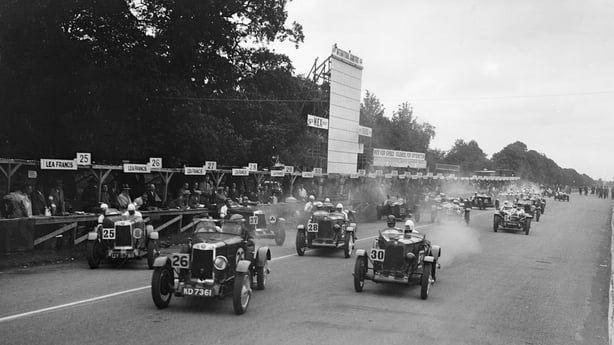
Against that, sport was used to project an image of the nation. Legislation was introduced in the Dáil in 1926 to allow for major motor races in the Phoenix Park. Motorcycle and sidecar racing took place that year. Later in the decade perhaps as many as 100,000 people attended a grand prix in the park. The Army Equitation School was founded in 1926 and produced a showjumping team that successfully competed at international level. Ireland was promoted as a venue for international sporting events, and in 1928 the new Irish Free State sent a team to the Amsterdam Olympic Games. The star of the team was the hammer-thrower, Pat O'Callaghan, who became the first athlete from the Irish Free State to be crowned an Olympic champion. Speaking at a homecoming in Kanturk, Co. Cork, he said: ‘I am glad of my victory, not of the victory itself, but for the fact that the world has been shown that Ireland has a flag, that Ireland has a national anthem, and in fact that we have a nationality.’
This essay is an extract from The Story Of Us - Independent Ireland and The 1926 Census published by Irish Academic Press. Paul Rouse is Professor of History at University College Dublin
Check out our dedicated section on Census 1926