
Jessie Buckley is outstanding in this tender and sorrowful tale of William and Agnes Shakespeare's lost son
Back in the golden age of Hollywood we’d probably call this handsome and superbly acted adaptation of Maggie O’Farrell’s acclaimed novel about William and Agnes Shakespeare’s only son Hamnet a weepie. Cynics might call it the kind of prestige "event" movie that makes the Oscars academy, well, weep onto their ballot cards.
However, such is the elemental power of director Chloé Zhao’s Hamnet that even the stoniest of hearts may well crumble in face of Jessie Buckley’s devastating central performance as Agnes Shakespeare and the pivotal scene where we watch in mute horror as her only son at a mere 11 years old is spirited away by the plague that claimed so many innocents all those centuries ago. It is a moment so raw and so startling it will strike directly to the hearts of any parent, anywhere and at any time.
Jessie Buckley on her special bond with Hamnet co-star, Jacobi Jupe
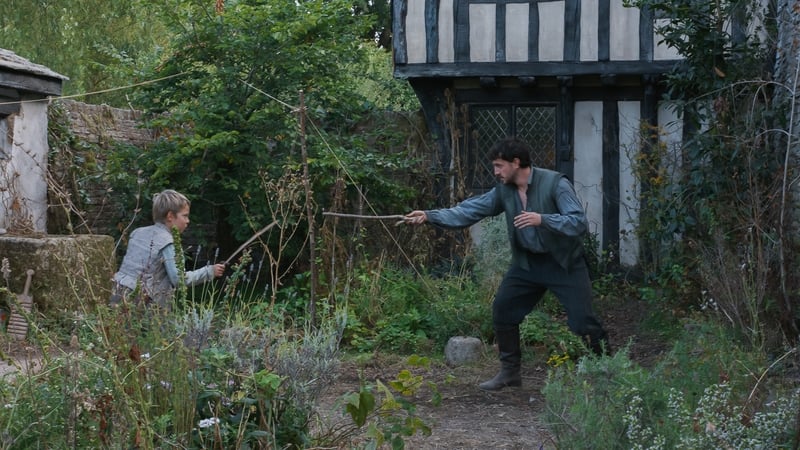
Buckley is the quickening heart of the movie, which was co-scripted by O’Farrell and also stars Paul Mescal as William Shakepeare as a remote, peripheral player in his own family life as he busies himself with achieving literary mortality in far away London. The aptly named and apple-cheeked Jacobi Jupe plays the titular boy with a mix of wonder, fear and mischievousness that lights up every scene he appears in.
Watch our interview with Jessie Buckley And Paul Mescal
That’s Agnes not Anne, as we know Shakespeare’s wife historically, and Hamnet, not Hamlet, as both were interchangeable in the 16th century. As the old saying goes, What’s in a name?
O’Farrell’s novel expanded on scholarly speculation that the death of Hamnet was the inspiration for the playwright’s masterpiece Hamlet but this is not a film about the creative instinct. Although we do see Will, quill in hand, scratching away on parchment by candlelight, this is a family drama about love, loss and redemption set amid an almost magical bucolic 16th century Stratford-on-Avon and a murky, plague-infested London.
We first meet young master Shakespeare as a Latin tutor, teaching local children. He is under pressure from his gruff father John (David Wilmot), who wants his son to give up his literary ambitions and follow him into the family business of glove making.
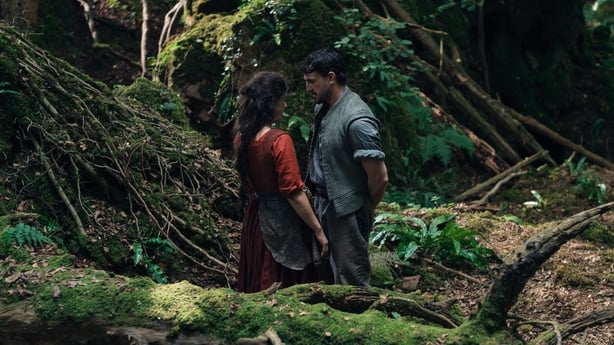
Mescal’s Will is a bit of a dreamer and a nerd. Buckley’s Agnes is connected to the very earth and immersed in the mysteries of the sensual world. She spends most of the time in the local forest, training her hawk, she also keeps an aviary, makes medicines from herbs and plants and is not so much at one with nature as an extension of it. The locals call her a forest witch, a name she wears with defiant pride.
Young Will is smitten. Their courtship sees Hamnet at its most playful and joyous; he tells her the tale of Orpheus and Eurydice and tries to gift her one of her father’s falconry gloves. She is initially resistant but they wed - much to their disapproval of their parents.
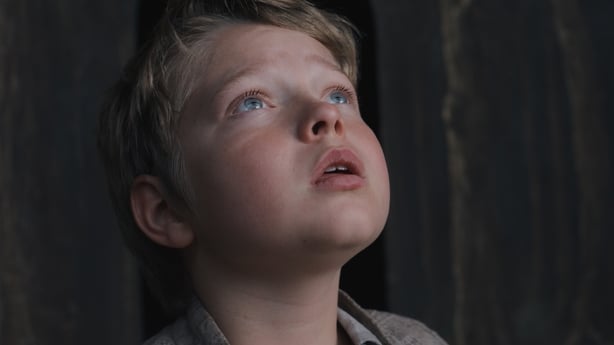
Their first child Susanna arrives and twins Judith and Hamnet soon after. The Shakespeares settle into a life of domestic bliss and Will’s new success sees them buy the finest house in Stratford but plague stalks the land and when it takes Hamnet, Will arrives too late and tension and a resentment emerges between husband and wife that sees the movie become a study in how we process unimaginable grief and how strong the bonds that tie us really are.
As Agnes grieves and rails against her husband for his absences, he is a vessel of numbed pain and sorrow. In one slightly jarring scene we see him standing alone on a rickety wharf at night staring into the murky Thames and mumbling lines that will soon be uttered by that doomed Danish prince.
This is certainty one of the most beautiful looking films you will see this year. Verdant greens and rustic browns dominate and the bucolic setting often takes on a dreamlike quality. There is stillness and silence, characters drift in and out of scenes. Zhao’s camera is often trained for long moments on pastoral landscapes; a lingering slow pull away from a beehive takes on unfathomable mystery. London, meanwhile, is a place of lurking danger.
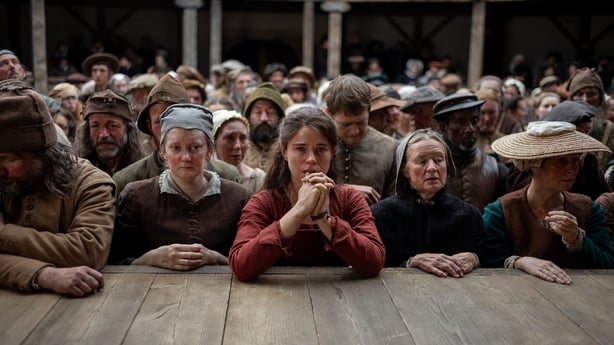
But it is the closing twenty minutes of Hamnet that makes this movie something truly special. Standing alone in a crowd, a magnetic Buckley finally realises the depth of her husband’s pain and how his work will see their lost son immortalised for the ages. Hamnet is a spiritual and powerful contemplation of love, death and grief that lingers long in the memory.