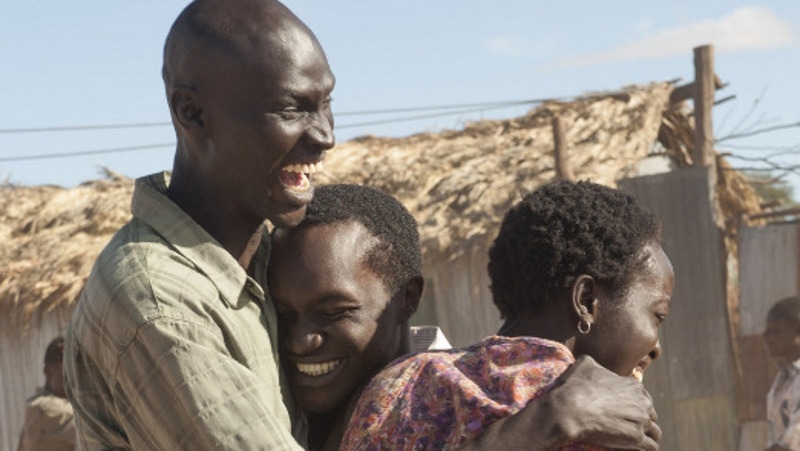
The Good Lie is based on events that occurred in South Sudan in the 1980s, when thousands of young people were orphaned by air-strikes from North Sudan forces. These children - many of them not yet teenagers - were obliged to flee their villages with little more than the clothes they wore.
They embarked on a perilous, extended walk across country, during which many died from hunger, drowning or by northern militia shootings. The lucky ones eventually made it to Kakuma refugee camp in Kenya. Many became adults during their time there, trapped in the limbo of desultory camp life.
The subjects of this fictional film - three young men and a young girl - spend 13 years at the camp, before they become beneficiaries of a programme which arranges work visas for them in the USA. The year is 2001, and they are clearly fortunate that the process of their repatriation is taking place prior to the catastrophic events of September 11.
On arrival, they are welcomed by members of an organisation known as Faith Based Charities. However, Abitail (Kuoth Wiel) is told that she will be separated from the men. She is sent to Boston, while the men are sent to Kansas City, Missouri.
The trauma of the separation from the young girl – effectively the mother figure - affects the young men deeply, as they try to come to terms with their new lives, helped by reluctant employment agency counsellor, Carrie (Reese Witherspoon). Their attempts to understand the American way of life is presented as rather limp comedy.
Stuck in their lodgings, they have no idea what to do with American food. The cultural misunderstandings are milked for much more than they are worth, although such confusion did in fact very likely occur.
Ultimately, the story is engaging and you forgive the over-earnest, simplistic approach. The youths befriend a young rancher and there is something touching about their instinctive desire to be near his cattle. Being there reminds them of their former pastoral existence in their native Sudan. Director Falardeau is not trying to extract any comedy from the scene and for once, there is no clunky effort involved.
Paddy Kehoe