



A new documentary about the rise and fall and rise again of Cavan band The Panic Merchants tells a tale of enduring friendship and paints a vivid picture of an almost forgotten Ireland
It's a story as old as rock 'n’ roll itself. A bunch of smalltown lads with big dreams form a band. They can’t play or sing but they give it their all until reality bites and they are forced to hang up their guitars and get on with a more prosaic life of work, immigration, marriage and bringing up children.
Ireland is full of smalltown bands who gave it a shot before imploding and very few of them get to have a documentary made about their rise and fall - and rise again - but Cavan act The Panic Merchants probably deserve to have their story of minor rock `n’ roll glory told more than most.
Formed by school friends Justin Kelly, David Meagher, Noel Larkin and Paddy Glackin in Bailieboro in 1986, they broke up in the early nineties, but after meeting at a funeral (where else?) 25 years later, they decided to give it another lash.
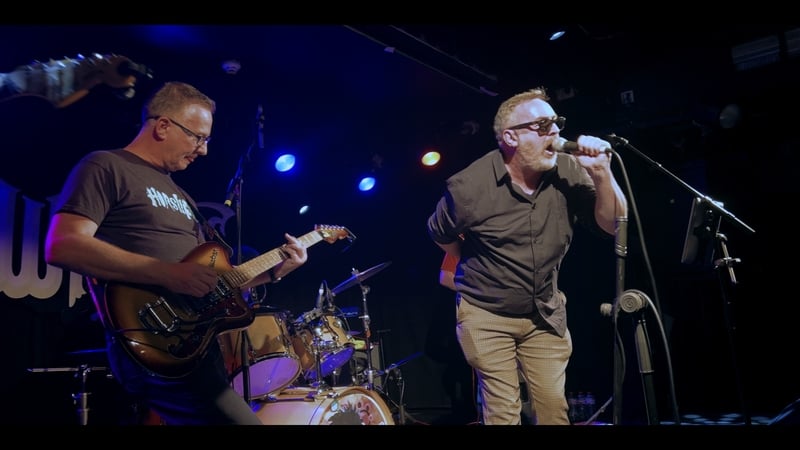
Now in their late fifties, The Panic Merchants were reborn as Sons of Southern Ulster a decade ago and are now a far better act. They've released three very good albums and played the Dublin music mecca of Whelan’s.
Their new incarnation, with Kelly spitting out his profane and guttural folk-punk poetry, sounds like Jinx Lennon fronting a punked-up A Lazarus Soul.
As David Meagher quips in Once We Were Punks, "We are the Joe Bidens of rock 'n' roll."
Their story is told in Once We Were Punks, a new film by Dublin-born writer and filmmaker Frank Shoudice. It’s a warm and kinda fuzzy tale of getting the old band back together and why the urge to create never really goes away.
"There was unfinished business," says front man Justin Kelly, who now lives in Boston with his family and works in fundraising. "We’d been in this band when we were younger and we got to a certain level. We parked it for the guts of thirty years but we always thought we could have done more."
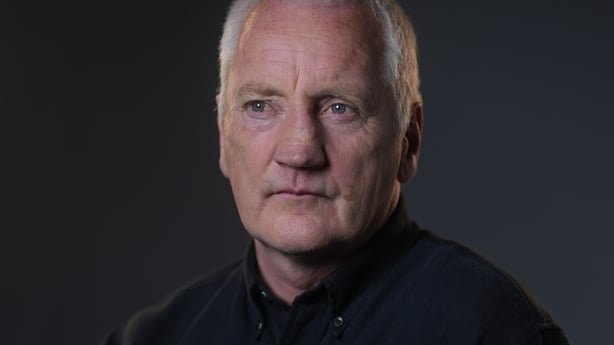
Once We Were Punks came about through a series of happy happenstances for Shouldice. He had just finished his 2019 film, The Man Who Wanted to Fly, which was also set in Cavan, and he was thinking about his next project when he heard a song on the radio as he was driving.
"It was absolutely ironic that I ended up going back to Bailieboro after finishing The Man Who Wanted to Fly, " says Shouldice, who has a background in theatre and journalism and also works as producer/director with the RTÉ Investigations Unit. "I heard this song by an Irish band called The Panic Merchants on the radio. I had never heard of them before but I just liked the song - so I made contact.
"I wasn’t clear what the story was and whether there was a documentary to be made but I was impressed by their passion to carry on after all those years and to do something they really love - that’s what really drew me into it."
We need your consent to load this Spotify contentWe use Spotify to manage extra content that can set cookies on your device and collect data about your activity. Please review their details and accept them to load the content.Manage Preferences
Once Were Punks was never going to be a straight down the line rock doc. Shouldice’s film is moodily shot and has a slow pace that gives plenty of space for the four very different band members’ personas to emerge. It’s a meditation on male friendship as much as anything else. It’s very ordinariness is part of its charm.
"It really is," says Kelly. "We kept in touch over the years and harboured this idea that maybe we’d do something. There’s an artistic side to life and if you have a desire to express yourself, it doesn’t really go away.
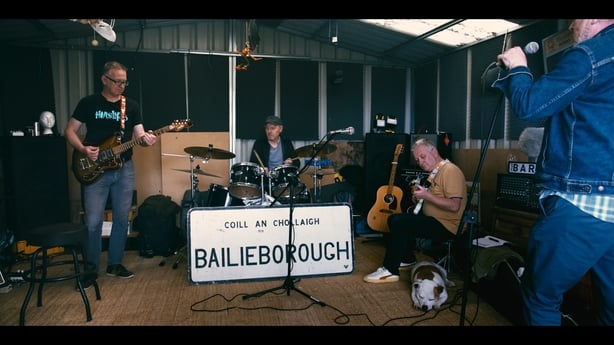
"We dabbled in a band and then we got on with normal life, working, getting married and bringing up children but that desire, it never really leaves you. It’s always there in the background . . . "
As discussions about the film progressed, another coincidence fell into Shouldice’s lap and brought the whole story back to a very dark chapter in Irish history.
He had been listening to a podcast about the Arms Crisis, an explosive political scandal in the late sixties and early seventies in which cabinet ministers Charles Haughty and Neil Blaney were dismissed for alleged involvement in a conspiracy to smuggle arms to the IRA.
One of their co-defendants was an Irish Army Intelligence Officer by the name of Capt. John Kelly, who was originally from Bailieboro.
"I mentioned to Justin casually that I was listening to a podcast about the Arms Trial," says Shouldice, "I asked him did he know that Captain Kelly came from Bailieboro. There was a pause and Justin said, 'he was my father’.
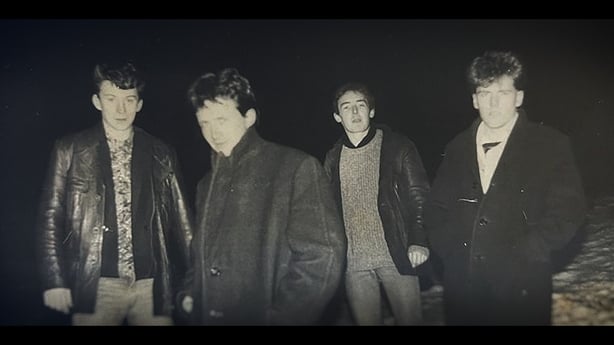
Captain Kelly was acquitted of any wrongdoing twice but never fully exonerated. He had to move his young family back to his hometown where he ran a pub and the fallout continued to have a profound effect on them. As the old Magazine song goes, they were shot by both sides.
Persona non grata with an Irish state desperate to contain the overspill from the Troubles and a marked man for paramilitary groups, there were threatening letters and phone calls.
In the film, Justin Kelly is visibly upset when he discusses that period of his family’s life. "It’s a raw nerve. The arms trial cast a real shadow over the life of my family," he says. "It changed the whole trajectory of our lives.
"Even though my father was acquitted, there was a kind of whispering campaign from the powers that be and I would argue that it still goes on today - ‘there’s no smoke without fire’ . . . people said the jury was gotten at . . .
"That was very hard for us to live with and deal with. It sets you up as outsiders, we were seen as these people with a shadowy past. It was very difficult but over the years, you learn to live with it but when you have a platform like a band and you’re writing these lyrics, even if nobody’s listening, it gives you an opportunity to talk about these things."
Capt. Kelly passed away in 2003 but he was to have an influence on his son’s songwriting.
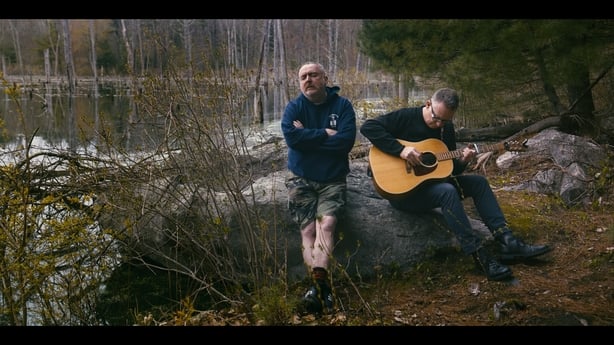
"Dad had no interest in our band but he was very accommodating, he was a very kind man," Kelly says. "I remember him saying to me, ‘you lads should write about Bailieboro, write what you know’. I laughed at the idea but here we are, all these years later and the Arms Trail is central to my lyric writing."
For Shouldice, who has a background in theatre and journalism, one of his inspirations for his film was Anvil! The Story of Anvil, the real life Spinal Tap tale of the eighties Canadian hair metal band whose journey to immortality was dogged by cruel bad luck.
"To me friendship is at the core of the film, friendship and music," says Shouldice. "It was privilege to get close to the lads’ friendship and observe it. what I loved about the Anvil film was the friendship and the love that was at the heart of it and I think that’s what the connection is with this film."
It is of a piece with Shouldice’s previous work. As a director, he seems to zone in on smalltown stories to tell a bigger story.
"This story is universal and it’s very interesting to me that after the Panic Merchants split up, none of the four lads joined another band," he says. "They all wanted to be in a band with their mates."
Once We Were Punks is in Irish cinemas now
