


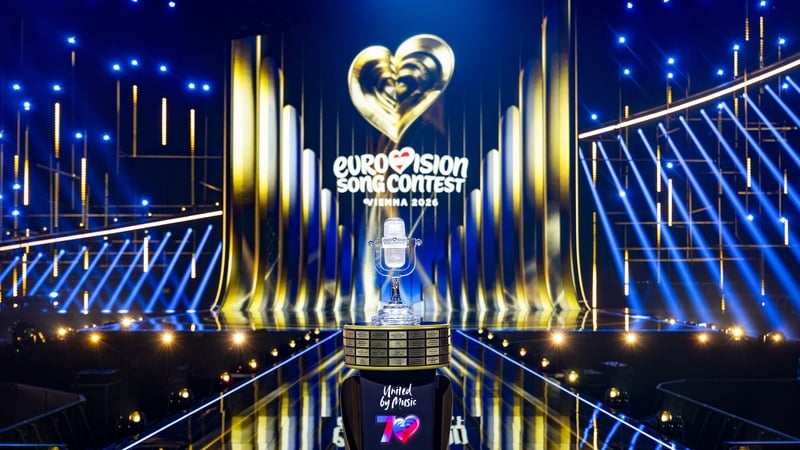
A fiery Finnish violinist-singer duo and Australian star Delta Goodrem are among the favourites to win tonight's Eurovision Song Contest Grand Final, with the competition hit by an unprecedented boycott over Israel’s participation.
This year in Vienna marks the 70th edition of the world’s biggest televised music event, which despite the razzmatazz rarely escapes the politics in the background.
Five countries, including Ireland, Iceland, the Netherlands, Slovenia and Spain, are staying away over Israel’s participation in protest against its war in Gaza.
RTÉ confirmed in December that Ireland would not participate in this year’s contest and would not broadcast the competition after the European Broadcasting Union confirmed Israel would be allowed to take part.
The 25-country final begins at 8pm Irish time at the Wiener Stadthalle, where about 11,200 spectators are expected.
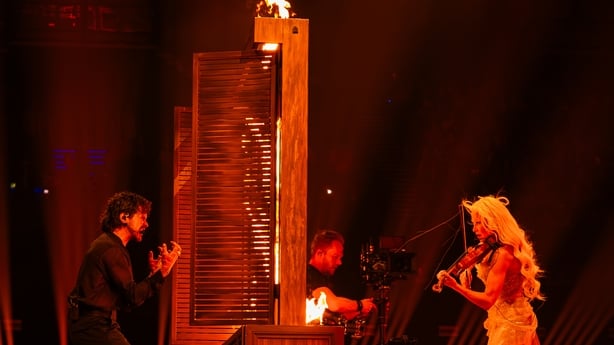
Finland's Linda Lampenius and Pete Parkkonen have long been among the favourites, after setting ablaze the immense circular stage during Tuesday’s first semi-final with their song Liekinheitin, which means flamethrower.
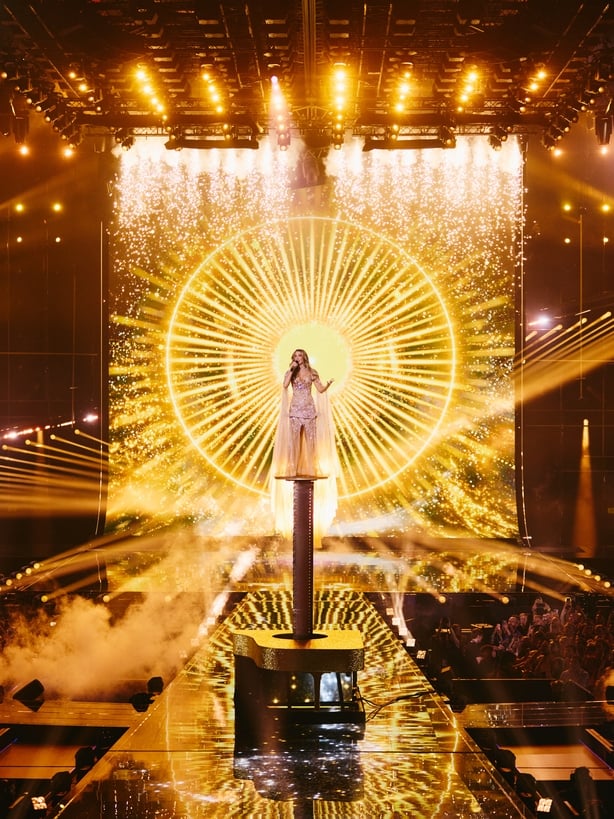
Goodrem has also surged in the rankings following her performance in Thursday’s second semi-final, which saw her soar into the air on a riser from the top of a glittering piano.
"It’s going to come down to Finland and Australia," Fabien Randanne, a journalist at French news outlet 20 Minutes and a specialist on the contest, told AFP.
Read more:
Eurovision chief hopes for pathway back for RTÉ
Internationally acclaimed violinist Lampenius, 56, got permission to use her 1781 Gagliano live on stage for the performance with Parkkonen, 36.
Instruments featured on stage are typically pre-recorded.
"I will never be a wallflower," Lampenius, who has appeared on the cover of Playboy and in an episode of Baywatch, told Austrian news agency APA ahead of the final.
Goodrem, who had a string of international hits in the early 2000s, has raised hopes of a first win for Australia with Eclipse, a song evoking a romantic alignment of the planets.
Australia has appeared at Eurovision by invitation since 2015.
"The European public still has more or less conscious reservations about voting for Australia, wondering what the country is doing in the contest, but perhaps Delta Goodrem's star aura can spur them to rally around her," Randanne said.
Her rise has come at the expense of Greece, Israel, Denmark and France, which have slipped in the rankings.
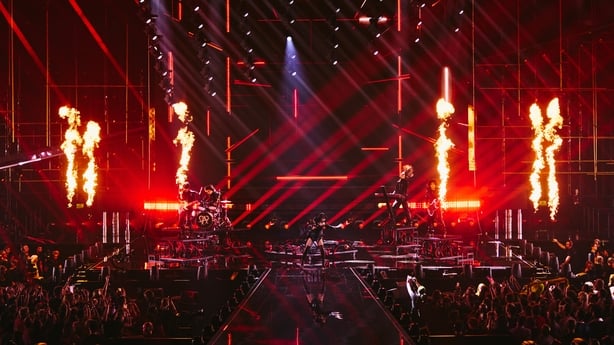
Romania’s Alexandra Căpitănescu, 22, has managed to break into the top five thanks to an electrifying stage presence with her metal track Choke Me.
Meanwhile, Italy’s Sal Da Vinci could emerge as "the dark horse" with his love song Per sempre sì, according to Sébastien Dias-das-Almas, a French journalist who has covered Eurovision since 2011.
A major figure on the Italian music scene, Da Vinci "could appeal to the traditional audience, who only follow the contest on television on the night of the event", Dias-das-Almas said.
While stage designs vary in boldness, songs range from pop to heavy rock and electro and are performed in diverse languages from Maltese to Albanian.
Fans from 75 countries have flocked to Vienna for the spectacle.
Undeterred by the rain, many have taken musical cruises on the Danube and sung karaoke in the huge fan zone set up in front of the City Hall and aboard trams crisscrossing the city.
"We have nothing like this in America, and I think Eurovision is phenomenal because it brings everybody together," Tory Huflar, an American fan, told AFP after Thursday's second semi-final.
Some 166 million viewers watched the contest on television last year when it was hosted in Switzerland.
Austria hopes to match that figure despite the boycott by Iceland, Ireland, the Netherlands, Slovenia and Spain and a call by more than 1,000 artists not to watch Eurovision over Israel’s participation.
Spanish Prime Minister Pedro Sánchez on Friday said he was certain his country was on "the right side of history".
Pro-Palestinian activists organised an alternative concert dubbed "song protest" on Friday in downtown Vienna, which has been under tight security all week.
"I’m Jewish, I support Palestine, and I don’t want a platform to be given to Israel at Eurovision," Dalia Sarig, 57, wearing a keffiyeh scarf around her neck, told AFP.
Source: AFP
