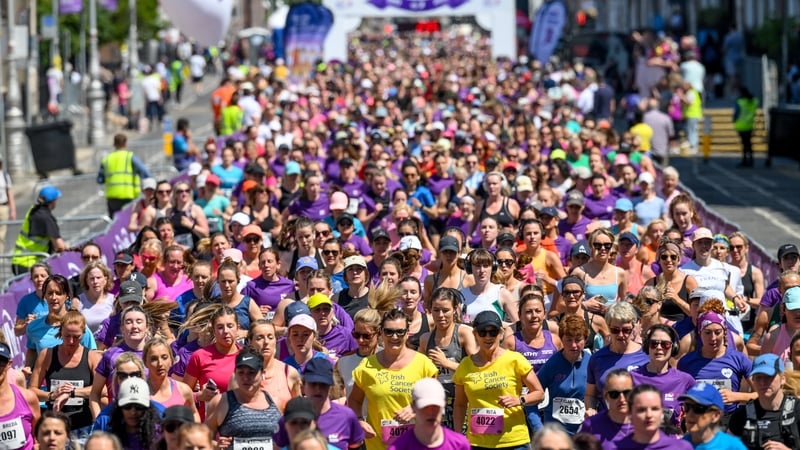


Analysis: The annual race on Dublin's streets provides a safe, fun environment for women to run or walk 10km in the company of other women
On Sunday, over 30,000 women will take to the streets of Dublin to run or walk 10km in the VHI Women's Mini Marathon. When the event began in 1983, mass participation running events were much less popular than they are today. For example, around 60,000 runners applied to run the London marathon that year, but the huge growth in demand for races over the decades means a record 1.3 million people have entered the ballot for the 2027 event, meaning that almost 2% of all adults living in the UK applied.
But the increased popularity of running has not had an equal impact across genders. Although demographic data from wearables and tracking apps suggests an even split between men and women's participation in recreational running, gender inequality in the sport persists and women remained underrepresented in many running events. This inequality and the barriers to sport and exercise women still face make safe, inclusive events like the VHI Women’s Mini Marathon vital to promote equality.
Recent data from the 2025 Irish Sports Monitor shows persistent gender gaps across many sports. While there are similar numbers of both high activity and sedentary men and women, formal participation in sports reveals significant gender differences. The proportion of men who participate in running is 33% higher than for women and for club membership overall across all sports 24% more men than women are members. While formal participation is not necessary to achieve the physical health benefits from running, many of the mental health benefits come from the social connections made through group or club activities.
We need your consent to load this rte-player contentWe use rte-player to manage extra content that can set cookies on your device and collect data about your activity. Please review their details and accept them to load the content.Manage Preferences
From RTÉ News in 2022, the Women's Mini Marathon marks 40 years on the streets of Dublin
Importantly, signing up for a race or joining a club can serve as both a powerful commitment device that allows women to prioritise their own health over competing demands on their time, and as a social outlet that further promotes wellbeing. This is necessary, as women in Ireland spend substantially more time than men on caring activities and household chores. Globally, research commissioned by Asics found that over half of women are not doing as much exercise as they would like to and 3 out of 4 reported time pressures were a barrier to exercise.
There are also gender gaps in how people perceive their physical activities. While just over one in eight women consider their physical activity to be sport (as opposed to exercise or recreation), twice as many men (one in four) report that their physical activity is sport. Furthermore, men are more than twice as likely as women to say that their participation is competitive.
When it comes to running, women are much less likely to take part in races, and are also much less likely to report being competitive or doing well in races as a motivational factor for taking part. There are also gender differences in perceived ability and confidence among runners themselves.
We need your consent to load this rte-player contentWe use rte-player to manage extra content that can set cookies on your device and collect data about your activity. Please review their details and accept them to load the content.Manage Preferences
From RTÉ Archives, Ann Cassin reports for RTÉ News on the 25,000 women running in the 14th Dublin Women's Mini Marathon in 1996
A recent study of over 2,000 runners in Britain asked them to compare themselves to other runners of the same gender and age. The results found that while 70% of men reported that they were above average ability, only 40% of women thought they were a better than average runner.
Among club runners (more likely to be above average than non-club runners) only 33% of women perceived themselves to be better than average. While the data suggests male runners tend to be overconfident, women are clearly under-confident, and it seems that more experienced or higher ability runners under estimate their ability even more.
These differences in time pressures, competitiveness, and confidence feed into gender differences in mass participation events in Ireland and internationally. Over the past decade there has been a persistent gender gap in finishers of the Dublin marathon, with more than twice as many male finishers last year compared to female.
We need your consent to load this rte-player contentWe use rte-player to manage extra content that can set cookies on your device and collect data about your activity. Please review their details and accept them to load the content.Manage Preferences
From RTÉ Radio 1, running coach Mary Jennings and Total Physio's Jenny Branigan on preparing for the Women's Mini Marathon
While the Dublin marathon organisers admirably changed the entry system for the 2026 edition to ensure better gender equity this year, the marathon is probably not the first race a female runner will consider entering. Women need to be encouraged to participate in shorter races to build their confidence and ability before taking on challenges like the marathon.
There is strong evidence to suggest that women-only spaces can facilitate women’s participation in sport. A review of research evidence on the effectiveness of women-only gyms found that they can provide a safer and more supportive environment, potentially removing barriers to participation. In a recent survey of 400 women who entered a women only race, more than half reported that they did so because they felt more safe and secure.
More generally, safety concerns for women running are highlighted by Garmin data from last year which shows men ran outdoors 21% more than women, while women ran on treadmills indoors 16% more than men. In addition to feeling safer, women reported a more enjoyable atmosphere in all-women races, and that they felt less competitive pressure in women-only events. The social connections and role model effects of these environments are also important. Research has found that women are most motivated to exercise by friends similar to themselves.
We need your consent to load this rte-player contentWe use rte-player to manage extra content that can set cookies on your device and collect data about your activity. Please review their details and accept them to load the content.Manage Preferences
From RTÉ Radio 1's Morning Ireland in 2025, interview with Ava Crean, the youngest ever winner of the Dublin Marathon women's national title winner, and her coach John Kinsella
For more than 40 years the annual VHI Women’s Mini Marathon has provided a safe, fun environment for women to run or walk 10km in the company of other women. This year’s theme is 'Best time ever’, not focusing on the numbers on the clock, but on the experience itself and the unforgettable moments.
My own athletics club Dundrum South Dublin (DSD) organise the event, so I will be there on Sunday along with hundreds of other volunteers from the club to cheer on participants and help ensure everything runs smoothly. For those participating in their first race, I’m willing to bet that the positive experience on Sunday will make it the first of many. If you happen to catch the running bug, remember our club is open to new members - especially women.
The author is a non-Executive Director of DSD Events who run the Women's Mini Marathon
Follow RTÉ Brainstorm on WhatsApp and Instagram for more stories and updates
The views expressed here are those of the author and do not represent or reflect the views of RTÉ