




Analysis: We are managing critical infrastructure by waiting for things to go wrong with bridges, water mains, school buildings and hospital roofs
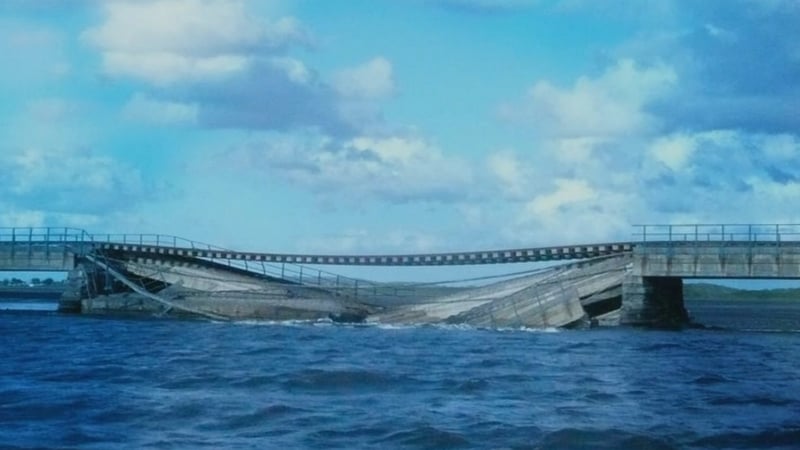
On a summer evening in August 2009, a passenger train crossed the Malahide Viaduct on the Dublin–Belfast line. Minutes later, a section of the 165-year-old structure collapsed into the estuary below. The cause was scour, the silent erosion of the bridge's foundations, a risk that had been documented since the 1840s but was lost from institutional memory when a key engineer left the organisation in 2002.
Across the Irish Sea, schools built with a lightweight concrete called RAAC, a material with a 30-year lifespan used throughout the 1960s to 1980s, began crumbling without warning. More than 214 schools and 47 hospitals in England alone are now affected. Ceilings in some hospitals are being held up by temporary jack posts. The material had been flagged as a concern in 1996. Systematic checks didn’t begin until 2022.
These are not isolated failures, but are symptoms of a shared, systemic problem across Ireland and the UK. We are managing critical infrastructure by waiting for things to go wrong. And when things go wrong with bridges, water mains, or hospital roofs, the consequences fall on the public.
From RTÉ Archives, a section of the rail line at the Broadmeadow Estuary near Malahide sank into the water in 2009
The scale of what’s ageing
The numbers are striking. In Ireland, the water network spans 65,000 kilometers of pipes with an average age of 75 to 95 years, more than double the EU average. Engineers Ireland grades our infrastructure at "C": mediocre. More than 110 rail bridges are classified as seriously deficient.
In the UK, the National Audit Office estimates a £49 billion maintenance backlog across public buildings. Around 3,090 road bridges are substandard. A flyover in Gateshead was suddenly closed in December 2024 after it emerged that a critical safety test had not been carried out for 28 years. The Institution of Civil Engineers’ 2025 State of the Nation report put it plainly: parts of the UK’s bridge network are "perhaps not as safe as the public thinks."
Why inspections alone aren’t enough
The standard approach on both islands is periodic visual inspection. Engineers visit a structure every few years, assess its visible condition and record a rating. But this approach has fundamental limitations.
We need your consent to load this rte-player contentWe use rte-player to manage extra content that can set cookies on your device and collect data about your activity. Please review their details and accept them to load the content.Manage Preferences
From RTÉ Radio 1's, Saturday with Cormac Ó hEadhra, what impact will the Critical Infrastructure Bill have on climate action progress?
Much infrastructure deterioration is invisible. Corrosion eats away at steel reinforcement inside concrete for decades before any surface cracking appears. Scour erodes bridge foundations below the waterline, beyond the reach of visual checks. A landmark American study found that bridge condition ratings varied so widely between inspectors that the same structure could be rated "acceptable" by one and "poor" by another.
Climate change is compounding the problem. The Royal Academy of Engineering reports that wetter winters, hotter summers and more frequent storms are placing new stresses on infrastructure which it was "never designed to withstand." Network Rail has recorded a 50% increase in weather-related asset impacts over the past five years.
Since 2000, 66 fatal bridge collapses worldwide have claimed more than 1,200 lives, many involving structures that had been inspected but where those inspections failed to catch what was happening inside.
We need your consent to load this rte-player contentWe use rte-player to manage extra content that can set cookies on your device and collect data about your activity. Please review their details and accept them to load the content.Manage Preferences
From RTÉ Radio 1's Morning Ireland, a new report finds that climate change is exposing vulnerabilities in critical infrastructure
From snapshots to continuous monitoring
The alternative is not to abandon inspection but to supplement it with something far more powerful: continuous, data-driven monitoring. Structural health monitoring uses sensors embedded in or attached to infrastructure to track stress, vibration, corrosion, and displacement in real time. Rather than relying on what an engineer can see on a single visit, it captures what is actually happening inside a structure, catching deterioration at onset rather than after the fact.
This is not theoretical. At Queen’s University Belfast, sensor-based monitoring of Northern Ireland’s bridges has saved more than £50 million by proving that some structures had far more life remaining than conservative assessments assumed. In one case, a bridge’s estimated fatigue life was revised from five years to more than 52.
In Ireland, a TU Dublin’s spin-out flagship technology, SM:ART, is now partnering with Northern Ireland's Department for Infrastructure to trial AI-driven corrosion sensors on bridges, technology that can, as the department’s principal engineer put it, "see hidden damage where traditional methods fall short."
We need your consent to load this rte-player contentWe use rte-player to manage extra content that can set cookies on your device and collect data about your activity. Please review their details and accept them to load the content.Manage Preferences
From RTÉ Radio 1's News at One, Feargal O'Rourke from the Accelerating Infrastructure Taskforce on the thinking and work behind the new Government plan
The cost of doing nothing
The economic case for prevention is overwhelming. The Royal Academy of Engineering found that every £1 spent on preventive maintenance saves between £5 and £10 in future costs. The NAO has shown that deferring maintenance by even two to four years increases costs by more than 50%. Yet the Irish and UK approach to infrastructure is dominated by reactive, emergency-driven spending.
Ireland has committed €275 billion in its latest National Development Plan, while the UK has pledged £725 billion over the next decade. Both governments are spending at historic levels, but spending more on infrastructure that isn’t being monitored is pouring new resources into an old problem.
What needs to change
The shift required is not primarily technological, the sensors, the data platforms, and the AI already exist. It is a shift in thinking: from managing infrastructure as though it will tell us when it’s failing, to accepting that deterioration is hidden, progressive, and predictable, if we choose to look.
Ireland and the UK have the engineering talent and the research base to lead this shift. What they need now is the institutional will to move from reaction to prevention, before the next Malahide, or worse, forces the change for them.
Follow RTÉ Brainstorm on WhatsApp and Instagram for more stories and updates
The views expressed here are those of the author and do not represent or reflect the views of RTÉ
