


Analysis: Swatch's in-demand watch collabs are part of the "enrichment economy", where something in short supply can be resold at a profit
By Roman Pavlyuchenko, University of Bath and Delphine Dion, ESSEC
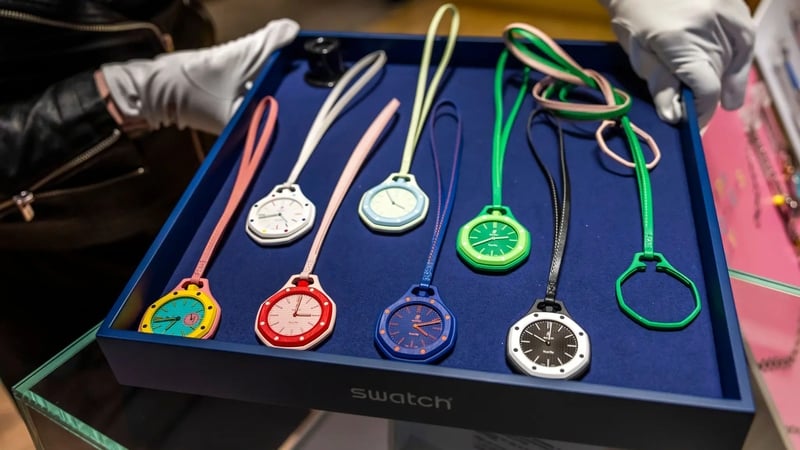
So now we know exactly what you get when you cross two distinct brands of Swiss watch-making, one affordable (Swatch) and one luxury (Audemars Piguet). You get a new model of watch that attracts massive hype, huge queues and brawling customers. For €385, you might also get your hands on a colourful pocket watch. But first you'd have to brave the crowds.
The watches, manufactured as a collaboration (or "collab") between the two companies, are available in selected Swatch stores, with purchases limited to one item per person, per day, per store. Before the "Royal Pop" watch collection went on sale on May 16th, excitement was already high. On release day, police and security teams were deployed in some places, with a tear gas incident in Paris and fighting in Milan. In the UK and the US, Swatch responded to the intense demand by closing its stores.
A popular product then, and a very effective marketing campaign to go with it. For Swatch, it is the third collaboration with a luxury watch brand in recent years. The first two (with Omega in 2022 and Blancpain in 2023) were also successful.
We need your consent to load this rte-player contentWe use rte-player to manage extra content that can set cookies on your device and collect data about your activity. Please review their details and accept them to load the content.Manage Preferences
From RTÉ Radio 1's Today with David McCullagh, RTÉ Business reporter Adam Maguire on the Swatch sale scuffles and what happens when new products create chaos
One reason for their success if that these partnerships allow consumers to own a little bit of elite watchmaking for a fraction of the cost (a "normal" Audemars Piguet could cost tens of thousands of pounds). Like a Louis Vuitton passport cover or a baseball cap made by Ferrari, it's a token experience of an elite brand for those who can’t regularly afford them.
From a business communications perspective, it’s a way of introducing large groups of people to luxury brands. It’s similar to how luxury car brands like Aston Martin and Lamborghini license their cars for use in video games such as Forza Horizon or Gran Turismo. Meanwhile, Swatch gets free press and a positive spin for its entire product portfolio.
Watch what you wish for
From a consumer perspective though, the picture is more complex. The recent frenzy over Swatch’s watches should not be dismissed as merely herd mentality, and nor can it be explained by a sudden surge in demand for mechanical timepieces. Instead, our research suggests that the response is a clear manifestation of something we call the "enrichment economy" – the fact that if something is in short supply and in high demand, it can be resold at a decent profit.
The enrichment economy has long been a feature of the world of art and antiques, but has also become a familiar part of mass market goods. Swatch has simply followed the example of certain trainers, Pokémon cards, dolls, and Lego sets. For instance, the Lego Cloud City set (originally released in 2003 in limited quantities for about €100) now resells at close to €7,300.
From the Liverpool Echo, chaos as watch stores in Liverpool and Manchester are forced to close
Driven by the chance to make a quick but substantial buck, consumers go out of their way to buy certain products and then resell them for much more than they originally cost. In the case of Swatch and Audemars Piguet, the evidence for that motivation is clear. The watches sell from the stores at €385 and are being almost immediately offered online for ten times that amount – or even more.
As with other economies, the enrichment economy is prone to periods of boom and bust. For instance, the market for second hand luxury watches, which experienced unprecedented demand a few years ago, has now hit a plateau, forcing resellers to discover new markets with greater investment potential.
While Swatch is at the centre of the enrichment economy in mid-May 2026, it could easily and quickly be overtaken by another brand or object very soon. As the cost of living crisis continues, it seems highly likely that the enrichment economy will only expand as people look for ways to supplement their incomes with various side-hustles.
We need your consent to load this rte-player contentWe use rte-player to manage extra content that can set cookies on your device and collect data about your activity. Please review their details and accept them to load the content.Manage Preferences
From RTÉ Podcasts' Brainstorm, the growing world of nixers, passion projects and side hustles
In the meantime, our research also suggests that big brands can do their bit to prevent customers getting so excited that they end up fighting with each other over popular products at shop fronts. They could, for example, allocate sales using an online lottery system. Or they could prioritise trusted and loyal customers and increase the availability of their merchandise.
From a business and PR perspective, though, Swatch may already have won. By turning the collaboration into a talking point – and making scarcity, controversy and curiosity all work in its favour – the brand is having the time of its life.
Follow RTÉ Brainstorm on WhatsApp and Instagram for more stories and updates
Roman Pavlyuchenko is an assistant professor of Marketing at the University of Bath. Delphine Dion is a Full Professor at ESSEC. This article was originally published by The Conversation.
The views expressed here are those of the author and do not represent or reflect the views of RTÉ
