

Analysis: It makes perfect sense to use the term soccer in Australia, Ireland and North America given the popularity of other codes
With this year’s World Cup in North America, and the next Olympics in Los Angeles, brace yourself for the tedium of confidently incorrect people insisting that you should not use the term "soccer". You may call the game whatever you want - beautiful, boring, even corrupt - but rest assured that soccer is perfectly acceptable.
Usually, objections to the term rely on the faulty argument that players can use their hands in the other codes of football. Crucially, the term "football" originates from medieval European games played on foot, in contrast to aristocratic games played on horseback. It does not refer to games placed with the foot. After all, in soccer goalkeepers may use their hands and the game retains throw-ins.
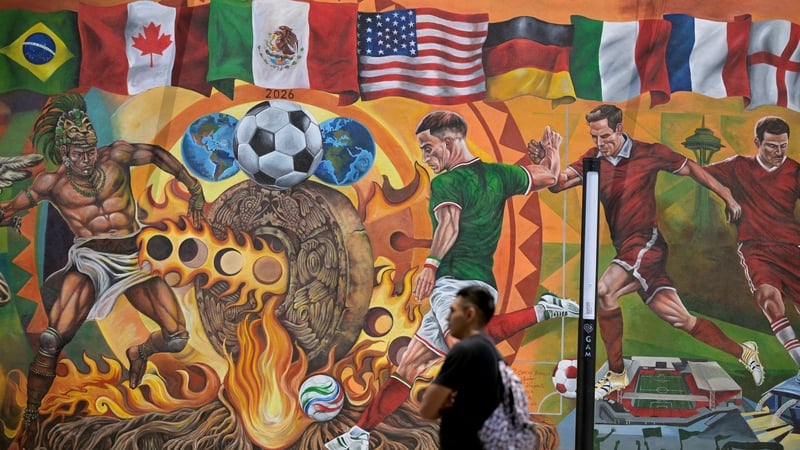
Many mistakenly think that the term is a product of American isolationist belligerence, akin to the maintenance of Fahrenheit and general resistance to the metric system, but the story is more complicated than that.
With mixed roots as a leisured pursuit of the British elite and the popular "rough Anglo-Celtic mêlées of the eighteenth century", Association Football, once codified in 1863 and subsequently professionalised by the 1890s, quickly became a staple of working-class culture in Britain. However, football was not codified singularly or in isolation. In the late 19th century, football quite quickly divided into Association and Rugby codes (League and Union) in England.
This division can be traced to class differences and disagreements about rules and professionalism. Once exported, codified football developed other forms, such as Australian, American, Canadian and Irish (later renamed Gaelic). That this was the case in predominantly white Anglophone countries is not co-incidental.
From DW Kick Off, what's behind the war between those who call it soccer and those who stick with football?
These variations derive, in no small part, from efforts to resist British cultural dominance and to assert distinct national identities. Elsewhere, early victories for New Zealand's All-Blacks and South Africa's Springboks over home nations have been attributed to their attachment to rugby union. Notably all of these codes retain the term football. Many myths cloud the first years of these codes, whether it's the GAA's founding at Hayes' Hotel in Thurles in 1884, figures such as William Webb Ellis and Walter Camp or the 1874 Harvard vs. McGill game.
The origin of the name soccer is no different. Variously attributed to slang developed at either Harrow, Oxford, Cambridge or Rugby School the term first appeared as early as 1885 and has been repeatedly yet erroneously credited to English sportsman Charles Wreford Brown. What is clear however is that the term originated in Britain in the 1880s as an abbreviation of the word ‘Association’. By adding "er" to the soc in association, the term was used to distinguish the game from "rugger." The awkward shortening of the cumbersome name association football is certainly useful. Paul Rouse, for example, explicitly uses the term for clarity throughout Sport and Ireland: A History.
Given the popularity of other codes, it makes perfect sense to use the term soccer in Australia, Ireland and North American contexts. While the term was initially developed as elite slang, it was in common usage in the UK by the 1930s. For example, major players and managers such as Tommy Lawton, Matt Busby, Bobby Charlton and Stanley Matthews, all used it in their autobiographies and commercial activities.
We need your consent to load this rte-player contentWe use rte-player to manage extra content that can set cookies on your device and collect data about your activity. Please review their details and accept them to load the content.Manage Preferences
From RTÉ Radio 1's Drivetime, soccer analyst Alan Cawley on the news that the World Cup final is to get a half-time show a la the Superbowl
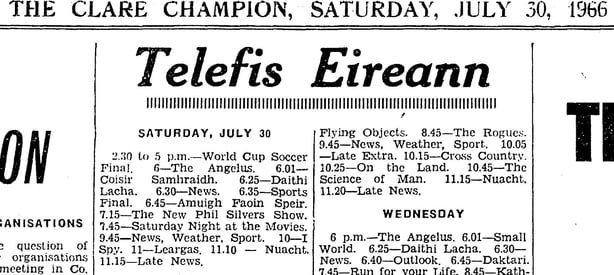
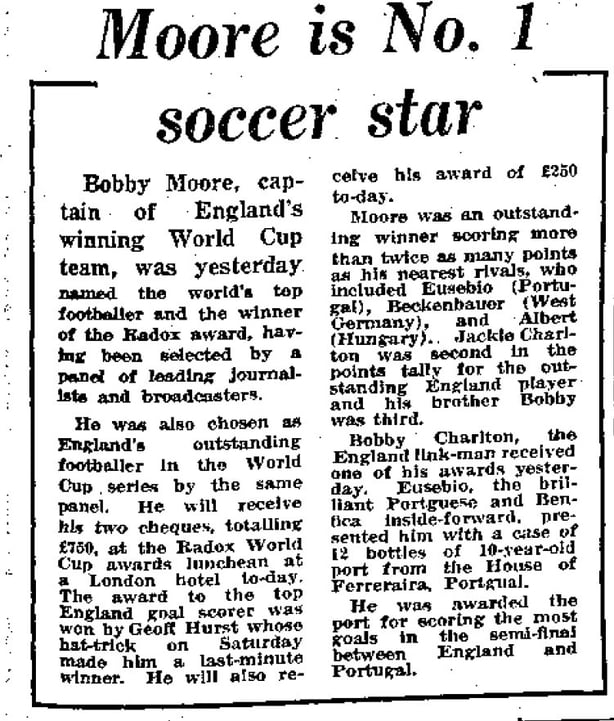
Though the BBC broadcast of the 1966 World Cup final preferred the term 'football', British and Irish print culture regardless of political persuasion freely used "soccer". The pointed rejection of "soccer" in Britain - and by extension Ireland - only emerged in the late 1970s.
The primary reason for this was a distaste with the growing American usage of the term. From 1968 to 1984, the North American Soccer League was America’s first national professional association football league. At its peak the league boasted some of the game's best players, such as Pelé, Franz Beckenbauer, Carlos Alberto, Giorgio Chinaglia, Johan Cruyff, Gerd Müller, Bobby Moore, Eusébio, George Best and Johnny Giles.
The NASL is key to "soccer" increasingly representing American "razzmatazz". To British sensibilities the league was offensive for its innovations such as abolishing draws, using ice-hockey style penalty shootouts, allowing offside from the 35-yard line, a unique bonus points system, and a countdown clock. Beyond the rulebook, gimmicks such as cheerleaders, some truly remarkable jerseys, merchandise and fireworks further diminished the status of "soccer".
We need your consent to load this rte-player contentWe use rte-player to manage extra content that can set cookies on your device and collect data about your activity. Please review their details and accept them to load the content.Manage Preferences
From RTÉ Radio 1's Morning Ireland, how do you get your hands on World Cup tickets?
Furthermore, America passed the landmark federal civil rights law known as Title IX in 1972, prohibiting sex-based discrimination in education programs that receive federal funding. As education administrators found soccer to be a cheap way to comply, "soccer" became increasingly seen as a women’s activity in America and the US became a dominant force in the women's game. In time, the term came to evoke the figure of the "soccer mom" and a more female-friendly domain.
As a term it retains a certain currency in the UK, as seen in the title of the Sky Sports television shows, "Soccer AM," "Soccer Saturday" and the annual Soccer Aid charity matches. But when the term and American sports vocabulary is used, it is seen as shallow and continues to generate "outpourings of distress and horror". This can be seen in real life as in the case of Bob Bradley, or on in fiction like Ted Lasso.
At last summer’s Club World Cup Final, US president Donald Trump, despite the popularity of the Gridiron code, even teased an executive order to rename soccer as football. At its worst, the contempt for the term is visible in the banter like, "if rugby was easy, they’d call it football," as if there was no F in IRFU.
Famously, in 2012, the Welsh Rugby Union referee Nigel Owens dismissed the player Tobias Botes’ complaints with the expression "this is not soccer". This toxic contrast of the apparent theatrics of foreign soccer with the stoical strength of (rugby) football was even repeated in Owens' autobiography subtitle.
The pretension that scorns soccer reveals a macho-isolationist cultural superiority that is a disservice to the world’s most popular sport. Despite this history of dismissal, the value of the term remains its clarity. Just as the derogatory term "eggchaser" has been reworked by the rugby community, fans may embrace that great British invention: the name soccer.
Follow RTÉ Brainstorm on WhatsApp and Instagram for more stories and updates
The views expressed here are those of the author and do not represent or reflect the views of RTÉ