


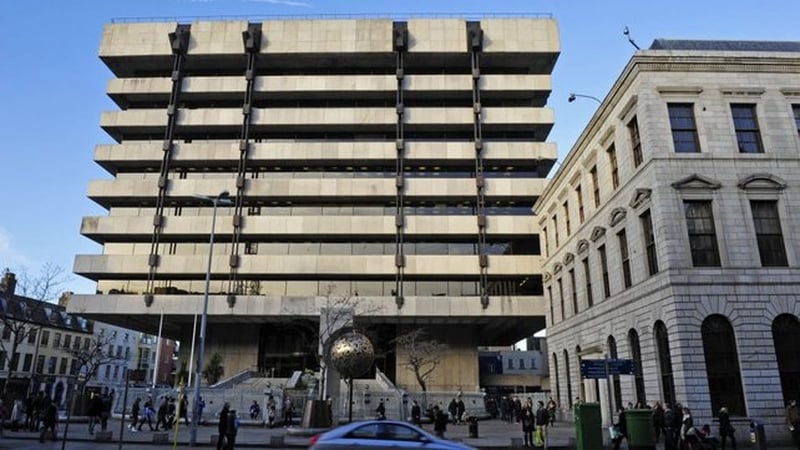


Analysis: Brutalist buildings were intentionally reduced to raw, unornamented forms, honest and true to their materials, often with sculptural openings and projections
What connects the Phibsboro Shopping Centre in Dublin and a bottle of Dom Pérignon Vintage Brut Champagne? One is a concrete-made shopping and office complex from 1969; the other is a luxury sparkling wine. The connection is in the name: 'Brut'. In champagne terms that means dry and unsweetened but in architectural terms it suggests something similar: materials that are raw, as found, unrefined. In other words: brutalist. Ireland has a range of beautiful brutalist buildings and this article asks whether we should adopt a new Irish word for them.
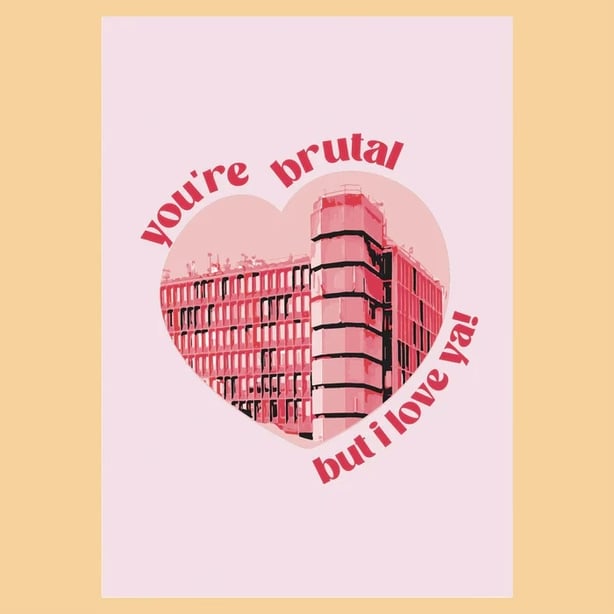
In 2025 designer Neil Dunne of Collective Productions created a witty Valentine’s Day card, depicting the Phibsboro Shopping Centre with the caption ‘You're brutal but I love ya’. This is obviously a riff on the building’s stylistic origins. But when we call a building brutal, is it an insult, or a classification?
As an adjective ‘brutal’ originally equated to non-human, beast-like; derived from the Latin brutus meaning heavy, dull or irrational. Interestingly, from searching the Irish Times’ newspaper archives, the term’s everyday usage was minimal pre-1950 and increased in popularity from the 1970s through to today. To further muddy the waters, in Irish slang ‘brutal’ specifically means terrible, awful and dysfunctional, often denoting a poor state of affairs, or a sub-par performance. It is therefore an adjective easily attached to a weather‑worn, poorly‑maintained concrete building.
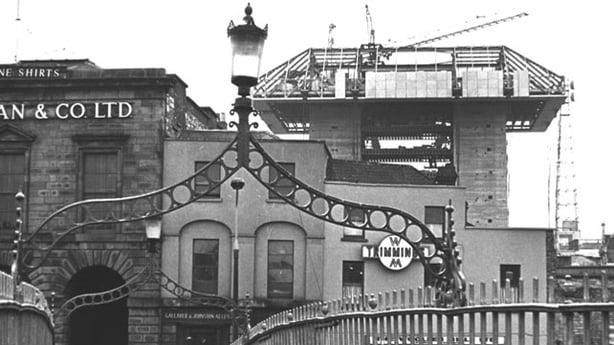
The term ‘Brutalism’ was used in the 1950s by critic Reyner Banham to describe the work of Alison and Peter Smithson. Buildings were intentionally reduced to raw, unornamented forms, honest and true to their materials, often with sculptural openings and projections. The word was simply derived from Béton Brut, the French term for raw concrete. Champions of brutalism aligned it with a range of modern art movements, including abstract expressionism and art autre.
Public perception tends to associate Brutalist buildings with bluntness, heaviness and austerity. As buildings, brutalist structures were not specifically intended this way. In the 1950s–70s concrete as a material facilitated daring, expressive and experimental structures, large spans, cantilevers and plastic shapes. Welfare state housing could be delivered at scale, cities rebuilt after the ravages of war, delivered relatively cheaply and in quick time. With hopeful and ambitious intent, Brutalism as a stye versus a philosophy were often incongruent realities, this provides the distinction academics make between the brutalist ‘aesthetic’ and the ‘ethic’.
As an aesthetic, these buildings have the capability of being minimalist and maximalist at once. At the macro scale, some of the large, less sculpturally-daring buildings can indeed seem monotonous; at the micro scale however, the concrete skin becomes a coral reef of textures, aggregates of stone fragments and sand granules. I would urge readers to get up close to your local brutalist building, to rub its skin.
To most people, concrete is merely the ubiquitous bland, grey, malleable slop of infrastructure and manufacturing. If you cherish exposed concrete outside the confines of roads and factories, you are thought to fetishise some sort of industrialist kink. Austin Clarke memorably described Dublin’s Liberty Hall from 1964, a highly commended building in architectural circles, as 'glorified cement'. I like to remind critics that the dome of the majestic Pantheon in Rome is built in concrete. The material can create lofty spaces of inspiration.
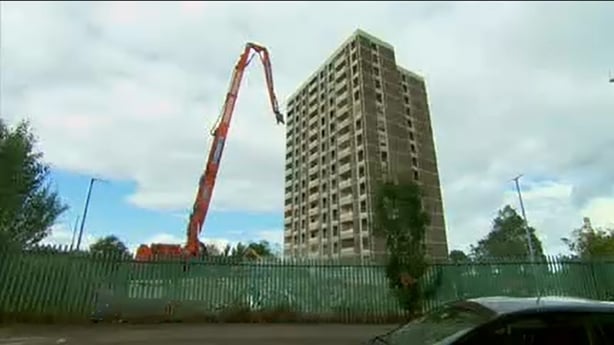
In Ireland many buildings, irrespective of intent, have been labelled brutalist: Bantry Library in Cork, the Eavan Boland Library and Arts Block in Trinity College, the Ballymun towers, the UCD campus in Richview, The North Strand Vocational School, Agriculture House, the former Central Bank, and the Ulster Museum in Belfast. These buildings are distinctive and varied, each combining local trades, materials, and craft.
They were formed under economic constraint and shaped by the importation of expertise and methods, primarily from Britain and America. In Trinity’s Boland Library, the concrete bears an imprint of the Douglas Fir’s timber shuttering like a painter’s thumbprint. Brutalism drew on inherited knowledge passed down through generations of stonemasons and carpenters.
Despite this richness, in our native tongue we have no appropriate way of categorising these buildings. Google Translate proposes the Irish language translation of brúidiúlacht, translating as ‘brutality’. Is this blunt translation befitting a language so agile in naming weather, land and materials? Think of the incredible versatile words for stones alone, for example those documented by the late Manchán Magan: gallán a pillar stone supposed to be thrown by giants, ailce an immovable stone, bláth-liag a smooth stone, foirneach a rolling stone, méaróg a finger stone – to name but a few.
A temptation exists to adopt a more appropriate word or words for Irish Brutalism – one that reclaims its originally-intended meaning. As an admirer of the Irish language (but not a native speaker or scholar), here are some of my initial candidates for Irish brutalism:
gairbheach: unfinished, rough, coarse– e.g. Bean gharbh tí: rough, untidy housewife.
corrach: rough, unsteady or quarrelsome– e.g. cosán corrach: unsteady path.
neamhshlactmhar: an unfinished, unorderly, untidy building – e.g. duine slachtmhar: orderly person.
Is a brutalist building a brute? In some cases, it can be. However, any experimental and avant-garde style that evokes such a strong emotional reaction has a cultural value. Furthermore, we should remember the ethics of brutalism were not dominant, cruel, or uncaring.
Corrach seems a fitting appropriate term, meaning both rough and quarrelsome – alluding to the lively debate these cantankerous buildings continue to inspire. Foirgnimh chorracha are not always ‘brutal,’ they’re unrefined, rich, and can be a luxury: like a Dom Pérignon.
Thanks to Siún Ní Dhuinn for assistance with the Irish language terms in this article.
Follow RTÉ Brainstorm on WhatsApp and Instagram for more stories and updates
The views expressed here are those of the author and do not represent or reflect the views of RTÉ
