



Analysis: With growing public pressure to demonstrate greater sustainability leadership, many are turning to independent certifications to verify their efforts
By Gerard McDonnell, Jean McCarthy, and Sarah MacCurtain, University of Limerick
Sustainable business is at the forefront of the economic agenda worldwide. One interesting development in sustainable business ownership and governance is the emergence of the Benefit Corporation.
A Benefit Corporation, more commonly known as a "B Corp", is a company (a for-profit legal entity) which explicitly works to balance profit maximisation with positive social and environmental impacts. B Corps are independently certified by the non-profit B Lab. This certification legally requires organisations to adhere to higher than typical standards of purpose and transparency, and to measure, evaluate, and enhance their impact on employees, stakeholders in the community, and the environment.
As organisations are increasingly required to report on their non-financial impacts for stakeholders, and as public pressure mounts on businesses to demonstrate greater sustainability leadership, many companies are turning to third-party, independent certifications to verify their efforts. B Lab state that, "unlike other certifications for businesses, B Lab is unique in our ability to measure a company's entire social and environmental impact". B Corp is now arguably the most globally recognised certification in sustainable business.
We need your consent to load this rte-player contentWe use rte-player to manage extra content that can set cookies on your device and collect data about your activity. Please review their details and accept them to load the content.Manage Preferences
From RTÉ Radio 1's The Business, Dharshini David explains why we should view the environmental crisis economically
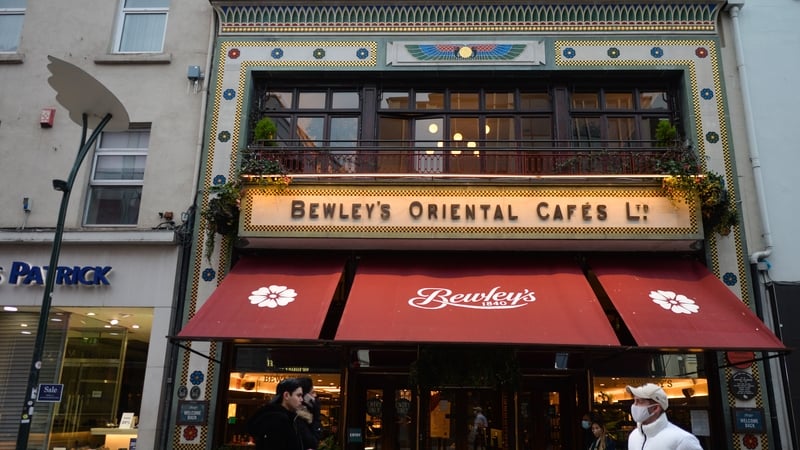
Since the "B Corp" label was established in 2006 by B Lab in the Unites States, there are now more than 10,000 certified B Corps across 215 countries and approximately 160 endorsed sectors, with Ireland home to one of the fastest growing B Corp communities. There are over 95 B Corps in Ireland, including familiar names such as Bewley’s, The Armada Hotel, Sculpted by Aimee, Earth’s Edge, Brow Aid, Chupi, and Cully and Sully. The full list of Irish B Corps can be found here,
To achieve B Corp status, these companies have had to answer over 150 questions, and include supporting evidence, on B Lab's B Impact Assessment, measuring impact on five areas:
1) Governance (e.g., Separate from a mission statement, what has your company done to legally ensure that its social or environmental performance is a part of its decision-making over time, regardless of company ownership?
2) Workers (e.g., What percentage above the legal minimum wage does your lowest-paid hourly employee earn?)
3) Community (e.g., What multiple is the highest compensated individual paid, inclusive of bonus, as compared to the lowest paid full-time worker?),
4) Environment (e.g., What % of energy (relative to company revenues) was saved in the last year for your corporate facilities?)
5) Customers (e.g., Is the social or economic problem addressed by your product/service one that is faced directly by your customers and/or your clients’ beneficiaries?)
We need your consent to load this rte-player contentWe use rte-player to manage extra content that can set cookies on your device and collect data about your activity. Please review their details and accept them to load the content.Manage Preferences
From RTÉ Radio 1's Countrywide, the work of Carraroe Community Garden
B Corps must achieve a score of 80/200 on this assessment and make their results publicly available. It doesn’t stop there, once certification is achieved, the company has three years to make improvements across the five areas of assessment to retain certification.
Research shows that B Corps are "typically more innovative" as they continually prioritise improvements in economic, social, and environmental impacts which can make them more resilient in the face of crisis and change. B Corps attract trust from both investors and employees seeking meaningful work. There is also some evidence to suggest that B Corps do better financially than non-B Corp’s. B Lab UK reported a 23% growth for B Corps versus 17% growth for non-B Corps between 2023 and 2024, and they further report 22% growth from certification to recertification of B Corps.
That said, B Corps have been criticised as "only a nod towards a sustainable corporate design" and there have been accusations of "greenwashing". For example, when Nespresso received its certification in 2022, several B Corp certified coffee companies protested with an open letter to B Lab seeking stricter certification standards, accusing Nespresso of an "abysmal track record on human rights". BrewDog lost its certification after reports of "bullying" emerged.
We need your consent to load this rte-player contentWe use rte-player to manage extra content that can set cookies on your device and collect data about your activity. Please review their details and accept them to load the content.Manage Preferences
From RTÉ Radio 1's News at One, consumers struggle to identify 'greenwashing' in ads
Concerns were also raised that many companies have used the B Lab process to gain initial certification only to lapse thereafter in terms of follow through or improvement. B Lab have responded with "a more rigorous, transparent, and globally aligned framework that strengthens how businesses demonstrate their impact and lead the way toward an inclusive, equitable, and regenerative economy" by launching an updated set of standards requiring accredited third party verification of measures.
Indeed, recent research indicated that companies seek the B Corp certification to avoid greenwashing while validating existing sustainable practices.
While the B Corp certification is not a panacea to the pressing environmental, social, and economic challenges driven by industrial activity and consumption, the B Corp does present the first structural, legal, and moral alternative to the primacy of shareholder value. And that is significant.
Follow RTÉ Brainstorm on WhatsApp and Instagram for more stories and updates
Gerard McDonnell is a PhD candidate at the Kemmy Business School at the University of Limerick, Chairman of Orthoxel and a Non-Executive Director of the Corin Group. Dr Jean McCarthy is an Associate Professor in Organisational Behaviour at the Kemmy Business School, University of Limerick. Prof Sarah MacCurtain is a Professor in Organisational Behaviour at the Kemmy Business School, University of Limerick
The views expressed here are those of the author and do not represent or reflect the views of RTÉ
