

Analysis: The 1939 strike exposed a deep sense of frustration amongst many farmers who felt ignored, a sentiment that has never entirely disappeared
The tensions had been building for some time, but a global conflict that drove up production costs ultimately triggered a crisis. Irish farmers organised protests to pressure the Government into granting economic relief, though the disruption also imposed significant hardship on ordinary citizens. This was the situation in November 1939, when the Irish government and protesting farmers became locked in a bitter dispute marked by widespread intimidation and forceful rhetoric on both sides.
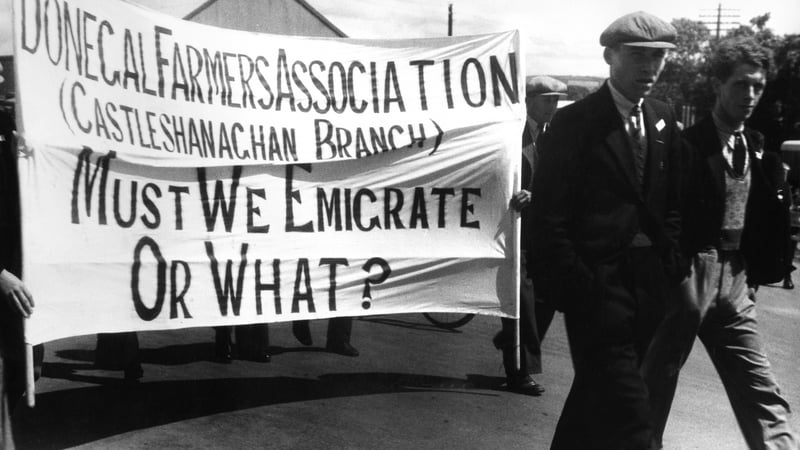
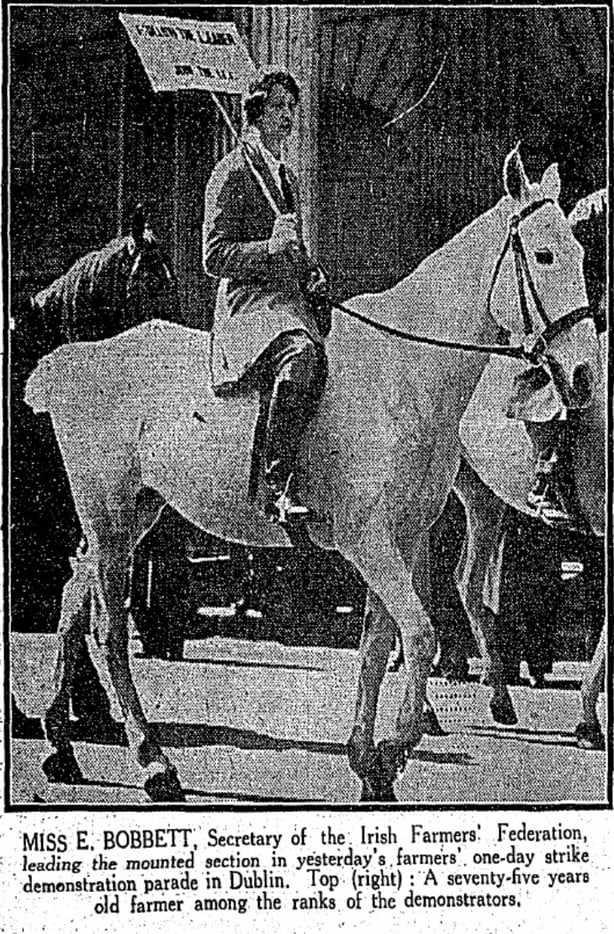
Irish farmers had a difficult 1930s. The Great Depression had a calamitous effect on agriculture worldwide, but the situation in Ireland was exacerbated by a protracted political and trade dispute with Britain known as the Economic War. The end of this dispute in 1938 brought some improvement in their economic position, but not nearly as much as many farmers had hoped. Consequently, rural disquiet grew, prompting 3,000 farmers, under the auspices of the recently formed Irish Farmers’ Federation (IFF), to stage a protest in Dublin in April 1939.
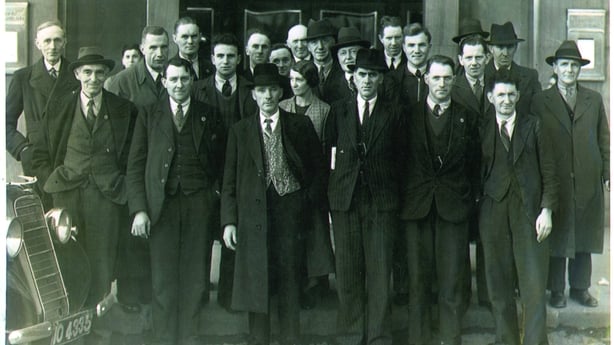
The Fianna Fáil Government paid little heed to the IFF, dismissing the organisation as a collection of big farmers who were unrepresentative of the farming community at large. As Minister for Agriculture, James Ryan, already had a fractious relationship with the IFF, he was quick to criticise those 'farmers who leave the plough idle in the field on a fine Spring day to do a propaganda march through Dublin'.
Relations between the IFF and the government remained acrimonious in the months that followed, but the outbreak of the Second World War in September 1939 further strained them. With the war disrupting the supply of vital imports, Ryan ordered all farmers to cultivate crops on a portion of their land to ensure more food was produced at home. Many farmers accepted this compulsory tillage order as necessary, but others saw it as yet another government infringement on Irish agriculture. In the view of one IFF member, it was as if the farmers were now to be ‘treated as slaves’.
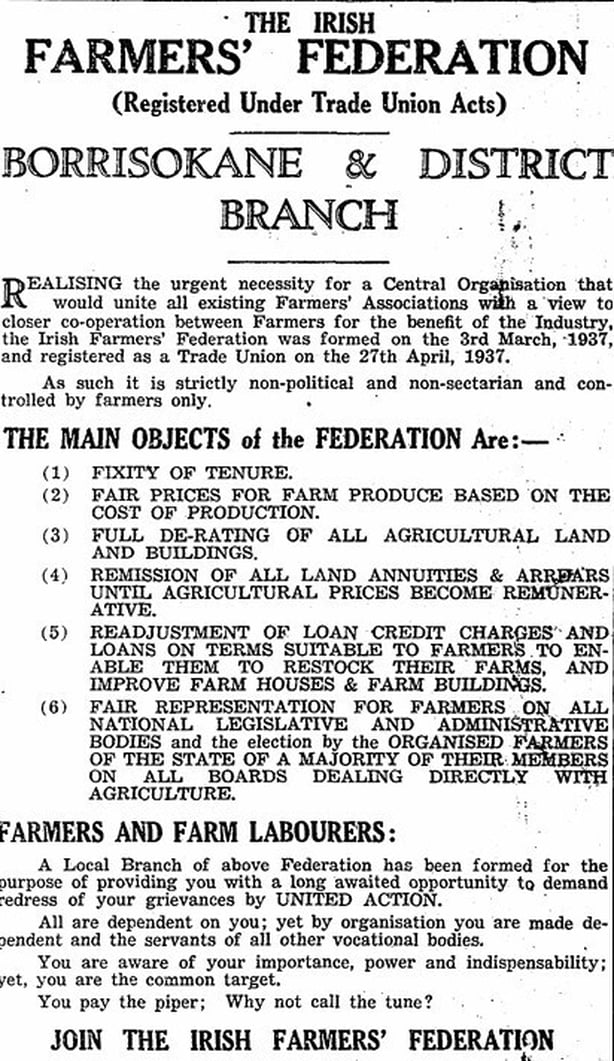
A greater concern was the rapid rise in animal feed costs resulting from the trade disruption, which prompted demands from the farmers who supplied milk to Dublin for higher prices for their produce. When Ryan refused, they began withholding their produce on 18 November. The IFF immediately threw its support behind the protest and declared a full commodity strike in pursuit of its demands for the derating of land and a moratorium on rates and annuities.
Many farmers ignored the call for strike action and continued to send their produce to the capital, but the IFF was determined that nothing should get through. Large groups of IFF members often descended on farms to warn owners not to contravene the strike. Some incidents turned violent, and gunshots were fired on occasion. Striking farmers set up blockades, stopped vehicles, and destroyed produce bound for the capital. Milk vans were regularly ambushed by IFF members who poured their contents onto the road. In one case, a lorry driver attempted to get through an IFF checkpoint, but he was brought to a halt when one of the strikers flung a stick through his window, scattering broken glass into his face.
We need your consent to load this rte-player contentWe use rte-player to manage extra content that can set cookies on your device and collect data about your activity. Please review their details and accept them to load the content.Manage Preferences
From RTÉ Archives, Dr James Ryan recalls his childhood in Wexford, his involvement in the Republican movement and his activities in the GPO during the Easter Rising for the RTÉ project The Survivors in 1965
Some farmers who sent cattle to Dublin found themselves summoned before IFF members and fined for non-compliance. While the IFF denied any involvement, some who refused to pay had their hay burned in arson attacks. Even James Ryan’s sister fell victim to the strike when she stopped to mend a punctured tyre while travelling to Dublin to visit relatives. A car pulled up beside her, but rather than offering help, the occupants seized two bags of apples from her car and threw them along the roadside.
The actions of the striking farmers only hardened the resolve of Ryan and his government colleagues, who regarded such a protest, particularly during a national emergency, as intolerable. Concerned about the ‘disastrous consequences’ the children of Dublin would face without it, Ryan quickly suspended the monopoly enjoyed by Dublin’s milk suppliers and rerouted ample quantities of milk from Munster creameries to the capital.
There was also initial concern about meat and vegetable shortages, but as the strike dragged on, increasing amounts of produce managed to break through the IFF blockade. Lorries began travelling in convoys to deter attempts to hold them up, and garda escorts also provided safe passage for produce.
At the same time, the militancy of the striking farmers led the government to conclude that only swift legal action, insulated from intimidation, could bring the dispute under control. As a result, the Offences Against the State Act was invoked, crimes arising from the strike were brought before the Special Criminal Court and 41 farmers were ultimately convicted under these procedures.
The use of such draconian measures, generally reserved for political subversives, caused consternation. During an ill-tempered Dáil debate on a Fine Gael motion to withdraw the order, the decision was denounced as a ‘vindictive, political measure’ designed to ‘crush opposition’. Ryan was adamant that it was necessary to defeat what he termed the ‘war-minded’ and ‘self-appointed dictators’ within the IFF who acted only for the benefit of large farmers and against the national interest.
Faced with an uncompromising government and dwindling support, the striking farmers had little option but to yield.
Some thought Ryan was needlessly belligerent, but as the days passed, increasing numbers of ordinary farmers were alienated by the IFF’s actions and concurred with the minister. Faced with an uncompromising government and dwindling support, the striking farmers had little option but to yield.
The strike ended on 1 December after Ryan committed to considering milk prices in the new year if farmers raised their concerns through the proper channels. This was far removed from what the IFF had demanded, and the organisation emerged much weaker from the strike. Its methods alienated many farmers, and its surrender left others disappointed. The IFF declined and never again threatened the Government’s authority.
The outcome was a clear victory for the Government. In Ryan’s view, they had demonstrated that ‘no body of people in this country can get political demands by intimidation or violence’. Yet the strike also exposed a deep and enduring sense of frustration among sections of the farming community who felt ignored and taken for granted. It is a sentiment that has never entirely disappeared.
The author's new book James Ryan and the Development of Independent Ireland, 1892-1970 is published by Four Courts Press
Follow RTÉ Brainstorm on WhatsApp and Instagram for more stories and updates
The views expressed here are those of the author and do not represent or reflect the views of RTÉ