

Analysis: While establishing a private burial ground on your own land is possible, obtaining the necessary planning permission can be an arduous process
Interment remains the most popular form of body disposal in Ireland, with most people finding eternal rest in their local cemetery. While there are no formal records, industry statistics show that Ireland's cremation rate is 26.56% (as of 2024). Cremation is far more popular in Dublin, simply because of the number of crematoria there. In Cork, research interviews with funeral directors suggest that about 20% of people in the city are cremated, but it'd be lower in rural areas and away from crematoria.
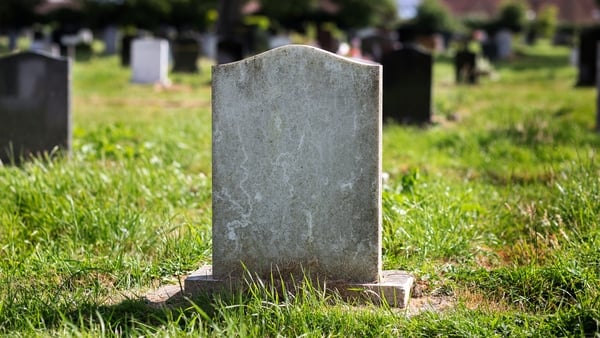
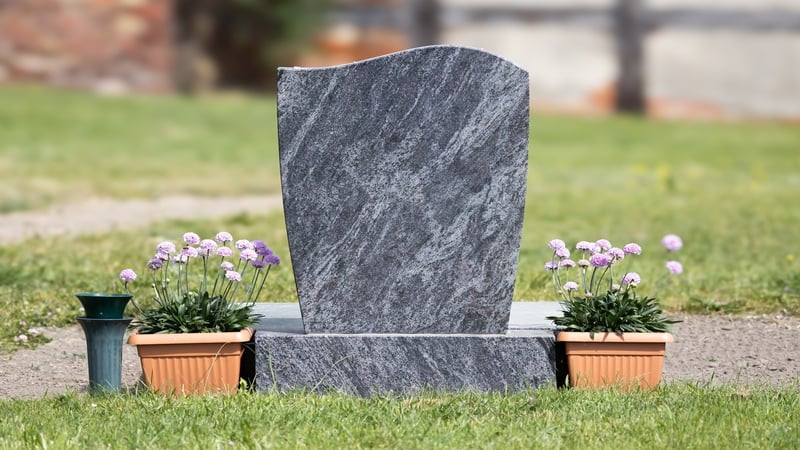
A very small number of people have elected to be buried closer to home. Establishing a private burial ground on your own land has been possible in this jurisdiction, with planning permission from your local authority, since July 1994 when Schedule 2 of the Local Government Act, 1994 came into effect.
But getting the necessary planning permission can be an arduous process. Site reports from environmental, heritage, engineering, roads and planning officers are often required; test holes have to be dug, and the objections lodged by neighbours considered. If you disagree with the decision reached by a local authority on an application (be it yours or someone else's) to establish a burial ground on private land, you can appeal to An Coimisiún Pleanála.
We need your consent to load this rte-player contentWe use rte-player to manage extra content that can set cookies on your device and collect data about your activity. Please review their details and accept them to load the content.Manage Preferences
From RTÉ Radio 1's The Business, undertakers David and Bridin McGowan talk about a life in the funeral business
At least 10 planning applications have been made to local authorities across Ireland to establish a burial ground on private property since 1994. The properties in question include residential blocks on the outskirts of local villages, medium-sized family farms, and large country estates. Taking into account the outcomes of four appeals made to An Coimisiún Pleanála, six of these 10 applications were ultimately approved, and four refused.
Between them, these applications reveal several key reasons why people want to be buried on their private property. Firstly, there is a strong desire to be buried on land – and often farmland – that has been in the family for generations. One (ultimately unsuccessful) application to establish a private burial ground made the case that the applicant 'has been working on his family farm all his life (and) plans to farm this land for his remaining life and hopefully be buried there'.
This speaks to a powerful, intergenerational sense of connection with the land that can be continued after death. A deep connection to the land also underpins another key reason people seek to establish private burial grounds: a desire to be closer to nature, and to be more environmentally friendly in death. In 2015, for example, a Mayo man got permission from An Coimisiún Pleanála to be buried on his farm, and he fulfilled his goal of bequeathing this land (grave included) to the public in 2022 as a woodland park. In 2025, he received an award from Mayo County Council – the local authority that had initially refused him planning permission – for the ‘deep-seated concern for the future’ his actions represented.
We need your consent to load this rte-player contentWe use rte-player to manage extra content that can set cookies on your device and collect data about your activity. Please review their details and accept them to load the content.Manage Preferences
From RTÉ Radio 1's Mooney Goes Wild, Terry Flanagan visits a natural burial ground in Co Wexford.
There are also reoccurring reasons given by local authorities when refusing permission to establish a private burial ground. Key amongst these is the concern that approving plans to establish a burial ground on a piece of private land will affect the character of the general area. This reasoning reflects the objections frequently raised by members of the local community to the unexpected presence of death in their vicinity – as one submission made by a disgruntled neighbour in response to a private burial ground planning application noted, ‘this construction is akin to a graveyard in my backyard’.
Also repeatedly expressed by local authorities is a concern that allowing one private burial application will set a precedent, and more people will take up this option – an outcome often said to be ‘contrary to proper planning and sustainable development of the area’.
The practical problems do not end when a local authority approves an application to establish a burial ground on someone’s private property. Several of the properties on which permission to develop a private burial ground was granted have subsequently been sold.
We need your consent to load this rte-player contentWe use rte-player to manage extra content that can set cookies on your device and collect data about your activity. Please review their details and accept them to load the content.Manage Preferences
From RTÉ Brainstorm, how RIP.ie became an unlikely Irish cultural phenomenon
This raises important conveyancing questions. Do future owners of the property have a right to know that bodies may be buried on the land they have just purchased? And how do families and friends of those interred on private land secure access to continue to visit the burial site when the property is sold? The deceased themselves can also come out worse off. In a country where burial is traditionally considered to be perpetual (although this is not in fact a legal requirement), guarantees must be sought from both present and future owners that the grave will not be disturbed or developed over.
Ultimately, whilst burial might last forever, property ownership is unlikely to do so – and whilst private burial grounds can have a huge emotional payoff, they will likely only lower the economic price that others are willing to pay for the land.
With all this in mind, would you like to be buried on your own land? The Research Ireland-funded BoDIESS project at UCC is conducting a national survey on body disposal preferences in Ireland. However you want your body to be cared for after your death, we want to hear from you and the survey can be completed here.
Follow RTÉ Brainstorm on WhatsApp and Instagram for more stories and updates
The views expressed here are those of the author and do not represent or reflect the views of RTÉ