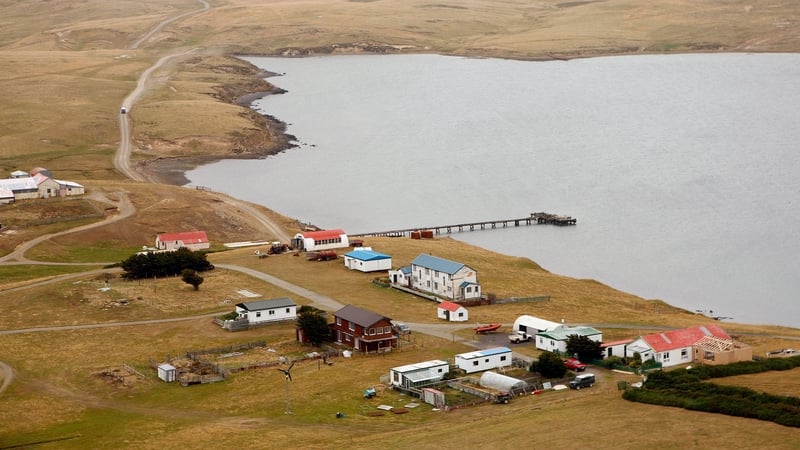


Analysis: With the Falklands back in the global headlines again, a look at the roles played by Irish-born pioneers in the history of the archipelago
Nations are forged as much by a shared identity as by legality. In the political atmosphere of the current Iran war, the Falkland Islands have reappeared in global headlines. A leaked internal Pentagon email floated a suggestion that the US should reassess its support for the United Kingdom in its claim for the South Atlantic archipelago because of the UK's lack of support for Iran war.
Perceived by Argentina as the colonial aggressor since 1833, the UK has defended the rights of Falkland Islanders to national self-determination since islanders overwhelmingly voted in 2013 to remain a British Overseas Territory. The Argentine response highlights their current view of the islanders as a transplanted people from Britain. The archipelago that Argentina calls the Malvinas islands is central to their understanding of their own sense of nationhood and it remains a "lost land" for them that they now seek to reclaim by diplomacy, rather than war.
From DW News, will US president Donald Trump's rage over the UK's lack of willingness to support his Iran war reopen the Falklands' conflict?
In online conversations with the author this week, the islanders themselves reiterate that they have heard it all before and so remain steadfast in their assertion of national self-determination. The Falkland Islands has doubled in population since the war between Britain and Argentina in 1982 over the long fractious sovereignty dispute.
The current population estimate is approximately 3,700 people but, despite this small population, the islands are remarkably diverse, with residents representing over 60 different nationalities. Descendants of Irish settlers, along with other British settlers, remain an integral part of the Falkland Islands' community. The Dictionary of Falklands Biography includes entries for 23 native Irish, from all occupations and social classes.
From BBC, the Uk government has said sovereignty of the Falkland Islands "rests with the UK" after reports the US could review its position on Britain's claim to the territory
An Irish-born governor shaped island education. The idea of establishing the travelling teacher system in Camp (West Falkland) was first proposed by Governor Jeremiah Thomas Fitzgerald Callaghan who was Governor of the Falkland Islands from 1876 to 1880 and originated from Midleton, Co Cork. Some Irish lived just for a short time in the Falklands, like Frances Howe-Hennis who worked as governess for four years, and after moving back to Ireland and England became a botanical artist and wrote a book about her stay in the Islands.
Irish-born governor, Sir Cosmo Haskard was the Governor of the Falkland Islands from 1964 to 1970. The late Prof Dermot Keogh, formerly of UCC, remembered Haskard's firm opposition to British government plans to transfer sovereignty of the islands to Argentina There are seventeen Irish who are listed in the Dictionary of Falklands Biography amongst the 30 military pensioners (or Chelsea pensioners), who were sent in 1849 with their families as settlers who could help in the defence of the Islands.
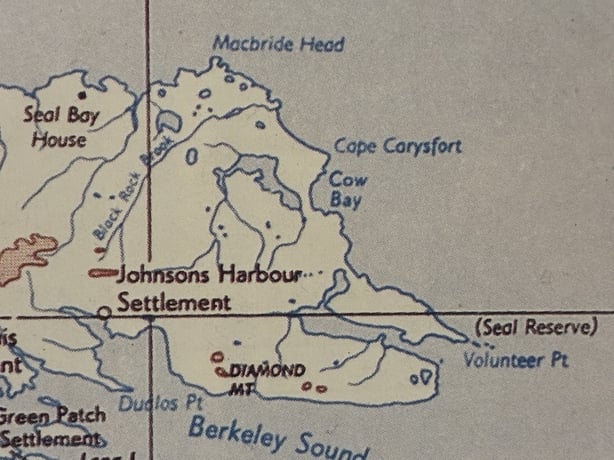
The Irish naval officer who carried out the first major survey of the Falkland Islands in the 18th century was John McBride. Born in Ireland around 1735 (likely Ballymoney, Co. Antrim), McBride played a critical role in establishing the British presence on the islands. His memory is inscribed into the archipelago’s topography. MacBride Head, the most north-easterly point of the Falkland Islands, on East Falkland, was named after him, as are island names derived from his ships, HMS Jason and HMS Carcass. It was McBride who changed the name of the islands from "Falkland's Land", named after a former expedition financier Anthony Carey, the 5th Viscount Falkland, to "The Falkland Islands".
The McBride survey became central to Britain’s sovereignty claim. On 25th September 1766, the Dublin-born Lord Shelburne, Secretary of State for the Southern Department, referred the Spanish Ambassador in London, Prince Fieschi de Masserano, to maps and books of travel in the British Museum, which revealed the Falkland Islands as English discoveries. The Falkland Islands were seen by the Admiralty as a base for the discovery of the great southern continent believed to lie in sub-tropical and temperate latitudes. This in turn, built on map knowledge from George Anson’s circumnavigation (1740-44).
We need your consent to load this rte-player contentWe use rte-player to manage extra content that can set cookies on your device and collect data about your activity. Please review their details and accept them to load the content.Manage Preferences
From RTE Radio 1's World Report, James Blears reports on life on the Falklands after the 2013 sovereignty referendum
In 1831, the US Navy invaded the Falkland Islands to arrest the Buenos Aires-appointed governor after American ships had been seized during a dispute over seal hunting rights. Following the capture of several of the governor's officers, the USS Lexington was used to return settlers to the mainland. The incident resulted in the British using earlier claims to reassert sovereignty over the Falkland Islands in 1833, despite Argentine protests, culminating in the 1982 war.
The back and forth has continued. In January 2013, British tabloids ran advertisements in Argentina defending the British presence on the Falklands, emphasising that Argentina was never permanently dispossessed of an indigenous population, but rather a garrison.
Dates are talismanic symbols in history that act as anchors to carry transformative power in the cultural imagination. Argentina accuses Britain of being a coloniser since 1833, but Britain now recognises Falklands' self-determination as a British Overseas Territory since 2013, which Argentina is unlikely to acknowledge.
Follow RTÉ Brainstorm on WhatsApp and Instagram for more stories and updates
The views expressed here are those of the author and do not represent or reflect the views of RTÉ