


Analysis: The southern US states offer a very different perspective of Irish migration throughout the 19th and early 20th century, which often gets overlooked
By Muiris MacGiollabhuí, Purdue University
The popular imagination of Irish migration to the United States typically conjures thoughts of New York, Chicago and Boston, and images of Irish migrants working on skyscrapers or arriving on overladen steamships. The southern US states offer a very different perspective of Irish migration throughout the 19th and early 20th century, which often gets overlooked.
There's a very good reason for this: 90% of Irish migration to the US has been to northern states by the middle of the 19th century. In 1860, only 84,000 of the 1.2 million Irish migrants in the US settled in southern, confederate states on the eve of the American civil war.
We need your consent to load this rte-player contentWe use rte-player to manage extra content that can set cookies on your device and collect data about your activity. Please review their details and accept them to load the content.Manage Preferences
From RTÉ Archives, Fintan Drury reports for Radharc in 1995 on the 300 people who emigrated from Wexford to the Mission River valley in southern Texas in 1833
But Irish migrants made and re-made themselves in southern US states during a period of significant racial and economic strife. The earliest notable wave of Irish migrants to the south were Scotch-Irish Presbyterians who arrived in the early 18th century, disembarking in Philadelphia and slowly, sometimes over decades, making their way south along the Great Wagon Road. They settled in places like the Shenandoah Valley in Virginia and the Piedmont in the Carolinas, becoming prominent landowners but shying away from the political limelight.
This trend shifted after the United Irish Rebellion of 1798 and the exile of tens of thousands of Irish radicals throughout the world. While the majority of those who went to the US settled in northern cities, many went to southern states. One example is Denis Driscol, who was exiled for being a United Irishman and arrived in 1799. During the 1790s, he had advocated for universal male suffrage in Ireland and believed in the immorality of all slavery.
When he arrived in New York City in 1799, he said that "slavery is odious, wherever it is practiced." By 1804 he had moved to Georgia. There, his politics on slavery changed. He wrote "slavery is freedom, comparatively speaking." Despite never owning slaves himself, his words showed the contradictions of a political ideology, which hinged, in part, on the condemnation of British participation in the transatlantic slave trade.
We need your consent to load this rte-player contentWe use rte-player to manage extra content that can set cookies on your device and collect data about your activity. Please review their details and accept them to load the content.Manage Preferences
From RTÉ Radio 1's History Show, Australian writer Thomas Keneally discusses John Mitchel, the focus of his Fanatic Heart novel
As the US hurtled toward a civil war fought over slavery, some newly arrived Irish migrants championed the Confederate cause, likening the Union to British imperialism. John Mitchel, born in 1815, became prominent in Irish politics during the 1840s. For his role as editor of The United Irishman, he was exiled to present day Tasmania (Van Diemen's Land). He broke his parole in 1853 and moved to the US where he lived in several southern states, including Tennessee and Virginia. He maintained an uncompromising pro-slavery position, viewed Irish migrants as inherently superior to Black Americans and argued for a strict racial hierarchy.
While most Irish migrants in the south were associated with the pro-slavery Democratic Party, not all accepted this reality. In 1860, on the eve of civil war breaking out, John McGuiggin urged enslaved people in Vicksburg, Mississippi to escape their plantations and slave-masters and find freedom. For his actions, McGuiggin was sentenced to 20 years of hard labour. He had been turned in by a fellow Irish migrant, John Roach and another Irishman, John O’Reilly, was on the jury that convicted him.
Irish women played integral roles in US southern cities and few more so than Margaret Haughery (neé Gaffney). She was born in Tully, Co Leitrim in 1813 and left Ireland for America when she was just five years old. She lost both her parents during a yellow fever epidemic in Baltimore, Maryland, in 1822 and was taken in as an orphan but was required to earn her keep. She married in 1835 and moved to New Orleans, Louisiana, where she stayed for the rest of her life.
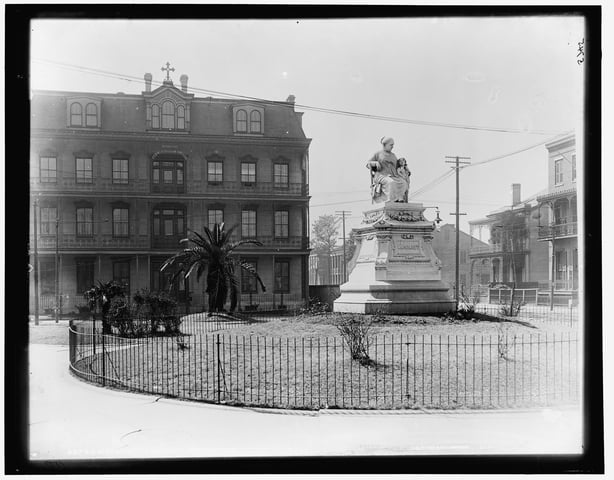
Over the next 50 years, Haughery dedicated her life to helping others, especially widows and orphans, and opened four orphanages in New Orleans. During the 1850s, as yellow fever ravaged the city, Haughery went from home to home offering care and treatment for those affected, offering no distinction for class or race. When she died in 1882, she was given a state funeral where thousands attended.
As the population of the US grew, Irish migrants traveled deeper into the interior of the country. Building railroad lines such as the Missouri, Kansas & Texas, Irish migrants traveled widely. One such territory was Oklahoma. Not yet a state, it was the home to several Indigenous nations in the 1880s. Those forced from their land, such as the Cherokee and Choctaw, during the Trail of Tears, were resettled in present day Oklahoma.
Because there were no nationality requirements to settle the land, migrants flocked to Oklahoma to claim their piece
In 1889, almost two million acres of land was opened to the public by the US government. It was deemed uninhabited as it had never been formally given to one particular indigenous nation, but thousands lived on the land. Because there were no nationality requirements to settle the land, migrants flocked to Oklahoma to claim their piece. Perhaps Irish migrants participated in their displacement with the number of Irish migrants in the territory increasing from 329 in 1890 to 1,384 in 1900.
Leaving Ireland during the 19th century, Irish migrants entered the US in search of opportunity and freedom to build new lives. It’s important to remember, though, that the Irish who entered these states and territories experienced the American paradox: liberty for some often means oppression of others.
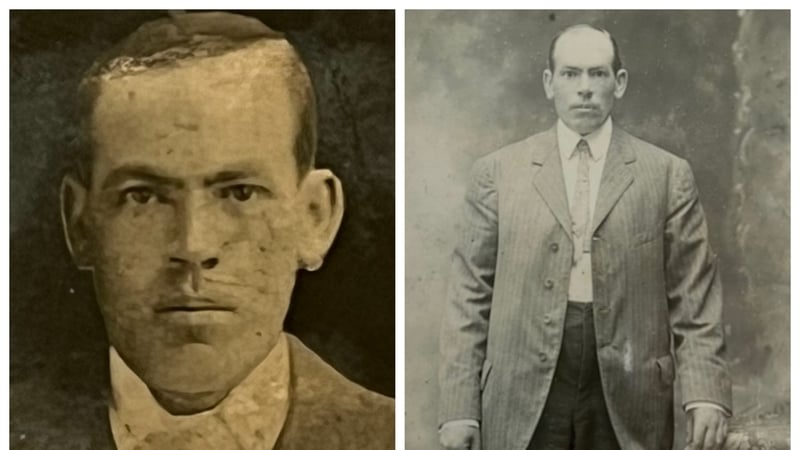
Rian na Fola is a new documentary presented by Dara Ó Cinnéide, which retraces the journey of Patrick Foley, an Irish writer who travelled widely across the US before being murdered in Oklahoma in 1930. The programme will air on Monday 4 May at 6.30pm on RTÉ One and RTÉ Player.
Follow RTÉ Brainstorm on WhatsApp and Instagram for more stories and updates
Dr. Muiris MacGiollabhuí is a Clinical Assistant Professor at Purdue University, Indiana and a contributor to the Rian na Fola TV show.
The views expressed here are those of the author and do not represent or reflect the views of RTÉ
