


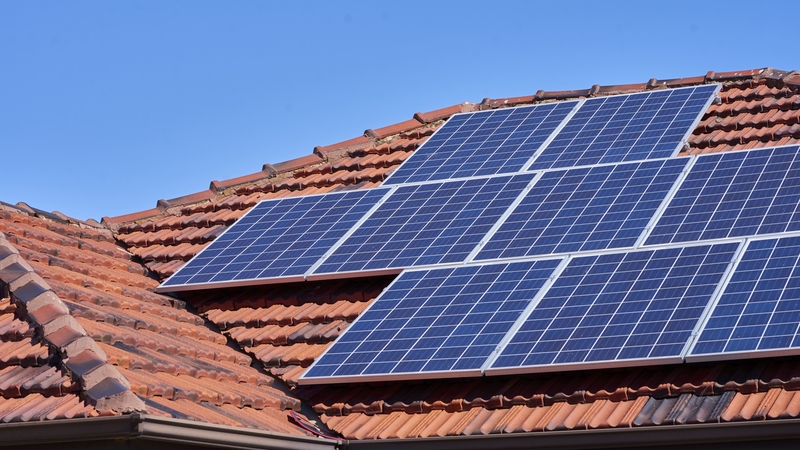


Analysis: With energy cost and supply changing and uncertain, solar panels, battery backup and electric cars can provide a buffer against disruptions.
From Storm Eowyn in January 2025 to the Strait of Hormuz and the road blockades and fuel protests of 2026, we keep discovering that the cost and supply of energy is not guaranteed, whether we fall foul of the weather, war, economics, politics or, soon, dynamic electricity pricing.
Solar electric, battery backup, and electric vehicles (EVs) can provide some buffer against these disruptions. Read on for 7 things on the costs, savings, safety and on using AI for your home solar and EV system.
How much does a solar panel system cost?
The basic 5.5 kW home system with solar panels and the electronics box, known as the inverter, can be installed for about €7,500. The annual return on the investment is about €1,400 a year for an overall payback period five to six years. That’s a respectable return in the renewables or clean energy world.
A full home system with solar panels, a 10 kWh battery, automatic changeover box, smart AI inverter and EV charger can be installed for about €14,000.
We need your consent to load this rte-player contentWe use rte-player to manage extra content that can set cookies on your device and collect data about your activity. Please review their details and accept them to load the content.Manage Preferences
From RTÉ Radio 1's Today With David McCullagh, here's what you need to know of you're thinking of getting solar panels?
How much solar do you actually need?
Power is measured in units of kilowatts (or kW) and electrical energy in the home or car is measured in kilowatt-hours (kWh). Each kW of power in your panels will generate about 1,000 kWh of electricity. The panels could generate more if you are in a sunny part of the country and less if the orientation is not optimum. The typical home in Ireland consumes about 4,200 kWh of electricity in the year. Thus, the 5.5 kW system generates about 5,500 kWh, more than covering the typical home’s requirements.
While the optimum installation is typically to have a spacious, south-facing roof, both east and west-facing roofs can also be quite productive in Ireland. The solar installation will reduce your electricity bills, with the caveat that we will still have bills due to the standing charges and levies.
The simple fact that the sun doesn’t shine as much in the winter means that we need to pay for the bulk of our energy consumption in the winter. But we make it up in the summer when the sun shines plenty, our electricity usage is down, and we sell our solar energy back to the grid at about 20c per kWh.
We need your consent to load this rte-player contentWe use rte-player to manage extra content that can set cookies on your device and collect data about your activity. Please review their details and accept them to load the content.Manage Preferences
From RTÉ Podcasts' Brainstorm, why electric cars need to be heard as well as seen
Should I go for battery backup?
With battery backup, a householder can get a major benefit. You can use the battery and the solar panels to keep the home powered up in case of an outage and so can be less bothered when things go crazy in the energy sector. We are in effect becoming more resilient in terms of the energy for the home and transportation.
The power backup using solar and a battery has had its controversies, but many installers can provide solutions. The latest technologies will automatically switch over to solar and battery, and can also use a petrol or diesel generator, if you lose power from the mains.
What about solar battery safety?
In 2024, for safety reasons, our neighbours in the UK updated their solar battery regulations to discourage the placement of solar batteries inside the home itself (such as in attics, lofts, bedrooms, escape routes etc). A detached garage or outside wall is the safest location. Be sure to hire a quality installer using quality products who is familiar with and follows the regulations and best practice.
We need your consent to load this rte-player contentWe use rte-player to manage extra content that can set cookies on your device and collect data about your activity. Please review their details and accept them to load the content.Manage Preferences
From RTÉ Podcasts' Brainstorm, how long will it take for my solar panels to pay for themselves?
Why does a home solar system need AI?
On 1 June next, Ireland is moving to offer dynamic pricing of electricity to homes and businesses. With dynamic pricing, your electricity rate will change every 30 minutes, or 48 times in the day. The latest technology in solar electric systems uses AI to determine the optimum times to power your appliances, charge or discharge the battery or EV, or sell back to the grid.
What will an EV cost?
Yoiur choice of EVs have multiplied over the past several years and there are now over 100 different EVs on the market in Ireland. Prices are competitive with petrol and diesel and they have dropped significantly since Covid with extraordinary competition between US, European, Asian and more recently, Chinese manufacturers.
You can buy a medium size saloon or SUV, such as the Volkswagen ID.4, with a relatively large battery of close to 80 kWh, with a real range of 450 to 500 km, for about €40,000. You can buy a smaller more urban vehicle with a 40 kWh battery, such as the Hyundai Inster, for close to €20,000. There is value in the used market as well. Depreciation has hit the older EVs very harshly with used EVs, as recent as 2022, being on sale for close to half the original price.
We need your consent to load this rte-player contentWe use rte-player to manage extra content that can set cookies on your device and collect data about your activity. Please review their details and accept them to load the content.Manage Preferences
From RTÉ Radio 1's Drivetime, Dublin's Lord Mayor calls for legal EV home charging in the city
Make sure the vehicle range matches your driving habits. If you are the typical driver doing 50 km a day, then most cars will work for you. If you are driving long distance on a regular basis, then EVs with the larger battery pack are the best option. The public charging infrastructure has improved significantly, but is not to everyone’s liking. You can extend your range by being light on both the accelerator and brake and keeping your maximum speeds to the speed limit or less.
What does an EV cost in fuel?
The average driver drives 15,000 km in the year. Let’s say the diesel or petrol-hybrid car has a fuel consumption of just over 6 litres per 100 km, which translates into a fuel economy of 16 km per litre, then the car consumes 940 litres of fuel in the year. When diesel or petrol is €2 per litre, the annual cost is €1,880.
Let the equivalent EV have a fuel consumption of 20 kWh of electricity per 100 km. This translates into a fuel economy of 5 km per kWh. When driving 15,000 km, the EV then requires 3,000 kWh of electricity in the year.
We need your consent to load this rte-player contentWe use rte-player to manage extra content that can set cookies on your device and collect data about your activity. Please review their details and accept them to load the content.Manage Preferences
From RTÉ Radio 1's This Week, concerns over a lack of technicians qualified to work on electric vehicles
When the standard rate of electricity is 30c per kWh, then the annual cost of fuelling the EV with electricity is €900. The annual cost of electricity drops to €540 if you use the night-time rate at 18c per kWh. The annual cost drops to €360 if you use the night-time boost rate at 12c per kWh. Note that while the night-time boost-rate is the best option for EV charging, the related day-time rates can be higher for your other loads. This could change for you with dynamic pricing.
However, if you are charging at a high-power charger on the motorway, you could be paying close to 90c per kWh, in which case your annual cost would rise to €2,700, far exceeding the cost of diesel or petrol.
If you have a home solar system, then you have the option of charging your car with your own solar energy, or you may find the overall economics more attractive by selling it back to the grid at a rate of about 20c per kWh. Thus, the opportunity cost of using solar to charge the car is the 3,000 kWh (required by the car) times the 20c per kWh equals €600, which is paid to you by the power company.
You can scale these numbers up or down depending on your vehicle fuel consumption, fuel prices and your annual driving. Enjoy the sunshine and happy motoring!
Thanks to Craig Hahessy from Cronin Electrical for his assistance with this piece.
Follow RTÉ Brainstorm on WhatsApp and Instagram for more stories and updates
The views expressed here are those of the author and do not represent or reflect the views of RTÉ


