



Analysis: Best known for his role in Ireland's fight for independence, Casement's fascinating zoological legacy can be found in many Irish museums and archives
By Aidan O'Hanlon, National Museum of Ireland and Angus Mitchell, Royal Irish Academy
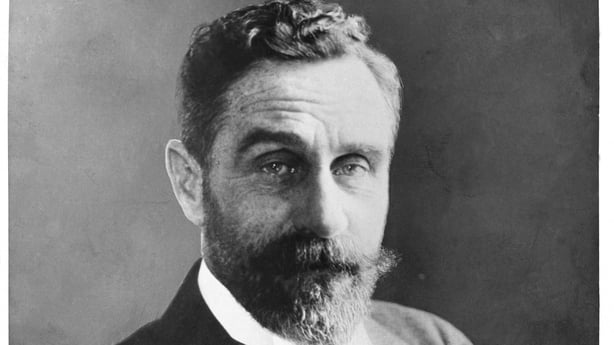
Roger Casement is remembered mostly for two defining acts: exposing colonial atrocities in the Congo and the Amazon, and paying with his life for his role in Ireland's struggle for independence. Yet threaded quietly through his life is another story - and it's one populated not only by people and politics, but by animals.
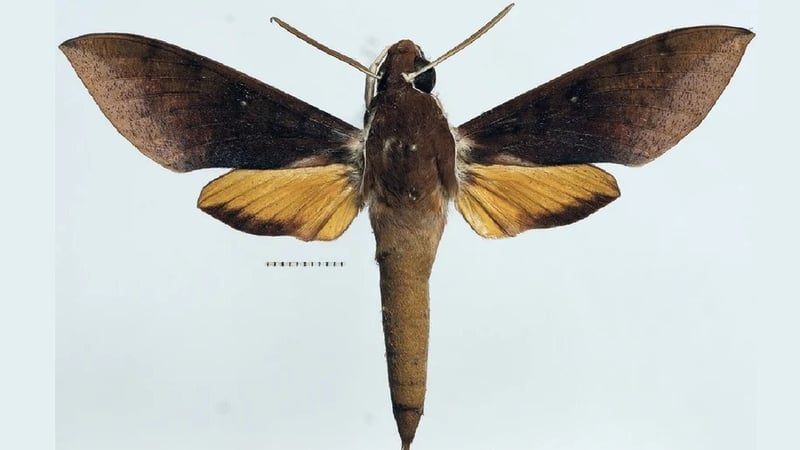
Snakes, parrots, monkeys, butterflies and jungle cats all passed through Casement’s hands, and their individual stories reveal a more intimate, sometimes disarming, perspective on empire, science and resistance. Casement’s name is even commemorated in zoological taxonomy: a species of hawkmoth from Java, Gnathothlibus casementi, bears his name - a rare, scientific memorial that sits oddly beside his far more consequential legacies.
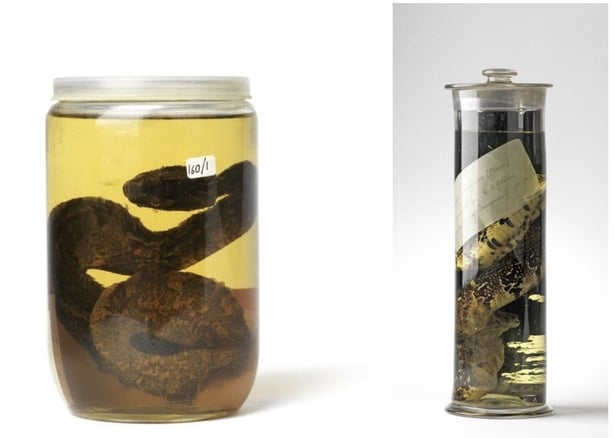
One of the earliest traces of Casement’s engagement with natural history is a venomous snake pickled in a jar of alcohol at Dublin's Natural History Museum. In 1898, while home on sick leave from Africa, Casement donated a rhinoceros viper - a striking, horned snake from west Africa. Two years later in 1900 he donated a puff adder from South Africa. Writing to the museum with evident zoological knowledge about a highly dangerous snake species, Casement called it "a really fine specimen of a very venomous reptile", and apologised that he had not yet managed to send something alive for the living collections at Dublin Zoo.
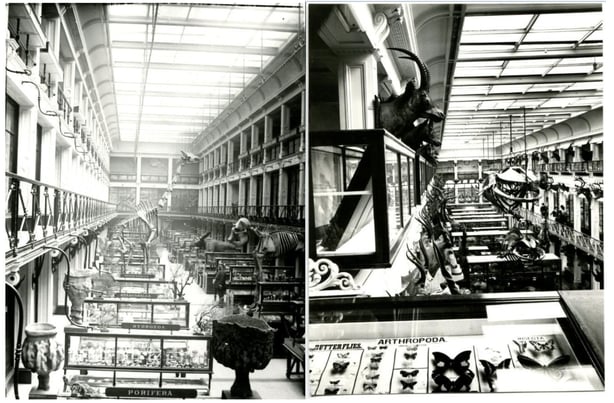
In 1904, alongside ethnographic and botanical material from the Congo, Casement also donated a weaver-bird’s nest to the Dublin Natural History Museum, which remained on public display for more than a century. Interestingly, at a time when museums and other cultural institutions were positioning themselves as custodians of national identity, Casement stated in a letter to the National Museum of Ireland’s Director Count George Noble Plunkett that he would rather see his natural history specimens housed in Dublin than in London.
Casement's move to Brazil after 1906 opened his eyes to an entirely new theatre of natural history. Over the next seven years, he sent a steady stream of animals back to Ireland. If his companion animal of choice had been dogs while in Africa, in South America he developed close friendships with parrots. While stationed in Brazil in 1908, he wrote to his cousin about a small parrot that had become his companion on a riverboat.
The bird wrestled with him, rolled itself into handkerchiefs, and slept nearby - until it was blown overboard during a storm on the Madeira River. "Everyone wept nearly. I did." Casement’s detailed descriptions of the bird’s behaviour make it clear that it was a species of caique - small parrots famous for their clownish, affectionate behaviour.
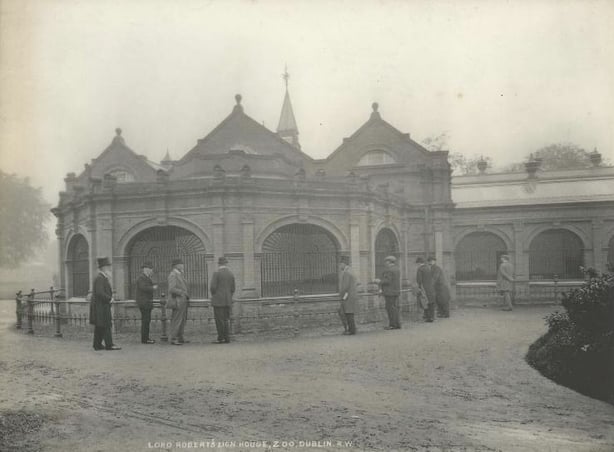
Another companion from that period was a ring-tailed coati, a raccoon-like mammal known locally as an "iquati". Casement named him Manoel and described him with obvious delight: laughing, climbing, play-fighting with dogs and macaws alike. Manoel, along with a female coati, was eventually sent from Brazil to Dublin Zoo. Archival research allows us to follow their fate with uncomfortable intimacy.
The female coati died within months, refusing food, and her body was then sold to an anatomist at the Royal College of Surgeons for teaching. Manoel lived on until 1916, dying of a cerebral haemorrhage, but there is no record of what happened to his remains afterwards. Casement sent monkeys - young, brown capuchins - from Rio de Janeiro to Dublin Zoo; both died within a year, their bodies transferred to veterinary colleges in Ireland and Britain for scientific research and teaching.
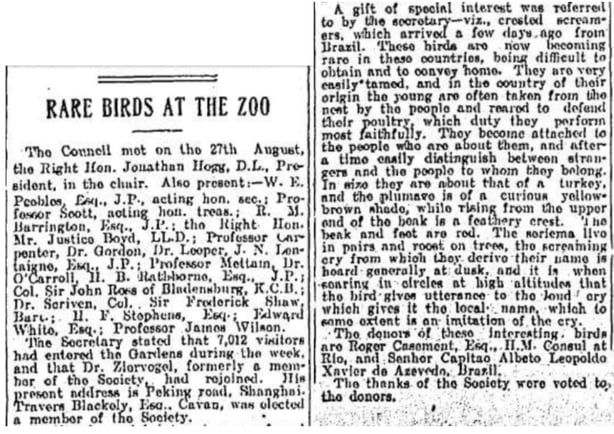
A red-and-green macaw he donated survived several years but was implicated in the violent death of another parrot in the same aviary before itself dying and being sold to a Dublin taxidermist. A red-legged seriema, a tall grassland bird from Brazil known for its piercing call, arrived at Dublin Zoo missing part of its beak and died after being injured in a storm. The seriema also caused bewilderment among staff when it arrived at the Dublin Natural History Museum, locally known as the Dead Zoo, by mistake before being rerouted to Phoenix Park to live in captivity at the actual zoo. The novelty of the bird’s arrival even warranted a write-up in the Evening Herald.
Casement is widely regarded as establishing the documentary practices that became foundational to 20th century humanitarian movements and international human rights law
Casement sent an ocelot – a medium-sized wild cat native to the tropical forests of Central and South America – which was described as "too fat" upon arrival at Dublin Zoo. It was paired with another ocelot and a breeding programme was planned. Sadly, both animals died from parasitic worm infections in 1915. Their carcasses were sent to the Royal Veterinary College for scientific study.
When considering the living specimens that Casement procured for Dublin Zoo, each animal’s story exposes the fragility of life once removed from its natural habitat, as well as the complicated colonial networks that commodified the creatures: extracting and transporting them across continents to become items for exhibition when alive and scientific study, once dead.
Yet Casement’s engagement with animals was not purely, or even primarily extractive. During his Amazon investigations, he resisted the casual killing of wildlife that surrounded him. In one striking journal entry, he and a fellow commissioner physically intervened to prevent a wood ibis from being shot at a notoriously brutal rubber plantation.
Casement attempted to photograph the bird instead, planning to identify the species later at the zoo in Belém. The moment captures Casement’s refusal to separate moral concern for people from concern for animals and their environment; both were ultimately victims of the same system of extractive capitalism.
Casement is widely regarded as establishing the documentary practices that became foundational to 20th century humanitarian movements and international human rights law. Butterflies, improbably, became one of his tools of investigation.
While documenting evidence of atrocity in the Amazonian Putumayo region in 1910, Casement and his colleagues sometimes pretended to be butterfly-collecting, knowing that the familiar figure of an eccentric European naturalist provided effective camouflage for far more dangerous work: "We play a part the whole day," he wrote, "and when investigating a most appalling crime… pretend to be butterfly catching."
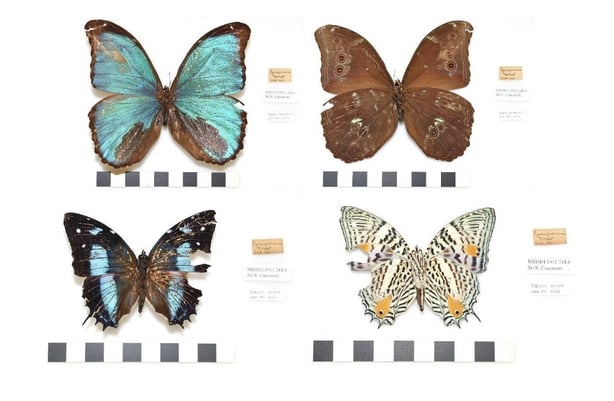
Some of the butterflies that Casement collected during this period - blue morphos and other vividly coloured species - were later donated to Dublin’s Natural History Museum. Casement struggled with collecting the insects at all, once releasing a captured butterfly rather than killing and preserving it, further revealing a deeply-rooted conservationist impulse.
The animal that most clearly embodied this blending of affection, strategy and spectacle was the hyacinth macaw that accompanied Casement for weeks during his final Amazon journey in 1911. The largest flying parrot in the world, now extremely endangered, brilliantly blue and impossible to ignore, it slept in his cabin and followed him up and down the Amazon Fellow travellers recalled the extraordinary sight of Casement - tall, dressed in white, the vivid macaw perched on his shoulder - striding boldly through urban spaces.
The hyacinth macaw, Polly, was affectionate towards Casement but bold and destructive in his absence. One witness reported how he saw Polly in a restaurant tearing up menus, flinging cutlery and attacking hotel staff. Yet, much like Casement’s foray into entomology, the macaw also served an important purpose beyond companionship.
Casement was a marked man on the Amazon, watched by enemies connected to the criminal rubber baron Julio César Arana. Travelling with such a conspicuous animal made Casement unforgettable - but also disarmed suspicion. He appeared as a harmless if not eccentric naturalist, collecting specimens and pets, rather than as a man attempting to destabilise a commercial regime built on terror.
When Casement finally left South America, the macaw was rehomed with the chocolatier-philanthropist Cadbury family in England. Later writing to the Cadburys, Casement pitied Polly’s caged existence in Europe, fondly remembering her wild expressions of freedom on the Amazon.
Today, Casement’s zoological legacy survives scattered across the collections of Irish museums and archives: snakes in jars, birds in drawers, butterflies pinned in entomology cabinets, archival zoo husbandry records listing deaths and diagnoses. Scientifically, this small zoological collection is unremarkable. Historically, it is anything but.
Each of Casement’s animals carry traces of stories about Indigenous knowledge and how it informs formal scientific interpretation; stories about transatlantic extractive networks and how they enabled the transport of commodities (and living beings) across continents; stories about sentimental attachment to the natural world and moral conflict regarding the collecting of animal specimens for scientific institutions.
Seen through these stories, Casement emerges as a figure whose concern for humanity and for the natural world were not separate instincts, but part of the same ethical vision - one forged in tropical rainforests far away from Ireland.
The full story of Roger Casement’s role as a naturalist will be published in a forthcoming issue of academic journal Archives of Natural History.
Follow RTÉ Brainstorm on WhatsApp and Instagram for more stories and updates
Dr Aidan O'Hanlon is a zoologist and curator of the entomology collections at the National Museum of Ireland. Dr Angus Mitchell's latest biography Casement was published in March 2026 by Haus Publishing. He is a recipient of the Royal Irish Academy Commemorations Bursary 2025/2026.
The views expressed here are those of the author and do not represent or reflect the views of RTÉ
