




Analysis: As well as his films, Lee left behind a language of movement, confidence and defiance that people are still using today
Bruce Lee died in 1973, but he is still everywhere over 50 years on. He appears in old film clips, gym motivation videos, TikTok videos, quote graphics and social media posts about discipline and self-belief. Many people who have never watched one of his films still know his face, his voice and his famous line about being like water.
While all of this makes Lee worth thinking about, his staying power is about more than fame. He still matters because he changed what people could see on screen, and because his image keeps being reused for new audiences.
Lee had speed, skill and charisma, but he also had something harder to define: authority. When he entered a scene, he did not look like a side character. He looked like the centre of the story. That was significant in the early 1970s, when Asian men in Western films and TV shows were often limited to narrow roles. Lee broke through that pattern and presented a very different image: strong, serious, emotionally intense and fully in control.
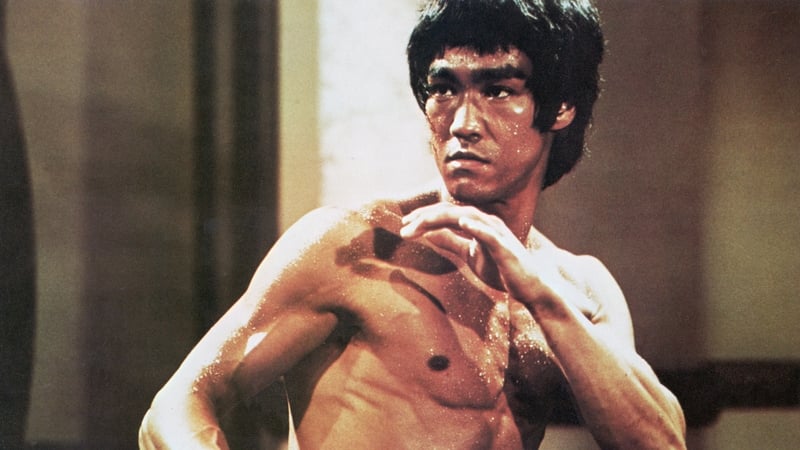
An iconic Bruce Lee scene from Enter The Dragon
That mattered not only for Asian viewers. Lee also became important to Black audiences and others who saw in him a rare non-white hero who refused humiliation. His films offered a sense of dignity that was largely absent from mainstream cinema at the time.
But his impact was never only about fighting. His films arrived during a moment of political and cultural change. In Hong Kong, they spoke to questions of identity, pride and power. In Fist of Fury, insult and humiliation are central to the story and Lee's response is direct and physical. He does not accept disrespect. This gave his films an emotional force that went beyond action entertainment. For many viewers, he became a figure of anger, dignity and resistance.
Lee also meant different things in different places. In Hong Kong and Chinese-language film culture, he could be seen as a powerful Chinese figure at a time of cultural tension. In the US, critics often admired him, but also placed him into familiar categories such as action star or martial arts sensation. He was celebrated but also translated into forms Western audiences already understood.
We need your consent to load this rte-player contentWe use rte-player to manage extra content that can set cookies on your device and collect data about your activity. Please review their details and accept them to load the content.Manage Preferences
From RTÉ Radio 1's Sunday with Miriam, Eva Pau talks about her show 'Coming Home' which tells the stories of the Chinese-Irish community
This tension helps explain his long afterlife. Lee was never just one thing: he was a film star, a martial artist, a thinker and a cultural symbol. His films created unforgettable images: the lean body, the intense stare, the yellow tracksuit and the explosive movement. His interviews produced ideas that travelled far beyond cinema.
The most famous is "be water". Today, it appears in sports videos, business talks and social media posts. People use it to talk about creativity, discipline and resilience. Many no longer know where it comes from, but they still use it.
This adaptability makes Lee particularly suited to the digital age and he fits internet culture remarkably well.Visual, recognisable and easy to reuse, his image can be clipped, looped, quoted and remixed in seconds. One person uses him as a symbol of discipline, another as a sign of Asian pride, another as a form of motivation. He survives because he can mean different things to different people.
From RTÉ Radio 1's The Business, the magic and the mundane of motivational quotes
However, there is a downside. The more an image circulates, the more it can lose its original meaning. Lee’s ideas are often reduced to short slogans and his films are sometimes remembered only as style or spectacle. A figure who once challenged racial limits can be turned into a generic symbol of "mindset" or personal success.
This process began long before social media. After Lee’s death, the film industry quickly turned him into a commercial formula. There were imitation films and repeated attempts to sell a version of "Bruce Lee" without Bruce Lee himself. The internet may not have invented this process, but it accelerated it.
Yet this is only part of the story. The digital age has also given Lee a new life. Each generation discovers him differently. Some find him through martial arts, others through cinema, music, fashion or sport. Some encounter him through memes. This mix of seriousness and reinvention is why he remains so influential.
We need your consent to load this rte-player contentWe use rte-player to manage extra content that can set cookies on your device and collect data about your activity. Please review their details and accept them to load the content.Manage Preferences
From RTÉ 2FM's Dave Fanning, Dr Ruth Barton from TCD discusses representation in film
Lee still matters because he shows how popular culture works. Influential figures do not survive simply because they were once famous. They survive because people continue to reinterpret them and they are quoted, reshaped and reused across different contexts.
Lee is one of the clearest examples of this process. He began as a Hong Kong film star and he became a global icon. He was then transformed into a brand and a legend. Today, he exists across digital platforms where meaning is constantly remade.
From kung fu films to TikTok, Lee’s afterlife shows how images travel across cultures and generations. It shows how fame changes over time, and how a cultural figure can continue to speak to new audiences long after his own era. As well as his films, Bruce Lee left behind a language of movement, confidence and defiance that people are still using today.
Follow RTÉ Brainstorm on WhatsApp and Instagram for more stories and updates
The views expressed here are those of the author and do not represent or reflect the views of RTÉ
