


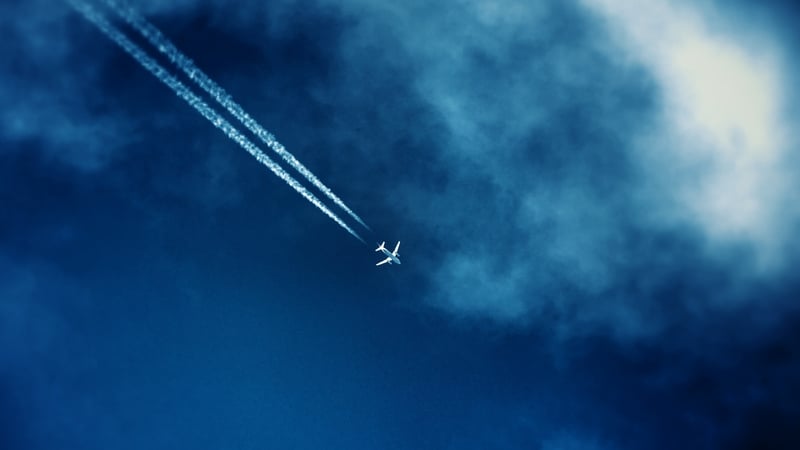


Analysis: Disruptions caused by deliberate interference with satellite systems can create safety risks for aircraft flying in or near conflict zones
It may seem unlikely that a modern aircraft could get 'lost' in this age of satellite navigation. Yet an increasing number of flights across Eastern Europe and the Middle East, particularly near Ukraine and the Strait of Hormuz, have experienced navigational disruptions caused not by pilot error or technical failure, but by interference with Global Navigation Satellite Systems (GNSS).
This interference typically takes two forms: jamming (which blocks satellite signals) and spoofing (which sends false signals to aircraft systems). Both can affect positioning accuracy, increase pilot's workload, and create operational and safety risks for airlines operating in or near conflict zones.
The rise of 'Low Navigation Integrity Category'
Once a rarely used phrase, 'Low Navigation Integrity Category' is increasingly appearing in operational reports, particularly near conflict zones and sensitive military areas where persistent satellite interference is becoming more common.
We need your consent to load this rte-player contentWe use rte-player to manage extra content that can set cookies on your device and collect data about your activity. Please review their details and accept them to load the content.Manage Preferences
From RTÉ Radio 1's News At One, European Commission president Ursula von der Leyen's plane hit by suspected Russian GPS jamming in Bulgaria
Modern aircraft depend heavily on the Global Positioning System (GPS), a satellite-based navigation technology used for route guidance, fuel-efficient operations, performance-based navigation, and, in some cases, approach and landing procedures. GPS has become the invisible thread that ties the modern air transport system together, but that thread is beginning to fray due to GPS jamming and spoofing.
GPS jamming occurs when a strong signal overwhelms the weak satellite transmissions that aircraft rely on. This can cause navigation systems to degrade, freeze, or fail entirely. Such jamming is often associated with military activity designed to disrupt drones or missiles, but its effects frequently extend into civilian airspace.
GPS spoofing is even more dangerous and difficult to detect. A false satellite signal is transmitted that appears genuine to onboard systems, leading the aircraft to calculate an incorrect position without immediately recognising the error. Unlike jamming, which typically triggers warnings, spoofing can produce confident but inaccurate navigation information.
From Flightradar24, GPS jamming and spoofing explained
This makes it particularly challenging for crews and increases the importance of mitigation strategies, including cross-checking navigation sources and using multi-constellation satellite systems such as GPS (US), Galileo (EU), GLONASS (Russia) and BeiDou (China).
How many flights are affected?
The scale of interference is growing. Industry data indicate that more than 430,000 GNSS jamming and spoofing incidents were recorded in 2024, affecting between 700 and 1,350 flights per day. IATA's latest safety report also highlights a "crisis-level" frequency of interference, noting a 67% rise in incidents and an overall increase of 193% in 2025 compared with 2023 across regions including Eastern Europe and the Middle East.
Additional reporting suggests that more than 700 flights in Gulf air corridors had experienced suspected spoofing events by March 2026, alongside continued disruption linked to airspace restrictions. At the same time maritime navigation in the Strait of Hormuz has also been affected, with more than 1,100 vessels reporting GPS interference within a 24-hour period.
From BBC World Service's What In the World podcast, why GPS 'jamming' is getting more common
Areas such as the Eastern Mediterranean, Black Sea, Cyprus, Israel, Egypt, Gulf region and Kaliningrad have all seen repeated reports of GNSS disruption, highlighting how widespread the issue has become. This matters because even a small navigation error can lead to international airspace violations, increased fuel burn or, worse, conflict with military aircraft in high-risk areas.
What this means for airlines
The impact of satellite interference extends beyond flight decks. Airlines may reroute aircraft to avoid affected regions, increasing operating costs and emissions. Flight planning becomes more complex, and contingency planning must be strengthened.
There's also a legal and risk-management dimension. Following recent disputes over aircraft stranded in Russia after the invasion of Ukraine, the industry has already become more cautious about geopolitical exposure.
We need your consent to load this rte-player contentWe use rte-player to manage extra content that can set cookies on your device and collect data about your activity. Please review their details and accept them to load the content.Manage Preferences
From RTÉ Radio 1's Morning Ireland, Iran war continues to affect flights and plane fares
But GPS unreliability adds a new layer of vulnerability that airlines and lessors must consider. EASA continues to advise airlines to avoid Middle East and Gulf airspace due to high risk levels, driven by the compounding effects of drone activity and electronic warfare.
How the aviation industry is responding
Airlines and aviation authorities are adapting. Pilot training increasingly includes recognition of GNSS anomalies and procedures for reverting to backup navigation. Crews are encouraged to cross-check position data using inertial navigation systems (INS), radio-based navigation aids (VOR/DME) and air traffic control support.
Manufacturers are also developing more resilient navigation solutions. Multi-constellation systems combine signals from GPS, Galileo, Russia's GLONASS and China's BeiDou satellites, reducing reliance on a single source. New avionics can detect inconsistencies between navigation inputs and alert crews earlier.
We need your consent to load this rte-player contentWe use rte-player to manage extra content that can set cookies on your device and collect data about your activity. Please review their details and accept them to load the content.Manage Preferences
From RTÉ News' Behind the Story podcast, what to consider before booking a flight
Regulators are also improving reporting systems and coordination. Notices to Air Missions (NOTAMs) now frequently highlight areas with known interference, allowing operators to plan accordingly.
In addition, EASA and IATA proposed further coordinated mitigation measures in 2025, including avionics upgrades for live spoof detection and monitoring, standardised radiotelephony phraseology, and enhanced inter-organisational harmonisation.
Keeping trust in the skies
The growth of GNSS interference raises broader questions about aviation resilience. As aircraft become more digitally integrated, dependence on satellite navigation increases. This creates the need for layered navigation strategies and improved international coordination.
Organisations such as ICAO, EASA and IATA are working toward standardised reporting, mitigation procedures, and improved technological resilience. Research is also exploring alternative navigation methods, including terrestrial augmentation systems and emerging concepts such as quantum navigation, aimed at reducing reliance on satellite-based signals.
GPS spoofing and jamming may be invisible threats, but their implications for flight operations, costs and safety are increasingly visible
Air travel depends on reliable navigation. While aircraft remain safe thanks to redundancy and pilot training, the increase in GNSS interference challenges that reliability. Rerouting, enhanced training and technology upgrades provide short-term mitigation.
However, the industry must work collectively to address the growing digital threats to flight safety. As geopolitical tensions continue to affect airspace, airlines and regulators must balance efficiency with resilience. GPS spoofing and jamming may be invisible threats, but their implications for flight operations, costs and safety are increasingly visible.
Follow RTÉ Brainstorm on WhatsApp and Instagram for more stories and updates
The views expressed here are those of the author and do not represent or reflect the views of RTÉ

