


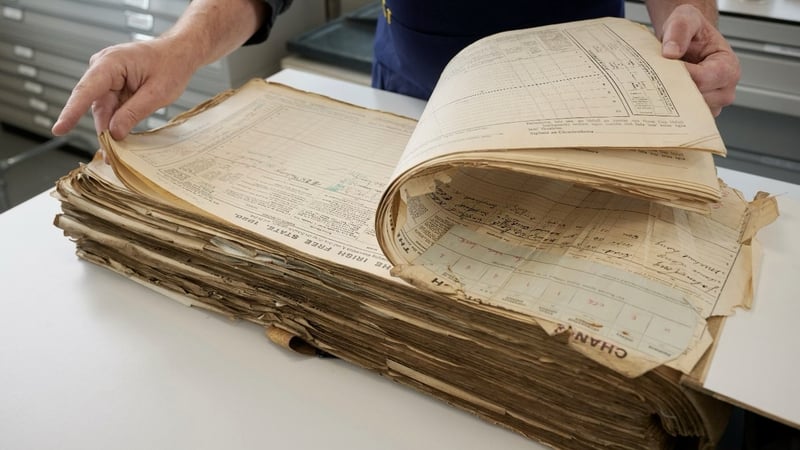

Analysis: It took many years to conserve, digitise and index millions of records to get the 1926 Census ready for publication
For the first time in a century, the Irish public will be able to access detailed records of their ancestors, when the 1926 Census is released on 18 April. Behind this moment is a remarkable multi-year effort to painstakingly conserve, digitise and index millions of records to make the entire census freely accessible online.
The road to release
In 2022, the Government confirmed funding for a programme to digitise and publish the 1926 Census online and free of charge. This recognised the extraordinary cultural and research value of opening this material to a global audience.
The returns include every individual counted in Saorstát Éireann on 18 April 1926. On release later this week, they will be fully searchable at no cost, following the precedent set by the landmark releases of 1901 and 1911.
Preparing the census for its centenary release required a multi-year programme of cataloguing, conservation, digitisation and transcription, combining traditional conservation methods with cutting age technology to provide universal access to these records.
Where have the records been?
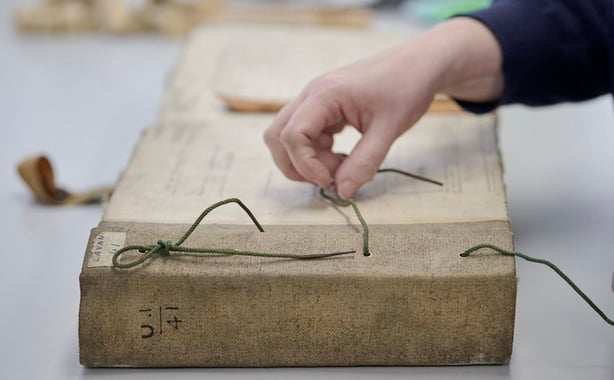
Physically, the Census 1926 records are housed in canvas-bound volumes, kept in 1,299 boxes, and containing over 700,000 return sheets.
They were preserved in a meticulously ordered system that mirrors the original enumeration geography across all 26 counties, where they are grouped by District Electoral Division (DED) and then by townland or street. The publication process follows this same administrative hierarchy, allowing users to navigate the records as enumerators once did.
For almost a century, since the findings were first recorded by statisticians at the Department of Industry and Commerce, these boxes have been unopened, and the fascinating stories they contain unseen.
Preparing the records
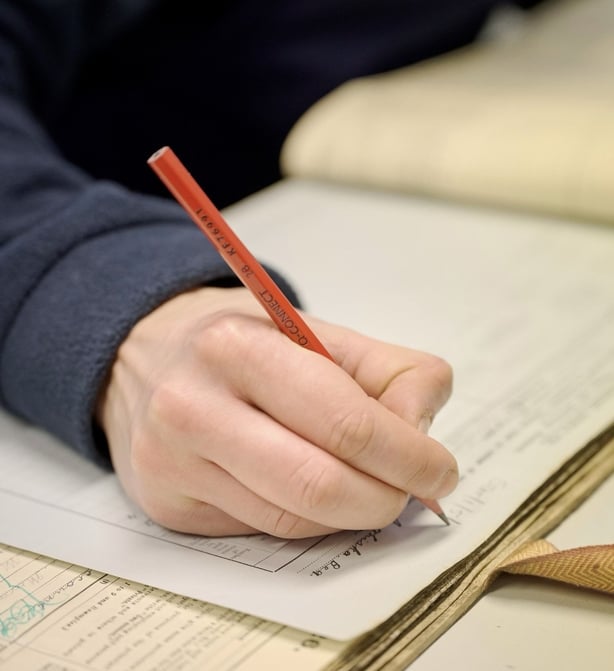
The first key step in facilitating the release of the 1926 Census was organising all of the information contained in every box.
This meant creating a catalogue, by manually extracting the information on each individual form – in effect, building a master spreadsheet recording the data on every single sheet, and where in the thousands of pages in the collection it can be found.
Through this process, the National Archives confirmed that remarkably, a century on, every single page of the census taken in April 1926 has survived.
The data from the complete catalogue became the basis for the rest of the Census project, crucially linking the final digitised images to the correct individuals
Conservating fragile documents
Every form was individually assessed by conservators to ensure that all the original paper forms from the 1926 Census were stable enough to withstand the physical handling required for digitisationand that the forms would be physically preserved for future generations.
Damage was found most frequently found along the edges, as the short-fibred paper tears easily during handling. Every page was individually checked. Pages were surface-cleaned using vulcanised natural rubber sponges and folds and creases flattened using a heated spatula Fragile sheets were repaired, degraded metal fasteners were removed.
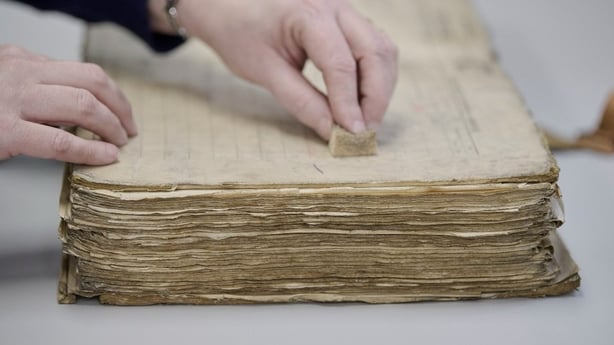
Repairs were applied only when necessary to avoid further damage and to ensure text was legible. Tears were repaired using a lightweight, re-moistenable Japanese tissue with an adhesive made by combining wheat starch paste with methyl cellulose.
The conservation of the census ran from November 2023 to June 2025. It is the largest project of this type to be undertaken by the National Archives and employed up to ten conservators at its peak.
Digitising the records
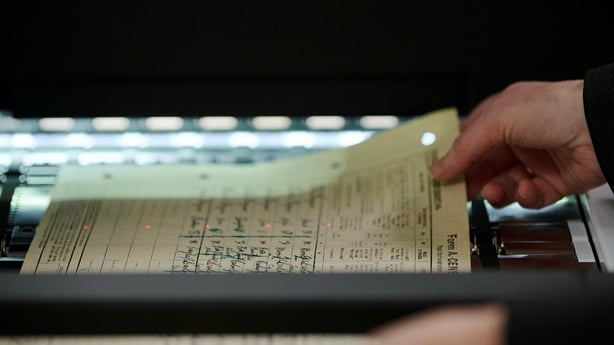
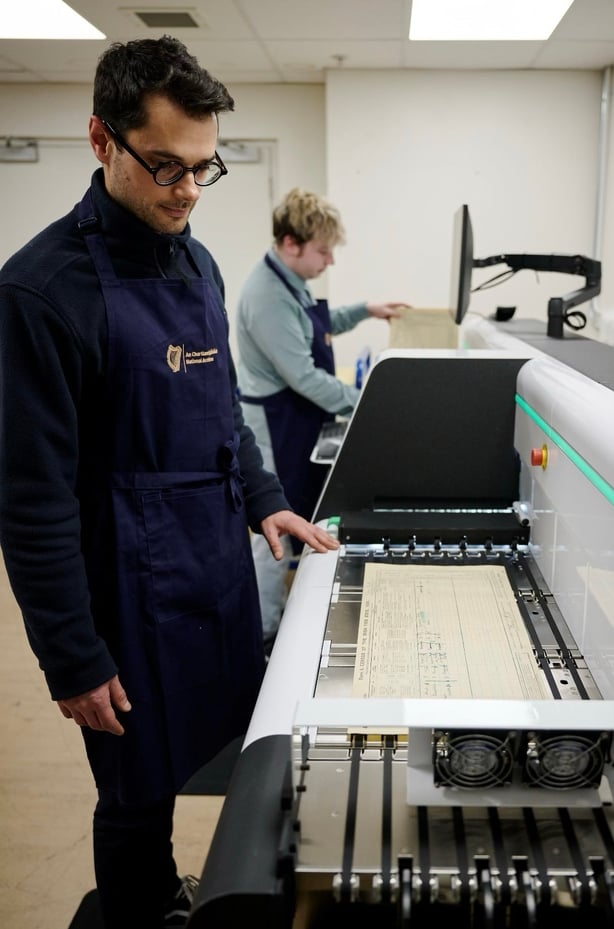
If the conservation process involved a combination of traditional techniques to carefully preserve decades old paper documents, the digitisation process employed cutting edge technology. The National Archives acquiring two powerful high-speed scanners to facilitate digitisation of the census forms after their conservation, and to capture high-quality colour images, scanned to 400 DPI (dots per inch).
The process resulted in the creation of approximately 1.5 million images, which were digitised in a number of digital formats, that are stored and backed up to ensure their long-term preservation, and that there is no risk of loss or corruption.
Transcription
Finally, the data contained on the scanned census forms was transcribed – in other words extracting the text from the forms in order to make the documents, and the information they contained, searchable when converted into an online database. Transcription presented its own challenges. Millions of individual data points, such as names, ages, townlands and streets, all had to be transformed into a structured, searchable database.
To manually transcribe the data in the 1926 Census would take one person an estimated 23 years. To make the project achievable within a realistic timeframe, we relied on modern computer programming and intelligent robotic process automation. However, automation was only one part of the story.
Our automated processes were initially trained using patterns identified in the 1911 Census and then refined through repeated physical checks. But because the 1926 returns introduced new complexities, particularly the inclusion of forms completed in Irish, automation alone was never going to be sufficient. Irish-language entries had not appeared in earlier censuses, and many were written in seanchló, a traditional Gaelic typeface with unique characters and a visual structure entirely different from English script.
These features made it particularly difficult to train automated reading models to a fully reliable standard, so the Irish-language forms were instead transcribed by fluent Irish speakers on the National Archives team.
Because of these challenges, every single piece of transcribed data from every page of the census was manually checked, twice, by National Archives staff. This "human in the loop" stage was essential to ensure that names were spelled correctly, ages were accurate, and the automated outputs matched the original records.
How will the public access it?
From 18 April 2026, the complete 1926 returns will be searchable and browsable online via the National Archives website, where thanks to the efforts of the National Archives team, users can read their own family and hometown stories from 100 years ago.
The release will also be accompanied by a major public programme designed to animate the stories behind the forms. Exhibitions are planned in Dublin, London and Boston alongside a touring exhibition across Ireland.
A century after enumerators called to doors across the country, the 1926 census will once again open Irish homes to view, accessible to anyone seeking to understand the people and patterns that shaped modern Ireland.
Follow RTÉ Brainstorm on WhatsApp and Instagram for more stories and updates
Zoe Reid is the Keeper of Manuscripts at the National Archives of Ireland.
The views expressed here are those of the author and do not represent or reflect the views of RTÉ
