


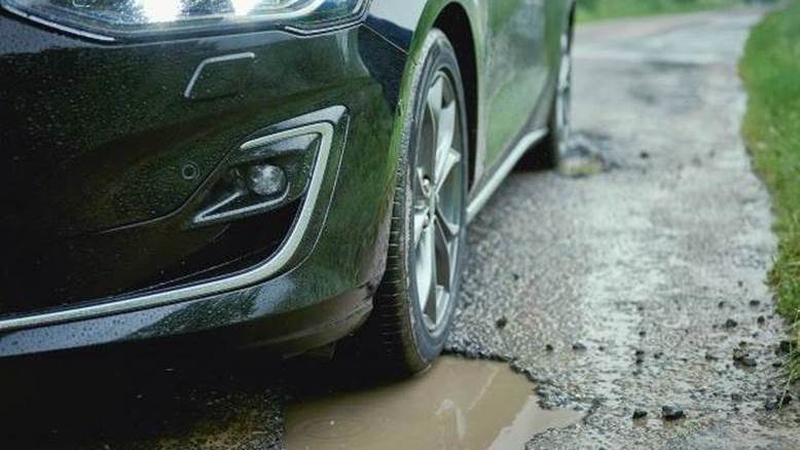

Analysis: Potholes are the result of a clear chain of events driven mainly by water, weather and traffic, but the problem is more complex in Ireland
By Ibrahim Hassan Syed, Research Ireland
You rarely see a pothole coming. You feel it. The sudden jolt, the thud beneath the tyres, the quick glance in the mirror to see if anything has fallen off the car. In Ireland, potholes can feel like an unavoidable part of driving, but they are not random. They are the result of a clear chain of events, driven mainly by water, weather and traffic. In this country, those ingredients are almost always present.
To understand potholes, you have to look beneath the road surface. According to the Department of Transport's Rural Flexible Roads manual from 2013, most Irish roads are made from an asphalt surface over one or more layers of stone. The asphalt layer provides a smooth ride and acts as a waterproofing layer to protect the stone below. It is cheaper and easier to repair than a concrete surface.
But over time, even well-built roads develop small cracks. Traffic, ageing and changes in temperature all contribute. At first, these cracks may be barely visible, but they create openings that allow water to enter the structure of the road.
We need your consent to load this rte-player contentWe use rte-player to manage extra content that can set cookies on your device and collect data about your activity. Please review their details and accept them to load the content.Manage Preferences
From RTÉ Radio 1's Drivetime, Dr Paul Davis from DCU on where the money is going to come from to fix the latest crop of potholes
The manual highlights that environmental conditions, traffic loads, and material quality all affect how quickly potholes appear. Even two roads built to the same standards may deteriorate at different rates depending on these factors. For example, areas with higher moisture levels in the underlying soil weaken faster under traffic. Roads with higher traffic volumes or heavier vehicles also tend to develop potholes more quickly. Understanding these factors is essential for local authorities to plan maintenance and repairs effectively.
In many countries, water seeps down from rain and snow, but the problem is more complex in Ireland. During winter, the soil beneath roads is often saturated after weeks of rainfall. Water tables rise, meaning moisture can move upwards into the lower layers of the road from below. Irish roads are often damaged by water from both directions, from the surface down and from the ground up.
This is where traffic comes in. Every passing vehicle applies pressure to the road. When the foundation is strong, the surface can cope. When the foundation has been softened by water, the asphalt flexes more than it should. Tiny pieces begin to loosen. Cracks widen. Small pieces break away. A shallow depression forms. Water collects in that dip, seeping deeper into the structure and making the area even weaker.
We need your consent to load this rte-player contentWe use rte-player to manage extra content that can set cookies on your device and collect data about your activity. Please review their details and accept them to load the content.Manage Preferences
From RTÉ Radio 1's Today with David McCullagh, are these the worst potholes across the country?
With each passing car or truck, the damage grows. Eventually, the surface collapses into a visible hole. What began as a fine crack becomes a pothole large enough to damage tyres, wheels and suspension systems.
Why storms make potholes worse
Storms accelerate everything. Intense downpours force large amounts of water into cracks in a short period of time. If drains and roadside gullies are blocked or overwhelmed, water pools on the surface. Standing water has more time to seep into the road layers. Flooding can be even more damaging. When roads are submerged, the entire structure becomes saturated.
Once traffic returns, the soaked foundation struggles to support the load and sections can give way rapidly. Storms can also wash away fine particles from the supporting layers beneath the road. This creates small empty spaces underground.
Without proper support, the asphalt above may collapse into those spaces, forming a pothole.
Can potholes be prevented?
Regular inspections are a key part of managing potholes. The Rural Flexible Roads Manual recommends assessing flexible roads at least every two years, with annual updates preferred. These inspections utilise the Pavement Surface Condition Index to assess the pavement's condition.
Early identification of cracks, depressions, and surface defects allows local authorities to act before small problems develop into larger potholes. Maintenance measures such as sealing cracks and surface dressing can prevent water from entering the road layers and slow the deterioration process.
Once potholes are identified, repair methods depend on their size and severity. Minor potholes can be patched using quick-setting asphalt. Larger potholes or areas with extensive damage may require resurfacing to restore the strength and safety of the road.
From RTÉ Archives, Connemara residents protest against government inaction on the region's notorious potholes in 1988
Prompt repair not only protects vehicles from damage but also reduces the risk of accidents. Efficient maintenance programs help councils prioritise high-traffic or high-risk areas and make the most of limited resources.
Research emphasises that potholes are more than a surface-level issue. They are common defects that can damage vehicles, create safety hazards and disrupt traffic. Detecting and monitoring potholes allows authorities to respond quickly to the most urgent problems.
The paper notes that monitoring programs, which include both visual inspections and technology-assisted detection, are important for managing maintenance work efficiently. Keeping track of where potholes occur helps authorities allocate resources effectively and maintain safer roads for all users.
From RTÉ Archives, Joe Little reports for Today Tonight in 1980 on the state of Irish roads, where about one mile in every five of national primary routes is in some way deficient.
Monitoring potholes also has a role in long-term planning. Roads decline at different rates depending on traffic, environmental conditions, and construction quality. Recording defects and repair work over time allows local authorities to anticipate which areas will require attention in the future.
Proactive planning reduces both the cost of repairs and the disruption to road users caused by sudden pothole failures. By tracking deterioration, councils can implement preventative maintenance strategies, extend the life of roads and improve safety for drivers, cyclists, and pedestrians.
In summary, potholes form because of the interaction between traffic, environmental conditions, and pavement structure. Moisture entering cracks or rising from below weakens the road layers, and repeated vehicle loads eventually cause the surface to collapse. While potholes are common on Ireland’s flexible roads, regular inspections, early repairs, and monitoring help manage their formation and reduce their impact on vehicles and road safety. They remind us that even well-constructed roads require ongoing care to remain safe and reliable.
Follow RTÉ Brainstorm on WhatsApp and Instagram for more stories and updates
Dr Ibrahim Hassan Syed is a former research fellow at the Research Ireland Centre for Research Training in Machine Learning (ML-LABS), Ireland and a recipient of the Research Ireland PhD Scholarship Programme. He is a senior engineer at PMS Pavement Management Services Ltd
The views expressed here are those of the author and do not represent or reflect the views of RTÉ
