




Analysis: Researchers are using eBird data with enhanced analytical models to measure bird populations and habitats across Ireland
There is something very special about birds. Maybe it is the diversity of their shapes and colours, or the fact that they are always present, or their melodic songs. Whatever it is, birds bring us a beautiful feeling of comfort and ease. So much so that a walk in a forest full of birds brings us mental health benefits, benefits that a forest empty of birds does not.
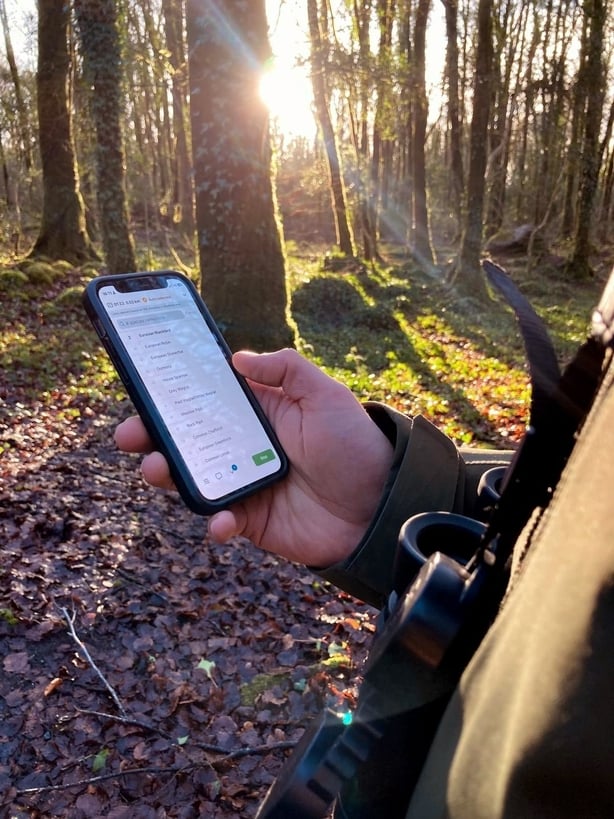
This fascination of ours with birds may be the reason why eBird became one of the most successful citizen science projects in the world. eBird is a web platform and a phone app in which bird enthusiasts can document and report their bird observations. Those observations, called checklists, contribute to forming a huge and ever-growing database. eBird was launched in 2002 by the Cornell Lab of Ornithology and the National Audubon Society in the United States. It has now expanded across the globe and there are approximately 121 million checklists submitted by over a million people.
We need your consent to load this rte-player contentWe use rte-player to manage extra content that can set cookies on your device and collect data about your activity. Please review their details and accept them to load the content.Manage Preferences
From RTÉ Radio 1's Nature on One, a special show exploring the wonderful world of garden birds
The data is publicly and freely available and is now being used in many research projects. For instance, observations from eBird were used to document a decline in species abundance across North America. In my lab at the School of BEES in UCC, we are using it to map the distribution of vultures across the world.
But what about Ireland? I am an ecologist who likes both birds and data analysis. Since I moved to Ireland five years ago, I wanted to know if the eBird platform was also being used here and if we could use the data to map the distribution and abundance of Irish birds to help protect them.
I teamed up with a student and collaborators from BirdWatch Ireland and the National Parks and Wildlife Service to dive into the Irish eBird dataset. What we discovered was fascinating. People across the Island of Ireland have increased the use of eBird exponentially in the last decade, with over 66,000 checklists reported by over 4,000 users up to 2023. That is a lot of bird observations, a lot of users and a lot of data.
However, using the data from eBird comes with its own set of issues. The problem with most citizen science projects is that the data is of "poor quality" from a scientific perspective. When I researched birds on a remote island of South America, I would wake up before sunrise to count birds when they are most vocal and in sites I carefully selected to represent the different types of habitats. In short, I was following a good scientific study design.
But most people don't do that. When people go out looking for birds in their free time, they usually do it in the middle of the day, close to roads or around urban areas where most people live. Of course, the idea is to have fun, connect with nature and the beauty of birds, not to do science. This can result in eBird data being a representation of where people most often go to look for birds, rather than the actual distribution, abundance or the species themselves. This is not the type of data that is useful for conservation.
There is, though, a solution and the use of models showed that these biases can be accounted for. The models use information on the time of day, the length of time spent searching for birds, approximate location, weather conditions and even an estimate of observer experience to correct for identification "errors." We can then obtain corrected species distributions and accurate habitat preferences.
We need your consent to load this rte-player contentWe use rte-player to manage extra content that can set cookies on your device and collect data about your activity. Please review their details and accept them to load the content.Manage Preferences
From RTÉ Radio 1's Drivetime, Birdwatch Ireland's Niall Hatch on how to track the birds in your back garden
How do we know that? We compared our results with annual data collected by trained volunteers across the country, a project coordinated by BirdWatch Ireland. For certain species, we found that the distribution of birds calculated with the "very good" data and the "poor eBird quality data" were very similar across years.
The magic of this is that people are reporting birds on apps all year round. As the number of checklists reported across the country keeps growing, we will be able to improve models, combine datasets and study birds year-round, across the entire island, something very difficult to do in a coordinated manner in a "traditional scientific study". We can also use the eBird data to complement existing datasets for habitats where good information is lacking.
The Irish citizen assembly on biodiversity loss showed that Irish people deeply care about biodiversity. The report calls for action. The good news is that citizens are collecting a lot of data that researchers can use to produce the information needed to guide action. And it is not just birds; you can report observations of all kinds of species to the National Biodiversity Data Centre.
In a time when people are more disconnected than ever from nature, birds are calling back. Birds are helping restore the connection with the natural world, providing joy and health benefits. Researchers, in turn, can use the data to generate information that can help guide the highly needed restoration of Irish natural habitats.
Follow RTÉ Brainstorm on WhatsApp and Instagram for more stories and updates
The views expressed here are those of the author and do not represent or reflect the views of RTÉ
