



Analysis: Taking a hot bath may be a straightforward way to help runners prepare for the 26.2 miles of a marathon
By Mike Stembridge and Elliott Jenkins, Cardiff Metropolitan University
For decades, elite runners have travelled the world to train at high altitude. When oxygen levels in the air are low, the body responds by producing more red blood cells – the cells responsible for carrying oxygen around the body. When athletes return to sea level, this greater oxygen-carrying capacity can enhance endurance performance.
But altitude training comes at a cost. It requires time away, financial investment and long-haul travel. For the vast majority of runners preparing for a marathon, it is simply not an option.
We need your consent to load this rte-player contentWe use rte-player to manage extra content that can set cookies on your device and collect data about your activity. Please review their details and accept them to load the content.Manage Preferences
From RTÉ Radio 1's This Week, what drives someone to put in months or even years of prep to run over 26 miles?
For our research, then, we began searching for a more accessible alternative. Our attention turned to another environmental stressor: heat. Athletes commonly use short periods of heat exposure – typically seven to 14 days – to prepare for competition in hot climates. But we wanted to know whether longer-term heat exposure, over four to five weeks, could trigger physiological changes similar to those seen at altitude.
We recruited a group of well-trained endurance runners and asked them to continue their normal training. The only addition? Five hot baths per week for five weeks.
The baths were not high-tech laboratory grade equipment. They were standard home bathtubs. Water temperature was maintained at 40°C using an inexpensive thermometer, with warm water added when needed. Each session lasted 45 minutes and was completed shortly after training.
We need your consent to load this rte-player contentWe use rte-player to manage extra content that can set cookies on your device and collect data about your activity. Please review their details and accept them to load the content.Manage Preferences
From RTÉ Radio 1's Drivetime, Dr Sarah Dillon from University of Limerick on how to avoid running injuries
Before and after the five-week period, we measured several markers of endurance physiology, including red blood cell volume, heart structure and maximal oxygen uptake (VO₂max) – widely regarded as the gold standard measure of aerobic fitness.
What we found
After five weeks of regular hot baths, our runners had significantly increased their red blood cell volume. In other words, they had more oxygen-carrying cells in their bloodstream. At first glance, this might seem surprising. At altitude, red blood cell production increases because there is less oxygen in the air. With heat, oxygen availability is not limited. However, heat affects the blood in a different way.
After even a single heat session, the liquid component of blood, plasma, expands. This expansion dilutes the red blood cells, temporarily lowering the amount of oxygen carried in the blood. The body senses this change and responds by producing more red blood cells to restore balance.
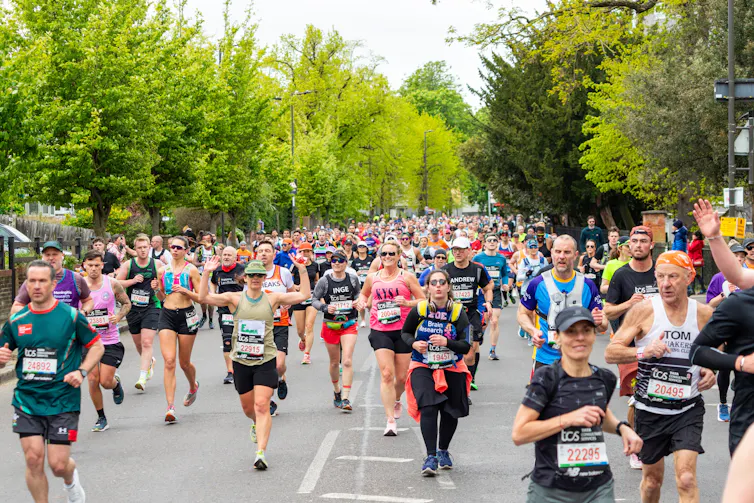
Heat exposure could offer a low-impact way to trigger beneficial changes in the body without the added strain of more exercise. Photo: Shutterstock
Over time, this results in both greater plasma volume and more red blood cells overall – meaning more total blood, and more capacity to carry oxygen.
We also observed changes in the heart. Endurance training is known to enlarge the heart's main pumping chamber, the left ventricle, allowing it to eject more blood with each beat. Following the heat intervention, the volume of this chamber increased further. The additional blood created through heat exposure likely contributed to this expansion.
Together, these changes improved aerobic capacity. On average, the runners' VO₂max increased by around 4%, and they were able to reach higher speeds during maximal treadmill tests.
We need your consent to load this rte-player contentWe use rte-player to manage extra content that can set cookies on your device and collect data about your activity. Please review their details and accept them to load the content.Manage Preferences
From RTÉ Brainstorm, what happens to your body when you run a marathon?
While laboratory measures are not the same as race results, improvements of this magnitude are meaningful for trained athletes, particularly given that these gains occurred without increasing training intensity or mileage.
Why this matters for marathon training
For runners and coaches, the implications are intriguing. First, heat exposure could offer a low-impact way to trigger beneficial changes in the body without the added strain of more exercise. Increasing mileage or intensity always carries a risk of injury. Hot baths, in contrast, place stress on the cardiovascular system without additional pounding on muscles and joints.
Second, this approach is relatively accessible. Most people have access to a bath, so compared with altitude camps, the financial and environmental costs are minimal. That opens the possibility of more equitable access to performance-enhancing (and entirely legal) training strategies.
We need your consent to load this rte-player contentWe use rte-player to manage extra content that can set cookies on your device and collect data about your activity. Please review their details and accept them to load the content.Manage Preferences
From RTÉ's Running podcast, the ups and downs of marathon training
As with all research, there are limitations. Our study used a specific protocol: 40°C water, 45 minutes per session, five times per week, for five weeks. We do not yet know whether shorter sessions, lower temperatures or other heat sources – such as steam rooms or saunas – would produce the same results.
There are also safety considerations. Prolonged heat exposure can increase the risk of dehydration, dizziness and heat illness. Anyone attempting a similar approach should ensure adequate hydration, avoid overheating and undertake sessions with appropriate supervision. People with underlying health conditions should seek medical advice before attempting this type of protocol.
Finally, we measured physiological markers and treadmill performance, not actual marathon race times. Although improvements in VO₂max are strongly linked to endurance performance, future studies will need to confirm how these changes translate to real-world competition.
Even so, our findings suggest that performance gains do not always require more miles or international travel. Sometimes, adaptation can be stimulated in surprisingly simple ways.
For marathon runners looking for a practical way to support their training, passive heat exposure may represent a surprisingly straightforward tool worth exploring.
Follow RTÉ Brainstorm on WhatsApp and Instagram for more stories and updates
Mike Stembridge is Professor of Cardiovascular and Environmental Physiology at the Cardiff School of Sport & Health Sciences at Cardiff Metropolitan University. Elliott Jenkins is a PhD Candidate in Exercise and Environmental Physiology at Cardiff Metropolitan University. This article was originally published by The Conversation.
The views expressed here are those of the author and do not represent or reflect the views of RTÉ
