



Analysis: Western culture and religion have inherited much from the Middle East and this continues to shape our worldview
Borders shape politics, but religion and culture cross borders. Western culture and religion have inherited ethics, mathematics (specifically in algebra, geometry, and algorithms), art, music and literature from the Middle East and this inheritance continues to shape our worldview.
What makes politics seem so intractable is that the West is a mirror-image of both the cultural and religious inheritance of the Middle East, as argued by Afghan-American author, Tamim Ansary in Destiny Disrupted. Culturally and religiously, there is more that unites the West and Middle East than divides the Middle East and West
We need your consent to load this rte-player contentWe use rte-player to manage extra content that can set cookies on your device and collect data about your activity. Please review their details and accept them to load the content.Manage Preferences
From RTÉ Radio 1's Morning Ireland, Israel launches fresh wave of attacks on Lebanon and Iran
While the initial focus was on the US-Israeli strike on Iran on 28 February 2026, a broad sweep of the Middle East, from Cyprus to Afghanistan, is now aflame. This entire region covers the imprint of the Achaemenid Persian Empire (c. 550–330 BCE), which was then the largest empire in the world, spanning across Asia, Africa and Europe.
It stretched from the Balkans and Libya in the west to the Indus Valley (Pakistan) in the east. The Achaemenid Empire tolerated regional religious and cultural differences, in contrast to the centralising tendency of the Roman Empire (27 BCE–476 CE in the West).
At Christmas, Christians’ celebrate the coming of the Magi as told in the Gospel of Matthew (Chapter 2) in the New Testament, which describes ‘wise men from the East’ following a star to worship the new-born King of the Jews. Magi were a specific hereditary priestly caste in ancient Persia and Median society, embedded in Zoroastrianism. They were famed as astrologers, dream interpreters, and prophets, and were influential in the Achaemenid and Sasanian courts. The Sasanian Empire was the last pre-Islamic empire of Iran (224 -651 CE).
We need your consent to load this rte-player contentWe use rte-player to manage extra content that can set cookies on your device and collect data about your activity. Please review their details and accept them to load the content.Manage Preferences
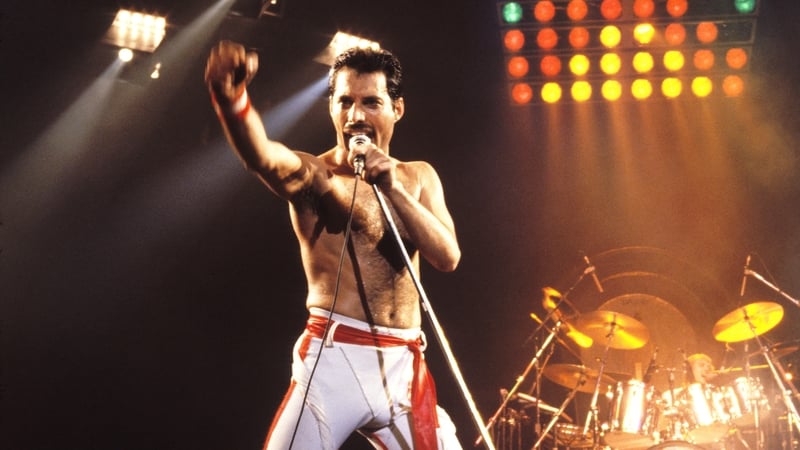
From RTÉ Archives, Joe O'Brien reports for RTÉ News on Queen playing at Slane Castle, Co Meath in 1986 where an estimated 80,000 fans paid £15 each to see them
Queen's Who Wants to Live Forever with vocals by Freddie Mercury, features in the final season of Stranger Things. Born Farrokh Bulsara, Mercury was of Persian descent, belonging to the Parsi community, who were descendants of Zoroastrian Persians who migrated to India to escape persecution. He was born in Zanzibar, off the coast of east Africa, to Indian-born parents and proudly identified with his Persian Zoroastrian heritage, famously calling himself a ‘Persian popinjay’.
Shirin Neshat is widely considered the most famous living Iranian artist, recognised for her powerful photography, video, and film work that explores the politics of the female experience in Islamic cultures. She grew up in a westernised, upper-middle-class family in Iran and attended college in the United States.
In 1990, she returned to Iran and was stunned by the cultural shifts that had resulted from the Iranian Revolution. In her work, women display a hidden power despite social sanctions. She has never been officially exhibited in Iran.
From Tate, Dreams Are Where Our Fears Live profile of Iranian visual artist Shirin Neshat
Rumi (1207-1273) was a 13th-century Persian poet, theologian and Sufi mystic born in Balkh (modern-day Afghanistan) to Persian parents, making him ethnically and culturally Persian. Although he spent most of his life in Konya (modern-day Turkey) writing in the Persian language, his origins are in the Persianate culture of the era.
Leonard Cohen (1934-2016) famously adapted Rumi’s sentiment on embracing vulnerability in his song Anthem, singing: ‘there is a crack, a crack in everything/That's how the light gets in’. While often attributed to the 13th-century Sufi poet Rumi as ‘the wound is the place where the light enters you’, Cohen’s lyrical version echoes this idea of finding illumination through brokenness or vulnerability.
We need your consent to load this rte-player contentWe use rte-player to manage extra content that can set cookies on your device and collect data about your activity. Please review their details and accept them to load the content.Manage Preferences
From RTÉ Archives, Don McManus reports for RTÉ News in 1968 on the handing over to the State of Sir Alfred Chester Beatty's collection of books, manuscripts, paintings, oriental ceramics and other art treasures
Iranian artists stand out for their unique blend of Persian traditions (miniature painting, calligraphy, geometric motifs) and Dublin's Chester Beatty Library houses a world-renowned collection of Iranian (Persian) art. Highlights include 16th and 17th-century Safavid manuscripts and works from the 'Meeting in Isfahan' exhibition. 'Manuscripts & the Mind: How we read & respond to the written word' is currently on at the Chester Beatty and visitors will encounter the annotations and borders that shape how we read texts.
The deliberate destruction of culture or ‘culturecide’, has long existed in warfare. Iran’s Golestan Palace, the former residence of the kings of the Qajar dynasty (1789-1925) on the UNESCO World Heritage List in 2013, is bomb-damaged as a result of US-Israeli ‘collateral damage’. If the cultural heritage of Iran and the Middle East is destroyed, we will all be poorer for it.
Follow RTÉ Brainstorm on WhatsApp and Instagram for more stories and updates
The views expressed here are those of the author and do not represent or reflect the views of RTÉ
