
Analysis: How we think about climate change is strongly influenced by our social and political identity.
By Ashling Bourke and Salam Jabbour, DCU
Recent flooding, in Ireland, as well as extreme temperatures in the US, Canada and Australia, may have more people thinking about climate change. While such weather events can have a temporary impact on our climate change attitudes, how we think about climate change is strongly influenced by our social and political identity.
Outright belief in climate change is generally quite high in Ireland (95%) and across Europe. But belief in the human cause - anthropogenic beliefs – and concern about climate change tend to be lower. So while almost everyone sees the problem, the disagreement lies in the cause and urgency, and these attitudes are influenced by a range of socio-political factors.
Younger people, women and more educated people tend to show more concern about climate change and have stronger beliefs in the human causes of climate change. A recent study found that men who are more concerned about maintaining their sense of masculinity show less climate change concern.
We need your consent to load this rte-player contentWe use rte-player to manage extra content that can set cookies on your device and collect data about your activity. Please review their details and accept them to load the content.Manage Preferences
From RTÉ Radio 1's Morning Ireland, research links record temperatures to human-caused climate change
For some, admitting to climate concern is perceived as a threat to traditional masculine identity, indicating that climate engagement is often filtered through a lens of self-image. This social conditioning is reinforced by our immediate environment - we tend to mirror the views of those in our closest circles, such as partners or parents.
One of the most consistent findings is the association between people's political orientations and what they think of climate change. While the left-right and conservative-liberal spectrum reliably predicts climate skepticism in the United States, this political divide is more subtle in Europe. In Europe, the ideological landscape is more nuanced, and a left-wing ideology isn't a significant correlate of climate concern, but right-wing and centrist ideologies are.
The salience of political identity as a factor in shaping people’s attitudes towards climate change should lead us to question the degree to which increasing environmental awareness can be beneficial in moving people in the right direction.
We need your consent to load this rte-player contentWe use rte-player to manage extra content that can set cookies on your device and collect data about your activity. Please review their details and accept them to load the content.Manage Preferences
From RTÉ Radio 1's Today with David McCullagh, warning from the chair of the Climate Change Advisory Council about our failure to meet emissions targets
While it is easy, and indeed necessary, to point to the facts and reality of climate change, as an avenue in motivating people to care and push for concrete actions against climate change, an individual’s political orientation can influence how this information is interpreted. One study, for example, found that greater scientific literacy was only associated with believing in the human-caused nature for climate change among left-leaning individuals. Without engaging people with the sociopolitical values animating their lives, increased awareness may only get us so far with climate change.
What does this tell us about how people think of climate change? It means that if we’re looking at the constellation of characteristics that would make people less skeptical about the reality of climate change and how to respond to it, the left-right debate and climate change literacy may not necessarily be a useful or the best marker - on their own - in Europe.
If traditional left-right politics don’t fully explain the European landscape, what does? The research points toward deeper, more visceral worldviews: populism and intolerance to other groups. Populism, or the degree to which individuals believe that everyday folks are being ignored and disenfranchised by the political establishment, is an important predictor of climate change denial. Specifically, anti-elitism was associated with being skeptical of the scientific expertise around climate change and a lower sense of personal responsibility to engage in climate change-behaviours.
We need your consent to load this rte-player contentWe use rte-player to manage extra content that can set cookies on your device and collect data about your activity. Please review their details and accept them to load the content.Manage Preferences
From RTÉ Radio 1's Brendan O'Connor, how do we change behaviour on climate change?
Another dimension of populism is anti-egalitarianism, or exclusionism. It seems that people's attitudes to their social groups in Europe - particularly, Muslims, foreign workers, and the LGBTQIA+ population – are associated with people’s attitudes to climate change. People who were more likely to endorse social hierarchies were also more likely to deny the reality of climate change. These findings are particularly concerning given the rise of 'far-right' influence and disinformation across the continent.
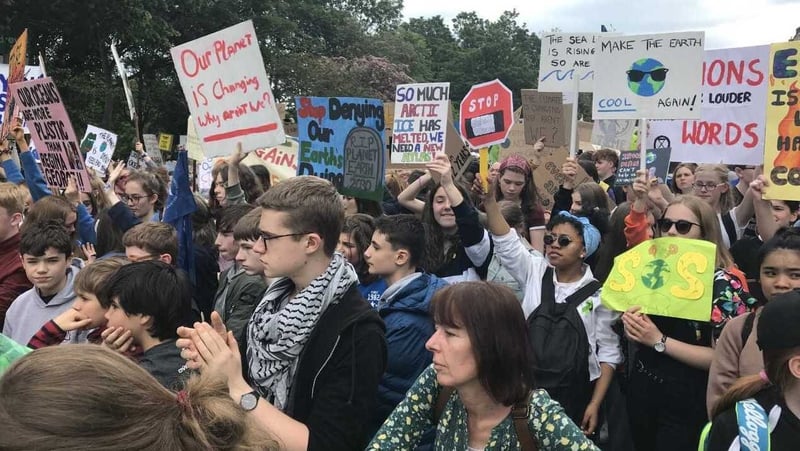
Therefore, as we are increasingly seeing the impact of climate change in Ireland, it is critical that we explore how the population thinks about climate change, and who and what influences that thinking, in order to successfully implement climate policy. However, there is a significant blind spot in this data - most of what we know about these attitudes is based on research with adults. Children and adolescents, who bear the least responsibility for the crisis but will suffer its greatest psychological and physical impacts and tend to be highly engaged in climate activism and youth-led litigation, are at the periphery of the research.
Our current project, funded by the Environmental Protection Agency, explores knowledge and concern about climate change and its impact on people's mental health. We intend to track the influence of schools, friends and social media on attitudes and behaviours. The societal shift needed for addressing the climate crisis is not just about better science communication, but we also need to understand the social fabric, including schools, friends, and social media, that shapes the next generation’s perspective.
This project also featured research from Aisling Martin, Lauren Walsh, and Dr Kristin Hadfield
Follow RTÉ Brainstorm on WhatsApp and Instagram for more stories and updates
Dr Ashling Bourke is an associate professor in the School of Human Development at DCU. Salam Jabbour is a Research Assistant at the Centre for Human Rights and Citizenship Education at Dublin City University and PhD Candidate at Trinity College Dublin
The views expressed here are those of the author and do not represent or reflect the views of RTÉ