


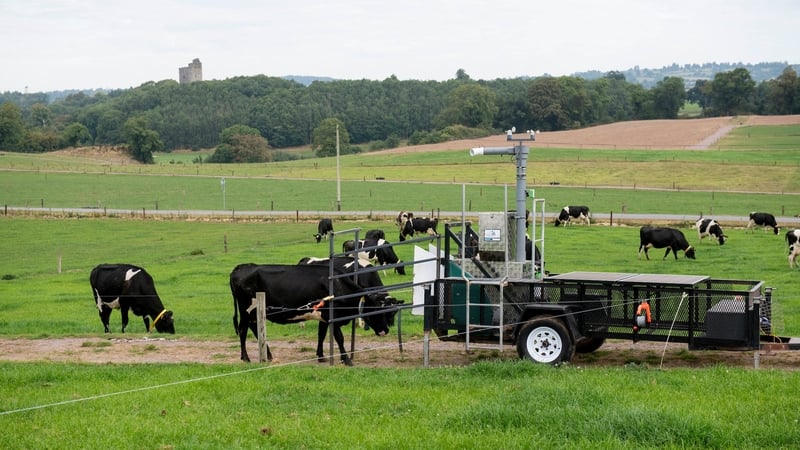
Analysis: High quality data provides better analysis and understanding of emissions from agriculture, which has a major impact on how they're mitigated
By Muireann Egan and Karl Richards, Teagasc
As part of its Climate Action Plan, Ireland has committed to reducing its greenhouse gas (GHG) emissions by 51% by 2030. Within this, the target for agriculture is to reduce its emissions by 25%, compared to 2018. Every year, the Environmental Protection Agency (EPA) reports on each sector's emissions and the overall national figure, known as the National Inventory Report. This is then used to calculate the emissions "spent" by each sector and compared to their remaining carbon budget.
In compiling the emissions for the agricultural sector, activity data such as animal numbers, fertiliser sales and manure management systems are multiplied by an "emission factor". An emission factor is a simple percentage number that converts an activity (e.g. animal numbers) into the GHG emissions caused by that activity.
In climate change, Tier 1 typically refers to the most basic level of GHG emission estimation, using average default international emission factors and broad, national-level data. It is a high-level, simplified approach for calculating emissions, requiring minimal country-specific information. Countries are encouraged to generate their own emission factors rather than use Tier 1. In Ireland, we found that Tier 1 emission factors underestimated fertiliser emissions by 49%.
We need your consent to load this rte-player contentWe use rte-player to manage extra content that can set cookies on your device and collect data about your activity. Please review their details and accept them to load the content.Manage Preferences
From RTÉ Radio 1's Countrywide, how to reduce farming emissions
Refining these emission factors to be country-specific requires local measurements, improved activity data and detailed models that account for national practices. As part of the Teagasc Climate Centre, Teagasc, supported by the Department of Agriculture Food and the Marine and Research Ireland, has invested in advanced research equipment for measuring emissions.
This equipment is located at various locations across Ireland, including grasslands, tillage farms, and agricultural peatlands, converting them into 'living labs’, in which regular, accurate measurements can create a picture of real-time agricultural emissions.
From grass to gas - counting burps
Methane emissions are a natural bi-product of enteric fermentation - the process that allows ruminant animals like cows and sheep to produce energy from grass. Most of this methane is released from the animal as they burp and the quantity is directly related to what the animal eats. Researchers at Teagasc are using monitoring systems called Green Feeds to measure methane emissions from cattle.
This system, which is placed in the field with the animals, incentivises them to the machines throughout the day by feeding them concentrate pellets. While the animal snacks on pellets, its methane emissions are measured by a gas analyser. This allows researchers to measure methane from individual animals' multiple times a day, providing a full picture on how methane emissions vary depending on feed, genetics, and season.
For very detailed and precise measurements, animals are placed in a chamber for short time periods and emissions are measured. But the number of animals that can be measured is low compared to the green feeds and its very artificial for the animals who are normally in fields.
No laughing matter
Nitrogen fertiliser is a key nutrient for grass and crop growth. However, in the process, nitrogen is lost from the soil into the atmosphere as nitrous oxide (N2O), know colloquially as ‘laughing gas’. Measuring N2O emissions is challenging as the emissions change rapidly within and between days due to changes in soil moisture.
We need your consent to load this rte-player contentWe use rte-player to manage extra content that can set cookies on your device and collect data about your activity. Please review their details and accept them to load the content.Manage Preferences
From RTÉ News' Hot Mess podcast, does the programme for government rely on bad science for reducing methane emissions from farming?
The levels of N2O in the atmosphere are about a thousand times lower than carbon dioxide which also makes them more difficult to measure. It is like measuring a couple of litres of gas spread through all the air in Croke Park.
One approach to get accurate measurements is the use of static chambers. These chambers sit on a patch of soil. At regular intervals, the chamber is closed and sealed over the soil surface for up to one hour. This allows gas exchange between the soil and the chamber headspace, which is then sampled and analysed either by a portable gas analyser in the field or in a gas chromatograph in the lab.
Previous systems required manual sampling, which made sampling at regular intervals or at remote locations difficult. The systems used by Teagasc in the National Soil Greenhouse Gas Test Platform have auto-chambers to sample and analyse emissions up to 12 times a day. This makes it possible to detect and analyse emissions every day of the year including during bad weather conditions.
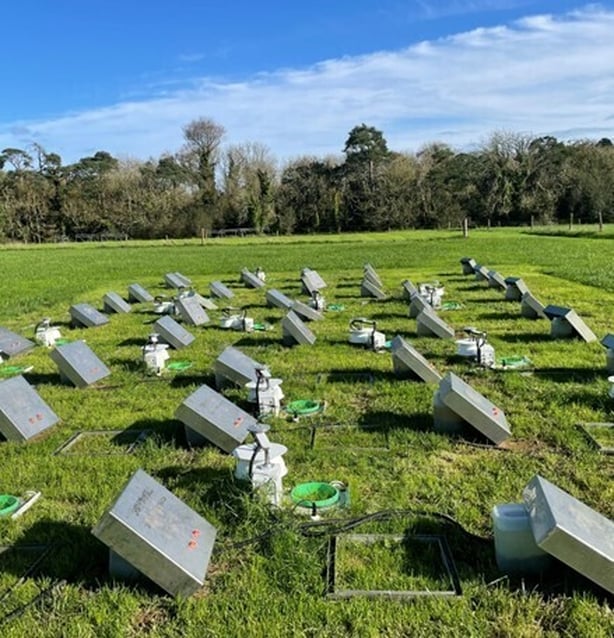
This data builds a more comprehensive picture of N2O emissions from agricultural soils. The auto chambers are used on Teagasc research farms to study the effects of different fertiliser and manure types, as well as long term studies on Irish peatlands.
Flux in the field
Soil carbon sequestration refers to the removal of carbon dioxide (CO2) from the atmosphere and its storage in the soil. However, the rate of sequestration and emissions of CO2 from the soil is in constant flux, depending on the soil type, land use and management, weather conditions, and vegetation type. Measuring soil carbon sequestration means detecting a tiny increase in a huge volume - like drops of water in a swimming pool.
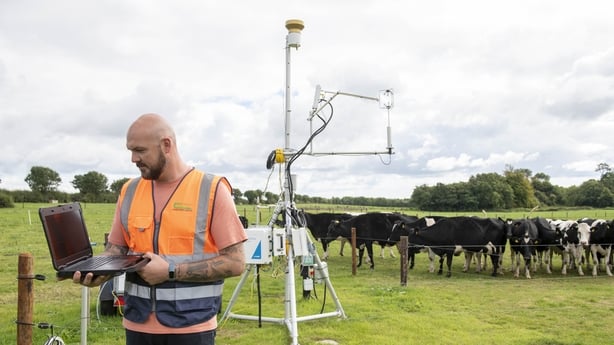
This exchange of CO2 between the atmosphere and the soil is measured using technology called Eddy Covariance towers. These towers consist of a 3D air movement sensor and a gas analyser, both take measurements sixty times per second, every minute and day of the year. The emissions data is then combined with farm activity measurements to calculate sequestration.
As part of the National Soil Carbon Observatory, Teagasc has located 28 of these flux towers across key sites, including research farms, mineral soils, forestry and peatlands.
Harvesting data, cutting emissions
High quality data is needed as it allows for better analysis and understanding of GHG emissions from agriculture, which has significant impact on the reporting and mitigation of these emissions. The data collected from these living labs will support the development of the country-specific emissions factors.
This means that the agricultural emissions data included in the national inventory accurately reflects Irish farming practices.
This data also supports the development and adoption of technologies to mitigate GHG emissions, such as novel fertilisers, feed ingredients, manure additives, and peatland management.
The long-term studies facilitated by this equipment ensures that mitigation technologies can be analysed across seasons and years, providing robust evidence to the farmers who will need to adopt these technologies for Irish agriculture to meet its sectoral targets.
Follow RTÉ Brainstorm on WhatsApp and Instagram for more stories and updates
Muireann Egan is the Operations Manager and Karl Richards is the Head of the Teagasc Climate Centre, a virtual centre to co-ordinate agricultural climate and biodiversity research and innovation across Teagasc.
The views expressed here are those of the author and do not represent or reflect the views of RTÉ
