




Analysis: There are many different symptoms to watch for when someone is concussed which makes it hard for people to know when they're experiencing it
When people think of concussion, they often picture NFL or rugby, but concussions can happen in any sport, at any level and at any age. It's also not just a sport problem: a clash of heads in the school yard, a fall off a bike or even a car accident can lead to a concussion.
When these things happen, parents often turn to the internet to figure out if their child is concussed and what they should do next. Unfortunately, finding clear, accurate and up-to-date information, especially in a way that makes sense to kids or teens, can be really difficult online.
That’s why we created "Knock Knock Who's There? Maybe a Concussion!", an online resource designed especially for kids and teens. It explains what a concussion is in clear language and helps them understand how to spot a concussion and what steps they should take if they think they are concussed.
We need your consent to load this rte-player contentWe use rte-player to manage extra content that can set cookies on your device and collect data about your activity. Please review their details and accept them to load the content.Manage Preferences
From RTÉ Radio One's Today With Claire Byrne, consultant in emergency medicine at Cork University Hospital Seán Underwood on how to spot concussions when you're on the sideline
What is a concussion?
A concussion is an injury to your brain that changes how your brain works for a while. It can happen when you hit your head, but also if you get hit on your neck or body that causes your brain to shake inside your skull. There are lots of different signs or symptoms that happen when someone is concussed. This can make it hard for people to know when they are concussed.
Some common signs and symptoms to watch out for are shown below. These can happen straight away or come on over the next few minutes, hours or even days after injury. Every concussion is different so you might not experience every sign and symptom.
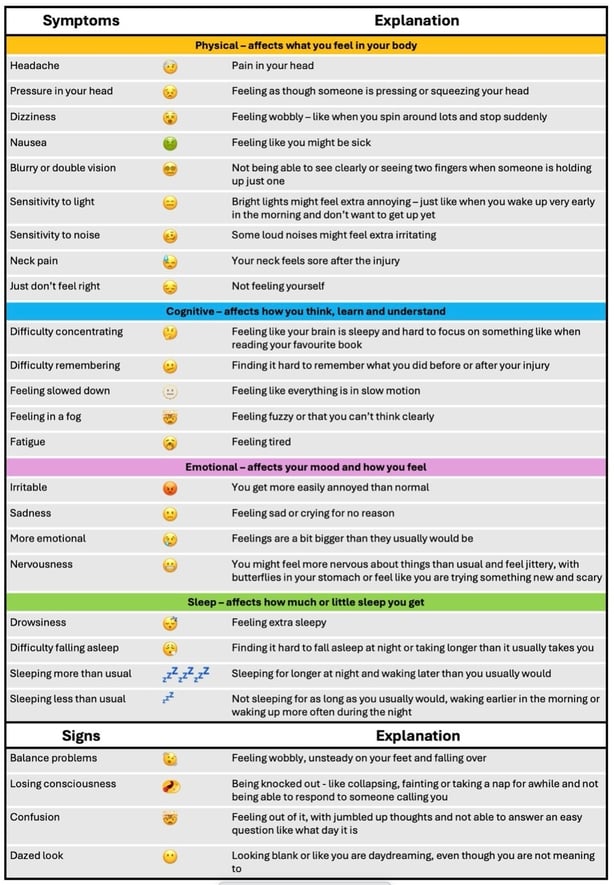
Other injuries can happen in the same way as concussions. That is why there are important warning signs we must look out for, and if we see them, the person needs to be brought to hospital as soon as possible. These include if someone:
- has a lot of neck pain, pins and needles or numbness in their arms or legs or if they struggle to move their arms or legs
- seems confused or becomes less responsive and drowsy
- loses consciousness
- has a bad headache or it gets worse
- has a seizure or convulsion
- starts vomiting or getting sick after the head injury
- sees double (e.g. see two fingers when someone only holds up one).
What should you do if you think your child is concussed?
Firstly, if they are playing sport, they must stop playing straight away and not return to play. Avoid things that make them feel worse e.g. bright lights, loud noises, and screens. Bring them to a doctor or healthcare professional, like an athletic therapist/physiotherapist who will check if your child is concussed and tell you what to do next.
We need your consent to load this rte-player contentWe use rte-player to manage extra content that can set cookies on your device and collect data about your activity. Please review their details and accept them to load the content.Manage Preferences
From RTÉ Radio One's Morning Ireland, a third of school rugby players would play on with concussion
Your child may need to take a break from things they like to do for a little while, like video games, or sports to help their brain heal. Following the advice from your doctor or healthcare professional means your child will get better faster. Remember sometimes children can’t think straight after a concussion and they might not realise they aren’t feeling well.
How are concussions treated?
Concussions are treatable. Sometimes people will feel better bit by bit and are able to gradually get back to school and sport without too much help. Others will need more help from their doctor or healthcare professional. For example, balance exercises for those with balance problems or thinking exercises for those who have trouble concentrating. There are lots of things to help people get back to themselves after a concussion.
After a concussion, some situations might make your child feel worse and slow down recovery. Your child might not even notice they make them feel worse until afterwards. These can be continuing to keep playing after the concussion - screen time, stress and worry, busy environments like a crowded shop, social activities with lots of conversations happening, activities that they need to focus a lot for like studying for a test or pushing themselves hard with exercise, especially without being advised to by a doctor or healthcare professional.
We need your consent to load this rte-player contentWe use rte-player to manage extra content that can set cookies on your device and collect data about your activity. Please review their details and accept them to load the content.Manage Preferences
From RTÉ Radio One's News At One, patients who suffer concussions are still affected a year on - and women have worse outcomes than men.
So, it is important to take care, make sure they drink enough water, eat good food and have a good sleep pattern. The important thing to remember is avoid anything that could make their symptoms worse or lead to another head injury. Follow all guidance from your doctor or healthcare professional.
How much time off does a child need after a concussion?
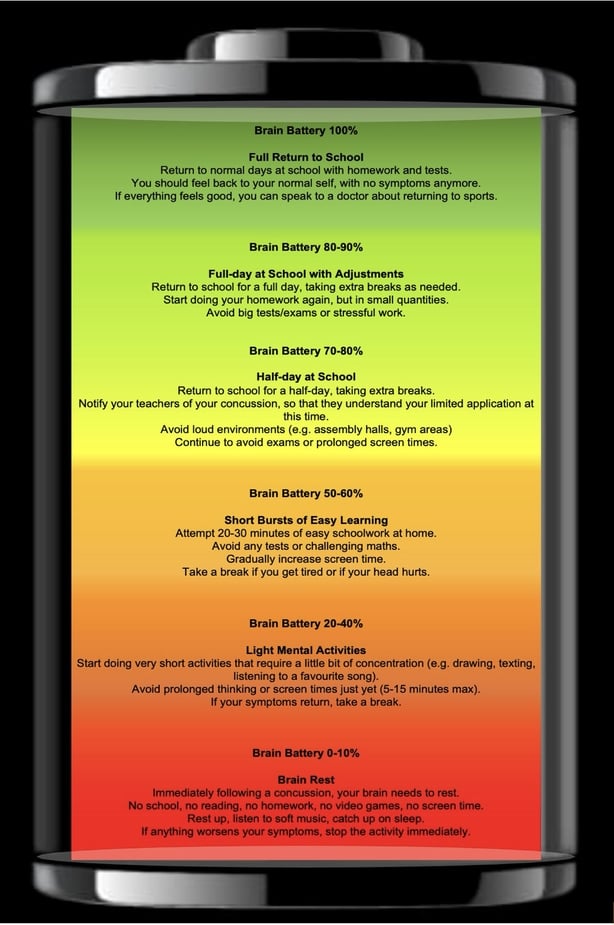
Imagine their brain is like a phone battery, and when they experience a concussion, they can use it, but it won’t last as long as usual. Their brain needs some rest and time to recharge before they can use it for learning or doing schoolwork again. We recommend following the return to learning pathway below. The priority is getting your child back to school.
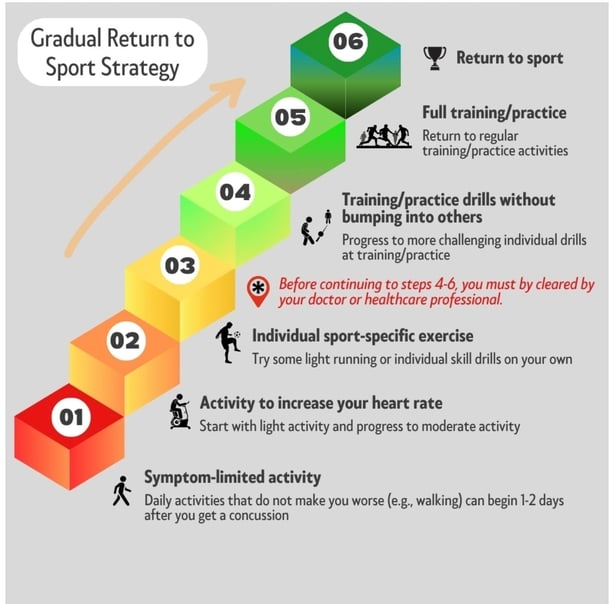
You can follow the return to sport pathway below to return to sport. Your child can progress along each step after one day, but if their symptoms get any worse at any stage they must stop for the day and try that step again tomorrow. If you are ever worried about your child's concussion or their recovery, talk to your doctor.
Follow RTÉ Brainstorm on WhatsApp and Instagram for more stories and updates
The views expressed here are those of the author and do not represent or reflect the views of RTÉ
