


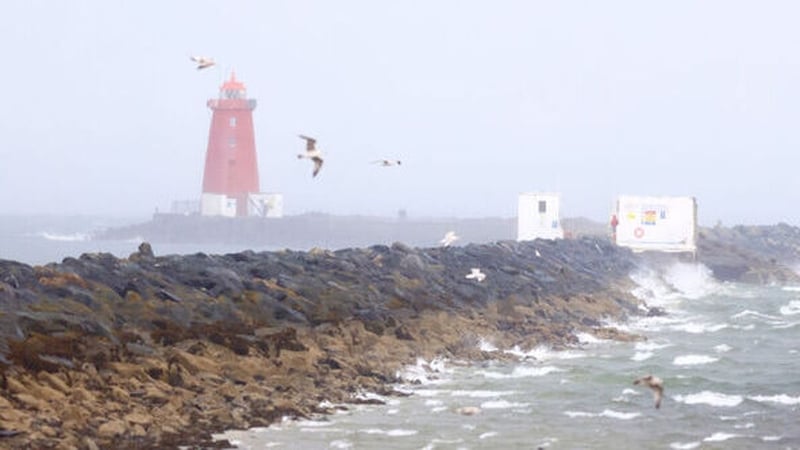


Analysis: The main coastal threats come from the major autumn and winter storms which bring erosion, flooding and extreme winds
As an island nation, the people of Ireland have always shared a close relationship with the sea. But as recent storms have revealed, our desire to be near the coast is not without risk. With global sea levels rising at increasing rates, the impacts of climate hazards on coastal regions are likely to intensify in the coming years.
The main coastal threats in Ireland come from the major storm systems we experience, particularly the named storms that tend to hit during autumn and winter. These bring erosion, flooding, and extreme winds that can cause significant structural damage.
To fully understand what is at stake around the Irish coastline, it is necessary to identify where these hazards are most likely to occur, and assess who and what may be impacted.
From RTÉ News, homes flooded in Dublin in as 2026's Storm Chandra brings heavy rain
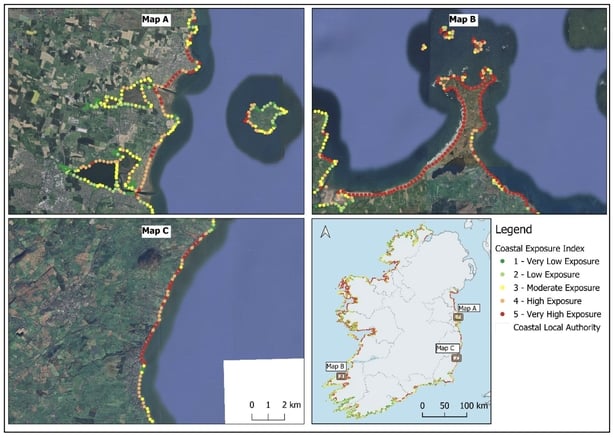
A recently completed national assessment of exposure to coastal hazards, by researchers in the DETECT project in UCC, aims to address some of these issues. Through integration of 30 years of climate data with the physical characteristics of the coastline into a single index, our analysis produces exposure ratings at 250m intervals along the entire Irish coastline, scored from 1 (Very Low) to 5 (Very High). We then evaluate how many people and cultural heritage sites are situated within exposure "hotspots".
The results of our study reveal that exposure hotspots occur in every county to varying degrees, with some examples shown below. One hotspot location, Portrane, Co. Dublin, has experienced alarming erosion and recently received over €600,000 in funding for coastal protection where 8 homes are at risk of collapsing into the sea.
Other areas of known erosion are also highlighted as "Very High Exposure", such as the Maharees Tombolo, Co. Kerry, and portions of the Wexford coastline.
Waves are the main force shaping our coastline – and Ireland certainly isn't short on wave energy. During storms, waves erode more coastline and can break over coastal defences – as was recently seen in Dublin during flooding in February of this year. Such flooding can be greatly exacerbated by storm surges which pose the largest risk to low-lying coastal regions in terms of economic damages and casualties.
For example Galway city narrowly avoided potentially disastrous flooding during Storm Eowyn in January of last year, when a 2.6m high storm surge coincided with a mid-tide. Our study confirmed Galway city as a particularly exposed area, with almost 13% of the city's population residing within exposure hotspots.
Coastal cultural heritage sites are most concentrated on the west coast. With some dating back thousands of years, these archaeological sites provide invaluable information on not only how humans lived in coastal areas in the past, but what the environmental conditions were like at the time. With over 700 National Monuments located in exposure hotspots in Mayo alone, our study highlights the significant number of sites at risk of being claimed by the sea.
We need your consent to load this rte-player contentWe use rte-player to manage extra content that can set cookies on your device and collect data about your activity. Please review their details and accept them to load the content.Manage Preferences
From RTÉ Radio 1's Today with David McCullagh, reporter Maura Fay finds out how Laytown in Co Meath has been affected by loss of coastline
Flooding and erosion are natural coastal processes, only becoming hazardous when they negatively impact us as human. Traditionally, Ireland has responded to these hazards by constructing hard defences such as sea walls or rock armour, and deploying temporary flood mitigation measures like sandbags or other barriers.
Although these interventions can reduce risk locally, they are often a short-term solution to a long-term issue. Some may also have negative, unintended consequences – sea walls for example can cause reflected waves to pull sand away from a beach, causing it to narrow, steepen, or disappear entirely.
Unlike "hard", engineered solutions, natural coastal habitats are somewhat malleable, and can adapt or recover from erosive or flooding events. Our study revealed many sections of coastline currently benefit from some degree of protection from habitats. For example Mayo and Donegal contains large extents of saltmarsh, which can adapt to sea-level rise, accumulating sediment and accreting vertically.
We need your consent to load this rte-player contentWe use rte-player to manage extra content that can set cookies on your device and collect data about your activity. Please review their details and accept them to load the content.Manage Preferences
From RTÉ Radio 1's Today with Claire Byrne, how vulnerable are homes along the coast?
Dunes – common along much of Ireland’s coastline, particularly in the west and northwest – stabilise the shoreline and serve as natural buffers from breaking waves and strong winds. This can have direct benefits for coastal populations, for example we found that within Dublin’s three coastal local authorities, such habitats reduce exposure to coastal hazards for an estimated 17,590 people.
Unfortunately many of Ireland’s natural habitats are not in a favourable condition, subject to numerous anthropogenic and climate pressures. By investing in restoration and conservation of these habitats, we can more sustainably protect against coastal hazards. These "Nature-based Solutions" come with a myriad of environmental, economic, and social benefits.
By showcasing where coastal hazards are concentrated, and where habitats can help in reducing the impacts, our study provides a valuable resource to planners and concerned members of the public.
Whether storms will get worse with climate change is yet unclear, however we know for certain sea-levels are rising, often at faster rates in urban areas – so the impacts are undoubtably going to worsen.
Prioritising nature-based solutions for coastal protection now is a step toward addressing these challenges sustainably and proactively, rather than simply reacting when disaster strikes.
This research was conducted as part of the Digital Environmental Technology for Enhanced Coastal Zone Management (DETECT) project, project code 2023-CE-1222, funded under the EPA Research Programme 2021-2030. This is a Government of Ireland initiative funded by the Department of Energy, Climate and the Environment.
Follow RTÉ Brainstorm on WhatsApp and Instagram for more stories and updates
The views expressed here are those of the author and do not represent or reflect the views of RTÉ
