


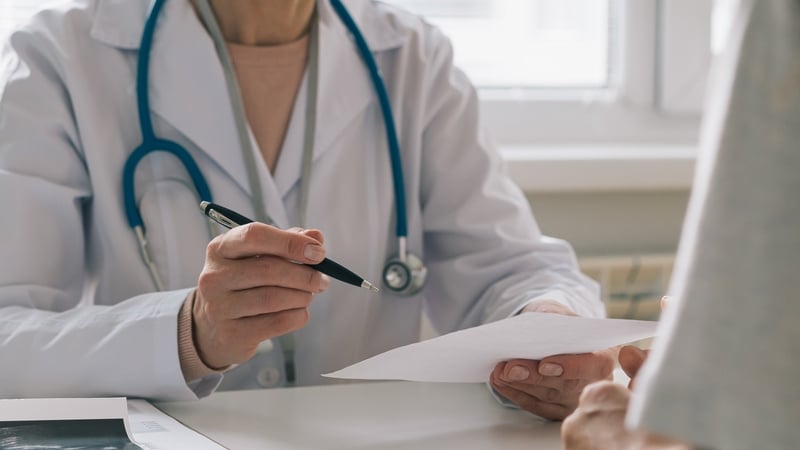

Analysis: People in rural Irish towns feel safer knowing that their GP lives locally and provides regular, preventive and emergency healthcare to those in need
'Place'; ‘my home place’; ‘the folks’ place’; ‘the place where I grew up’; we use the word place so much in everyday conversation that we forget how much place matters. Place has status and agency. It may be defined in Euclidean terms by area, distance and economic activity but we really feel place attachment in our gut.
Place is landscape, soundscape and smellscape; it is where our bodies and minds are sculpted by family, friends and community and where we reciprocate their gestures. Place makes us and we make it in return. The ancient Greeks maintained that ‘for something to exist it had to be somewhere’, so place necessarily provides the basis for existence.
We all want a good quality of life where we live and work, and this is where the local GP comes in. Dr. Michael Harty from Kilmihil in Co. Clare was elected to Dáil Éireann in 2016. He campaigned on the issue of ‘No Doctor, No Village’, when he discovered he could not find a new GP to take over his practice when he was was due to retire. Like many other GPs of his age, Harty wanted to pass on the care of his patients to someone worthy of their trust.
We need your consent to load this rte-player contentWe use rte-player to manage extra content that can set cookies on your device and collect data about your activity. Please review their details and accept them to load the content.Manage Preferences
From RTÉ Radio 1's Today with Claire Byrne, how rural Ireland is attracting GPs
People in rural Irish towns feel safer knowing that their GP lives locally and supported by their out-of-hours service, provides regular healthcare, preventive healthcare and emergency care to those in need.
We have never lived longer: Irish men may expect to live to almost 80 years and Irish women, to over 83 years. Lifespan is one thing, but healthspan is what really matters: Irish men and women can currently expect to live a healthy life up to 70 years, on average.
A lot of this improvement can be traced to advances like sanitation, clean drinking water, good nutrition and road safety, but much of it comes down to healthcare delivered by the local GP.
Up to 1941 when supplemental iron became part of regular pregnancy care, women often died from anaemia at or after childbirth. Now, every pregnant woman is entitled to free ante-natal care from her GP, where risk factors are identified early and dealt with on time.
Before the 1960s, nobody knew how important cholesterol is in heart disease. Nowadays, people can have their cardiovascular health monitored by their GP and have statins prescribed (only available since the 1970s).
Indeed, the HSE’s Chronic Disease Management programme provides the very best of preventive care, free to all GMS and GP Visit card holders, at their local general practice. In the past, babies and small children frequently became seriously ill from common infectious disease such as smallpox, polio, whooping cough, diphtheria, measles, mumps, rubella and meningitis.
We need your consent to load this rte-player contentWe use rte-player to manage extra content that can set cookies on your device and collect data about your activity. Please review their details and accept them to load the content.Manage Preferences
From RTÉ Radio 1's Liveline, listeners from around the country share their stories about how they are saving the local amenities in their rural areas.
Read Peig Sayers’ account of living on the Blasket Islands from 1892- 1942 to get a sense of how people made sense of these tragedies by trusting in God. State-funded vaccination services, free to everyone at the local GP practice, changed all that.
Although the Irish economy has boomed over recent decades, pockets of deprivation persist in our countryside, villages, towns and cities where people are marginalised and their healthcare needs underserved.
While illnesses are experienced by an individual, their causes may be due not only to a person’s genes, behaviour and exposure, but more frequently, to the social determinants of health such as poor housing, low level of education and unemployment. The Pobal HP Deprivation Index (2022) shows the Republic of Ireland with areas of relative deprivation mapped by Electoral District or Small Area (an area with around 100 households) to highlight where poverty causes disadvantage.
We need your consent to load this rte-player contentWe use rte-player to manage extra content that can set cookies on your device and collect data about your activity. Please review their details and accept them to load the content.Manage Preferences
From RTÉ Radio 1's This Week, the conditions in which we are born, live, work and age have a significant impact on the course of our health. Dr. Anne Dee, a consultant in Public Health Medicine, is leading a project to investigate these factors.
Rural disadvantage tends to arise from emigration, ageing population and high unemployment. Deprivation in cities is characterised by overcrowded housing, low educational attainment and high numbers of single parent households.
This Index shows that the gap between Ireland’s most disadvantaged areas and the national average has increased. Many communities experience disadvantage that persists over several generations.
My research, entitled ‘Advocates of the Poor’ studied General Practitioners who provide healthcare for marginalised people. The main finding was that these GPs get so much joy and satisfaction from their work.
Obliged, as they are, to deliver the highest standards of medical, obstetric and psychiatric primary care to patients, or lose their licence to practice, they find meaning in relationship and the continuity of care ‘from cradle to grave’ that they provide to generations of their patients. In disadvantaged areas, consulting time is only part of their work.
We need your consent to load this rte-player contentWe use rte-player to manage extra content that can set cookies on your device and collect data about your activity. Please review their details and accept them to load the content.Manage Preferences
From RTÉ Radio 1's This Week, with more than one-third of the country's population living in an area defined as 'rural’ some communities are taking action to keep their towns and villages thriving.
After the surgery doors close, they do the ‘hidden work’: writing letters begging for urgent hospital appointments for sick patients, asking for better housing or for home improvement grants that might give an elderly widower a downstairs toilet to enable him to stay out of a nursing home. They fill out forms, the same ones, over and over. Along with their practice team they devise clever workarounds to help disadvantaged patients navigate the system.
Seaside GPs volunteer for the RNLI, rural GPs volunteer at sporting events that couldn’t go ahead without them and city GPs visit homeless people under bridges and in parks, day and night, to deliver healthcare. This is how GPs make place. They advocate, they go the extra mile, they delight in the small wins when someone’s health improves.
Follow RTÉ Brainstorm on WhatsApp and Instagram for more stories and updates
The views expressed here are those of the author and do not represent or reflect the views of RTÉ
