


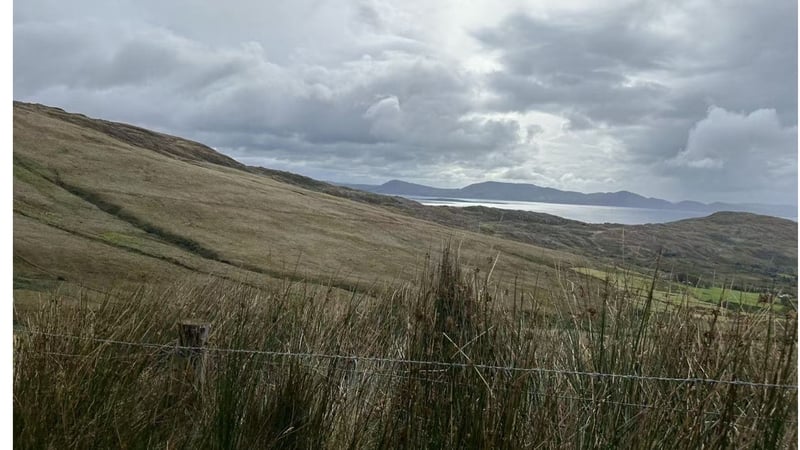

Analysis: The convergence of geology, climate, vegetation and human history allowed peat to accumulate on an extraordinary scale over thousands of years
By Nannan Li and Lisa Orme, Maynooth University
In Ireland, the abundance of peatlands means that many people have not only seen them but may also have touched them, jumped on them, and even smelt them. Generations of childhood memories are tied to bogs and the activities that take place around them, with many people having experience cutting and drying peat for fuel.
These deep, waterlogged, spongy layers of partially decomposed plant material cover around 20% of the country, placing Ireland among the world's most peat‑rich regions. But how did this happen? Why did Ireland become so densely carpeted with bogs?
The answer lies in the convergence of geology, climate, vegetation, and human history - a unique cocktail of environmental conditions that allowed peat to accumulate on an extraordinary scale.
From RTÉ Brainstorm, how bogs tell the story of climate change over thousands of years
How ice laid the groundwork
During the last Ice Age, around 20,000 years ago, vast ice sheets swept across Ireland, sculpting the land surface like a giant carving tool. As the ice advanced and retreated, it eroded, compressed, and reshaped the ground beneath it. When the climate warmed, the great ice sheet finally withdrew around 15,000 years ago, leaving behind a raw, uneven landscape that drained poorly.
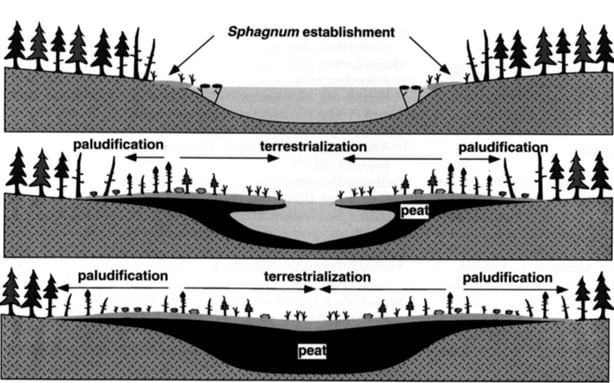
Along its retreat line, it deposited glacial debris - clays, gravels, and other sediments - that formed an impermeable layer, preventing water from easily soaking into the soil and creating thousands of shallow lakes and marshes. These naturally waterlogged conditions favoured the growth of moisture‑loving plants such as reeds, sedges, and mosses. Their dense growth gradually filled the shallow lakes with organic material.
Over centuries and millennia, floating mats of vegetation spread toward the centre of these basins, eventually covering the water entirely. As plant material accumulated year after year, the peat layer thickened and began to rise above the surrounding landscape. Fed solely by rainwater rather than groundwater, these formations developed into the 'raised bogs' that today characterise much of the Irish Midlands.
Climate did the rest
Waterlogging is the first essential step in peat formation, but geology alone is not enough. Peat requires more than water; it needs conditions where plant material accumulates faster than it decomposes. Ireland's mild yet consistently wet climate has favoured peat accumulation for thousands of years.
Sitting directly in the path of Atlantic weather systems, Ireland receives a steady supply of rainfall throughout the year. In most regions, rainfall exceeds evaporation, keeping the soil saturated. Crucially, temperatures remain relatively mild: cool enough to slow bacterial activity and therefore slow decomposition, yet warm enough to support continuous plant growth that builds the peat.
This wet, temperate climate lies behind every Irish bog. Without it, the waterlogged basins left by the ice would have evolved into lakes, forests, or meadows - not the deep, extensive peatlands that ultimately came to define much of the island’s interior. If Ireland’s post‑glacial topography provided the foundation for bog formation, its climate ensured that the bogs could continue growing, layer by layer, for millennia.
We need your consent to load this rte-player contentWe use rte-player to manage extra content that can set cookies on your device and collect data about your activity. Please review their details and accept them to load the content.Manage Preferences
From RTÉ Radio 1's Mooney Goes Wild, Ten Thousand Years Deep: The story of Ireland's Peatlands
Plants built the bog
While geology and climate provided the foundations, the true architects of bogs are the peat‑forming plants. In waterlogged environments, early colonising species such as sedges, reeds, cotton grass, and Sphagnum moss thrive in oxygen‑poor, nutrient‑poor, acidic conditions where few competitors can survive.
Sphagnum moss is the most influential peat-forming plant. Acting like a living sponge, it can absorb and hold up to ten times its weight in water. As Sphagnum grows, dies, and regrows in continuous layers, it sustains the waterlogged, acidic, low‑oxygen conditions that almost completely halt decomposition.
Each generation of moss becomes a thin layer of peat, accumulating at roughly one millimetre per year. Over thousands of years, these layers have built up into peat deposits several metres deep.
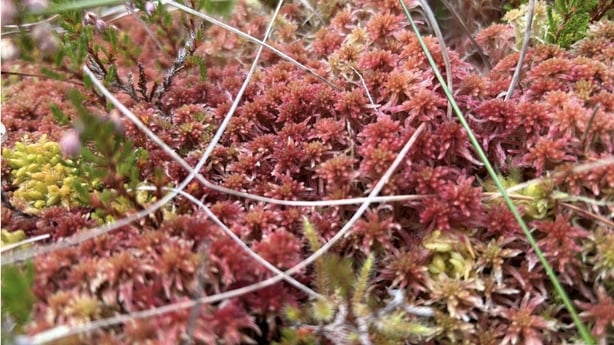
By acidifying and trapping water, bog plants created a powerful self‑reinforcing cycle: more acidity meant fewer trees; more water meant slower decay; slower decay allowed deeper peat; and deeper peat created conditions for more Sphagnum. In this way, vegetation transformed Ireland's wet, post‑glacial landscape into a vast peat‑forming system.
Humans shaped peat's past and future
Besides raised bogs, Ireland is also home to blanket bogs, which - as the name suggests - form a continuous 'blanket' over hills and uplands. Unlike raised bogs that develop in lake basins, blanket bogs can grow in upland areas as long as rainfall is extremely high, typically above 1,200 mm per year.
Unsurprisingly, this includes much of the western coastline as well as the mountains of central and eastern Ireland, making the island home to 8% of the world’s blanket bogs.
We need your consent to load this rte-player contentWe use rte-player to manage extra content that can set cookies on your device and collect data about your activity. Please review their details and accept them to load the content.Manage Preferences
From RTÉ Radio 1's Sunday Miscellany, Writing the Bog features stories of the Irish boglands past, present and imagined future, in collaboration with the Irish Architecture Foundation's Bog Bothy project
Although climate largely determines where blanket bogs can occur, the most surprising element in their development is the role played by early human activity, particularly early farming. When Neolithic settlers arrived around 6,000 years ago, they began clearing forests for agriculture.
This widespread deforestation destabilised and leached the soils, allowing nutrients and minerals to wash down into deeper layers. Over time, the accumulation of fine materials formed an impermeable layer that impeded drainage, encouraging the waterlogged conditions in which peat readily forms.
This interaction between environment and early human land use is one of the most distinctive features of Ireland's blanket bog heritage.
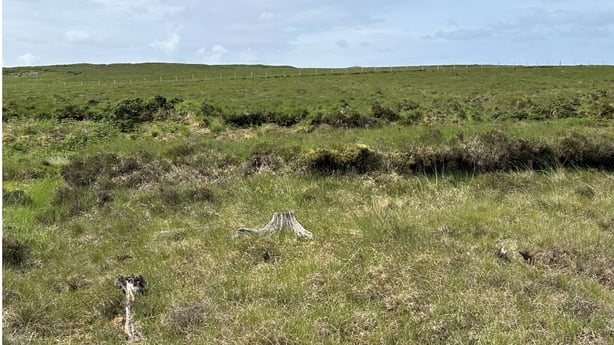
Ireland's bogs - far from being lifeless wastelands - are ecosystems shaped by thousands of years of rain, moss, geology, and human influence. In a world where many peatlands have been drained or destroyed, many parts of Ireland retain a landscape where bogs are not the exception but the rule.
What makes Ireland’s bogs valuable is not only their ecological value but also their capacity to store carbon. Although they cover only about 20% of the land area, Ireland’s bogs hold an estimated 53 – 62% of the country’s soil organic carbon. Protecting and restoring them has become a national priority - not only to preserve biodiversity but also as a key strategy in tackling climate change.
To palaeoclimatologists and palaeoecologists like us, Irish peat bogs form a natural archive written in layers of peat, metre by metre, over millennia, telling us stories that help us understand our past and guide our future.
The PCARB project is researching the rates of carbon accumulation in the past by Irish blanket bogs and is funded by Taighde Éireann - Research Ireland.
Follow RTÉ Brainstorm on WhatsApp and Instagram for more stories and updates
Dr Nannan Li is a Postdoctoral Researcher in the ICARUS Climate Research Centre and the Department of Geography at Maynooth University. Dr Lisa Orme is a palaeoclimatologist working in the ICARUS Climate Research Centre, a physical geography lecturer in the Department of Geography and co-director of the MSc Climate Change programme at Maynooth University
The views expressed here are those of the author and do not represent or reflect the views of RTÉ
