

Analysis: How a Galway goldsmith with a colourful past created an Irish design icon of love, jewellery and folklore
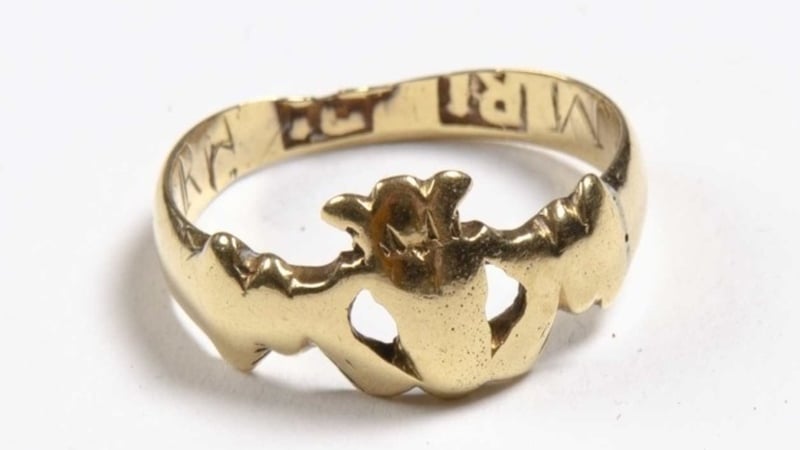
The Claddagh ring has long been a symbol of love in jewellery form, featuring a crowned heart clasped by two hands. It is intrinsic to Irish identity with its design and name, but also has an interesting history shrouded in folklore and legend.
What is thought to be the oldest Claddagh ring is currently on display at Galway City Museum. It dates from around 1700 and was made by the renowned goldsmith Richard Joyce, a local man credited with the iconic design of the Claddagh ring. It was acquired by the museum in recent years and is now displayed in the Silver Room, under appropriate conditions and spot lit, on its own plinth, in a fitting place of prominence for such an icon of Irish design.
We need your consent to load this rte-player contentWe use rte-player to manage extra content that can set cookies on your device and collect data about your activity. Please review their details and accept them to load the content.Manage Preferences
From RTÉ Radio 1's Countrywide, reporter Della Killroy visits the Galway City Museum to visit the oldest known Claddagh ring in the world
Every year around Valentine's Day, there is a definite increase in visitors to see the ring. According to the museum’s acting director Adam Stoneman, it is "without doubt one of the most popular pieces in the collection" and is also "a living thing, an inspiration for current practitioners and jewellers to put their own spin on". The Claddagh ring today is continually reinterpreted in new ways by contemporary jewellery designers extending to brooches, pendants, earrings, bracelets and the motif itself is popularly associated with Irish identity.
The ring gets its name from the Claddagh, an area close by Galway city. It was thought that such rings were passed down from local mothers to daughters, but the size of some older Claddagh rings indicate they may have been worn by men. Few original rings survive due to gold being a valuable commodity in a country with a relatively impoverished past.
In the design itself, the heart represents love, the crown loyalty and the hands friendship. They were given as tokens of love, but also may be used as a friendship ring. How the ring is worn, on the ring finger, conveys whether the wearer is single, married or attached romantically. If the owner wears it with the crown pointing towards the finger nail (and the heart inwards), they are said to be in love with someone or attached; if worn with the heart pointing to the finger nail, they are single.
We need your consent to load this rte-player contentWe use rte-player to manage extra content that can set cookies on your device and collect data about your activity. Please review their details and accept them to load the content.Manage Preferences
From RTÉ Archives, Jim Fahy reports for RTÉ News in 1985 on moves by a firm to take out a patent on the word 'Claddagh' with the aim of manufacturing the heart clasped rings in the US.
Where the wearing of the ring is wrapped in custom and symbolism, the real history of the ring and its origins are rooted in folk legend. One fantastical local story attests to a flying eagle dropping the first ring into the lap of lady named Joyce during medieval times, thus associating the family with the ring’s original design.
The goldsmith credited with the design had a remarkable biography. Richard Joyce was captured on his passage to the West Indies by Algerian pirates who then sold him to a wealthy Turkish goldsmith. Joyce was trained by him and worked under him for many years. Eventually Joyce was released from slavery and his master, not wanting him to go, offered him the hand of his daughter in marriage along with property. Joyce refused, preferring to return to Galway where he wed and set up a goldsmithing business, where he devised the design for the Claddagh ring. While Joyce’s story cannot be proved with 100% certainty, the Galway City Musuem point out that historical events which occurred in the same period would seem to suggest that the story has veracity.
The design of hands featured on rings was not new, as rings known as fede or mani in fede had long been popular throughout Europe. The inclusion of the crown and heart on the bezel of the Claddagh gave the design a satisfying symmetry and it was also made by contemporaries of Joyce’s. Sometimes the crown in the design was excluded, and these versions became known as Fenian Claddaghs (the crown being associated with British royalty and colonialism in Ireland).
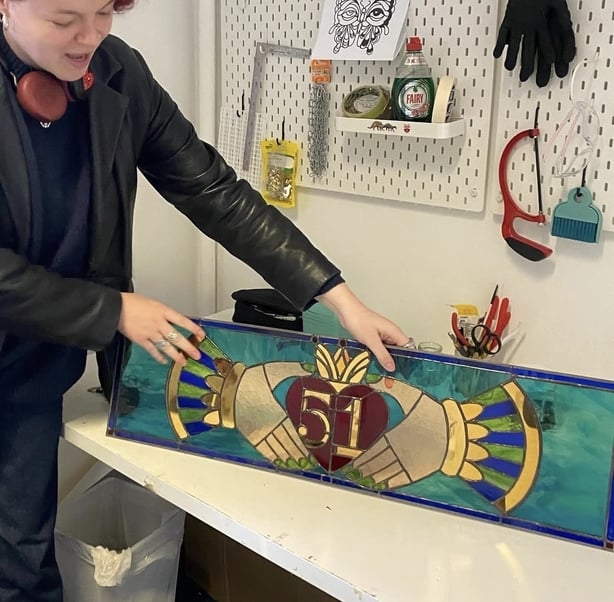
Claddagh rings became widely popular, in gold, silver and other materials. Historical wearers of note are said to include Queen Victoria, John F. Kennedy and Princess Grace Kelly. They remain popular around the world, especially with those who wish to display their Irish heritage.
The Claddagh ring represents a wealth of Irish heritage in design and craft that today’s designers continue to draw upon. For Irish designers today, knowledge and understanding of our design history is an important cultural reference, not just for jewellery but also for interiors, furniture and fashion. This understanding allows contemporary designers to take inspiration from the past in order to form a distinct Irish design identity going forward.
The Claddagh ring represents a wealth of Irish heritage in design and craft that today's designers continue to draw upon
Many firms persist in making the ring, with Dillon’s of Galway continuing to make the original ring at William Street in the city. In 2025, acclaimed Irish jewellery designer Martina Hamillton brought out a new version inspired by the "timeless symbol of love, loyalty, and friendship" of the original Claddagh design.
The future of the Claddagh ring looks bright, with Galway Musuem planning a new exhibition devoted to Richard Joyce’s wider work later this year. For now, they look forward to welcoming visitors to see the original proudly displayed in their collections, not only at a time of year associated with love and romance, but all year round.
Follow RTÉ Brainstorm on WhatsApp and Instagram for more stories and updates
The views expressed here are those of the author and do not represent or reflect the views of RTÉ