


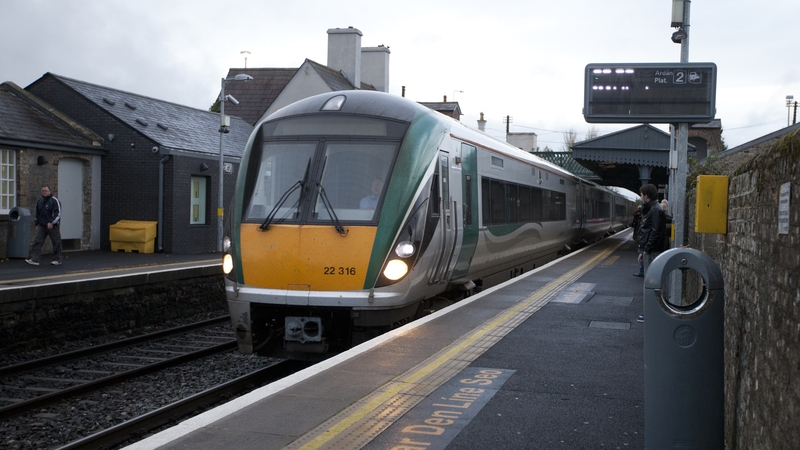

Analysis: 42% of Irish students live at home and many spend well in excess of two hours travelling to and from college every day
By John Cullinan, University of Galway and Darragh Flannery, University of Limerick.
Long before classes start each morning, many students are already well into a daily commute that can shape their entire college experience. For increasing numbers of students, the typical college day begins at a bus stop, rail platform or driveway. Commuting has become an integral part of college life for many, due to student accommodation shortages, very high rents, and widening participation in higher education.
As the number of commuter students rises, so too do questions about how living arrangements and commuting impact student engagement, academic outcomes and the college experience. There are also concerns about how commuting might affect student wellbeing, an issue we address in new research.
We need your consent to load this rte-player contentWe use rte-player to manage extra content that can set cookies on your device and collect data about your activity. Please review their details and accept them to load the content.Manage Preferences
From RTÉ Radio 1's Drivetime, how long-distance commuting is impacting on college life
More and longer commutes
According to the cross-country Eurostudent surveys, around 42% of students in Ireland live at home and commute to college on a regular basis. This compares to a European average of 34% and has been steadily growing over time. For many, living at home provides a range of benefits, including good quality housing, low or zero accommodation costs, access to family and other supports.
But the Eurostudent data also reveal that students living at home in Ireland have relatively high rates of dissatisfaction with their location (27% versus a European average of 15%) and commute time (41% versus 32%). One reason for this is that their average one-way commute is 52 minutes, compared to just 17 minutes for those living in student accommodation. In fact, many commuter students are spending well in excess of two hours travelling every day.
'So what? Lots of people commute'
While this is true, the stakes matter and it is important to consider the ways in which commuting can impact college students is important. In terms of academic engagement and performance, it is well known that getting a better degree or qualification has a significant payoff in the labour market. If commuting leads to lower engagement and poorer performance, this can have life-long consequences for students' careers and their earnings.
We need your consent to load this rte-player contentWe use rte-player to manage extra content that can set cookies on your device and collect data about your activity. Please review their details and accept them to load the content.Manage Preferences
From RTÉ Radio 1's Drivetime, new analysis shows how the time people spend in their cars getting to work is continuing to rise
The international evidence shows that longer commutes are related to decreased participation in campus life, higher drop-out rates and lower grades. There’s also an important equity dimension, since students from less well-off backgrounds typically face longer commutes.
In college, but not on campus
Commuting doesn’t just mean early starts and longer journeys; it can also transform how students experience and engage in college life. Clubs and societies often meet in the late afternoon or evening. Guest talks sometimes start at 6pm. Group projects can drift into late night library sessions. Social events tend to run even longer. For a student facing a long and sometimes unpredictable journey home, such opportunities become much harder to avail of.
Disengagement can have a range of knock-on effects, including fewer peer and social connections, a weaker sense of belonging, and less informal access to staff: the quick question after class, the corridor conversation, the "are you going to that revision session?" nudge from a friend. These are hard to quantify but can impact a student’s grades or even determine whether they persist when the going gets tough.
We need your consent to load this rte-player contentWe use rte-player to manage extra content that can set cookies on your device and collect data about your activity. Please review their details and accept them to load the content.Manage Preferences
From RTÉ News' Behind the Story, a survey from the University of Limerick's Student Union found 60% of commuter students travelled more than one hour each way to campus during last academic year
Academically, time loss compounds. While a long commute need not necessarily be 'dead time’ if you can read or listen to a podcast on the bus, it is often fragmented, unreliable and tiring in practice. A delayed train or heavy traffic can wipe out a tutorial, while a missed connection can turn a manageable day into a stress marathon.
Commuting and wellbeing
It is well known that commuting has a negative effect on wellbeing in the general population. As far back as 2004, the Nobel Prize winning economist Daniel Kahneman identified commuting as the daily activity that produces the fewest positive feelings and the most negative ones. But despite this, very little research has considered if this is also the case for college students.
In our new study, we use the fact that students who grow up in areas with poor geographic accessibility to higher education in Ireland are much more likely to leave home and live close to college. This means, somewhat counterintuitively, that this group tend to have shorter commutes than students with better accessibility. It creates what economists call a ‘natural experiment’ and allows us to estimate the effects of living at home and commute time on wellbeing by comparing otherwise similar ‘movers’ and ‘stayers’.
We need your consent to load this rte-player contentWe use rte-player to manage extra content that can set cookies on your device and collect data about your activity. Please review their details and accept them to load the content.Manage Preferences
From RTÉ Radio 1's Drivetime, does the cost of living crisis means students are working long hours in part-time jobs and losing out their college education?
We find that, on average, living at home reduces wellbeing for female students and this is because of longer commute times relative to those who move. Interestingly, we don’t find a similar effect for male students. We also find that the longer the commute, the bigger are the effects. For example, female students with a one-way commute of over 45 minutes are 14 percentage points more likely to be classified as having poor wellbeing, compared to a similar student residing close to or on campus.
How can institutions and policymakers make a difference?
While there is no single fix for the commuting challenge, the good news is there are clear areas where institutions and policymakers can make a difference. For example, timetabling is just one issue consistently raised by commuter students. Clustering lectures, and avoiding unnecessary early starts or late compulsory classes, can make things more manageable for students balancing long commutes with study and other commitments.
Campus infrastructure matters too. Dedicated commuter spaces or ‘hubs’ can help students stay on campus between classes, while more daytime events and activities can strengthen their sense of inclusion. A recent report sets out more than 50 recommendations aimed at improving the experiences and outcomes of commuter students in technological higher education in Ireland. This underlines that while solutions must be tailored to institutional contexts, there is no shortage of practical options available.
The stark difference in commute times between students in accommodation and those living at home highlights how closely housing and educational access are linked.
Beyond campuses, transport policy is critical. Reliable and frequent services to major institutions are essential if students are to participate fully in academic and social life. Ultimately, housing supply remains central. The stark difference in commute times between students in accommodation and those living at home highlights how closely housing and educational access are linked.
Because ultimately, when commuting becomes a defining feature of student life, higher education starts to look less like an opportunity and more like an endurance test, one that begins long before students even arrive on campus.
Follow RTÉ Brainstorm on WhatsApp and Instagram for more stories and updates
Prof John Cullinan is Professor in Economics at the University of Galway. Dr Darragh Flannery, is Associate Professor in Economics at the Kemmy Business School at the University of Limerick.
The views expressed here are those of the author and do not represent or reflect the views of RTÉ
