

Analysis: Over 900 disputes are referred annually to this independent body that resolves sports-related disputes using arbitration and mediation
The Court of Arbitration for Sport (CAS) is an independent body that resolves sports-related disputes through two processes. One is arbitration (where an independent third party is empowered to impose a binding decision on two or more parties) and the other is mediation (a non-binding decision imposed on the parties by a mediator who facilitates and coordinates the discussion between two or more parties). While it hears any dispute 'directly or indirectly' related to sport, the parties must recognise its jurisdiction in its statutes/regulations or by way of agreement.
The CAS represents a specialised model of alternative dispute resolution for international sport and offers an alternative to pursuing litigation through the courts. While the intervention of the courts into the realm of sport has been a welcome development in some respects, there are limitations and disadvantages.
Litigation in the courts is expensive, often protracted and beset by procedural formalities. In sport, alternative dispute resolution provides an informal, faster, and less costly alternative to court litigation. Litigation before the courts is often perceived as intimidating and inaccessible. In place of court-based litigation, many sports have increasingly embraced arbitration, negotiation, and mediation as dispute resolution mechanisms. The law courts have demonstrated a reluctance to become involved in CAS decisions as seen in Raguz v Sullivan where the New South Wales Court of Appeal ‘confirmed’ the ‘exclusivity’ of the CAS.
We need your consent to load this Spotify contentWe use Spotify to manage extra content that can set cookies on your device and collect data about your activity. Please review their details and accept them to load the content.Manage Preferences
From the Bar Council of Ireland podcast, William McAuliffe, Head of Disciplinary at UEFA and Giovanni Maria Fares, Counsel at the Court of Arbitration for Sport (CAS) discuss sporting disputes
In the early 1980s, there was an increase in sports-related disputes going before the courts. It was Juan Antonio Samaranch, then president of the International Olympic Committee (IOC), who put forward the idea of creating a specialised authority that would hear sports specific disputes. The process would be inexpensive, speedy and offer both athletes and sporting bodies an alternative form of redress. The IOC ratified the statutes of the CAS in 1983, which came into force in June 1984.
Doubt was cast on the independent nature of the CAS considering its close workings with the IOC in Gundel v Fédération Equestre Internationale (FEI) in 1992. The CAS Panel, in partially upholding the appeal and reducing the rider Elmar Gundel’s suspension, accepted that the prohibited substance had been found in the horse’s urine sample, however, it was unlikely to have been a deliberate and intentional method to obtain a competitive advantage.
Dissatisfied with the outcome, Gundel appealed the decision of the CAS to the Swiss Federal Supreme Court. In dismissing the appeal, that court held the CAS ‘therefore represents an alternative to state justice, while, of course, respecting certain inalienable fundamental rights’. While the court was endorsing the neutrality and independence of the CAS, it raised concerns as to the close connection between the CAS and IOC. In response, amendments were made to the CAS’s structure in the form of the creation of the International Council for Arbitration for Sport (ICAS), which was officially approved in 1994 with the signing of the ‘Agreement concerning the constitution of the International Council of Arbitration for Sport’.
The CAS has over 400 arbitrators from 87 countries who hear cases brought by individuals, governing bodies and associations.
Decisions of the Swiss court are capable of review by the European Court of Human Rights (ECtHR) where an application is brought against Switzerland under the European Convention of Human Rights (ECHR), exemplified by Caster Semenya v Switzerland. In its decision in Royal Football Club Seraing SA, the Court of Justice of the European Union (CJEU) held that CAS decisions may be subject to ‘effective judicial review’ by European Union member state courts albeit in limited circumstances when there is an alleged breach of EU public policy. The decision precludes the doctrine of res judicata, a principle which provides that once a dispute is conclusively determined, it may not be re-litigated. The sport must constitute an economic activity within the EU for EU law to apply.
More recently, in what has been described as 'highly exceptional circumstances', the Swiss Federal Supreme Court referred a case back to the CAS earlier this year. Given that the court has a limited purview of review of CAS arbitral awards, sending a case back to the CAS is quite rare.
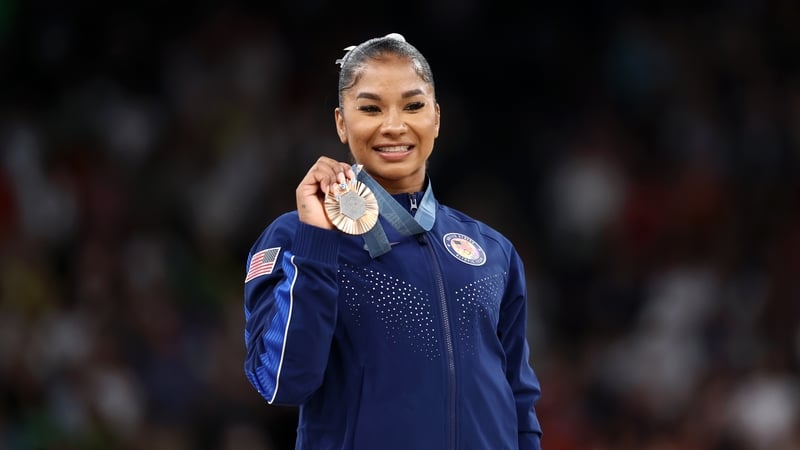
The case in question concerns American gymnast Jordan Chiles who competed in the women's artistic gymnastics floor exercise final at the 2024 Paris Summer Olympics. Her initial score was challenged by her coach before the competition jury, which resulted in an adjustment of the points by 0.1 which placed her in third place.
From ABC News, the Swiss Federal Supreme Court has ruled that US gymnast Jorddan Chiles' case will go back to the Court of Arbitration for Sport for reconsideration
The Romanian Gymnastic Federation then appealed, as this decision moved its gymnasts Ana Bărbosu and Sabrina Maneca-Voinea to fourth and fifth places respectively in the placings. The ad hoc CAS Panel upheld the appeal of the Romanian Gymnastic Federation as it determined that the adjustment to the score occurred one minute and four seconds after the score appeared on the scoreboard. Under the regulations, a challenge must be made within one minute.
Consequently, Chiles was stripped of her bronze medal. In referring to new evidence of an audio-visual recording, the Swiss Federal Supreme Court has sent the matter back to the CAS recommending that it watch the newly uncovered recording, which may justify a departure from the contested decision.
The CAS has over 400 arbitrators from 87 countries who hear cases brought by individuals, governing bodies and associations. Over 900 disputes pertaining to more than 50 sports are referred annually. All arbitrators are persons with specialist knowledge of arbitration and sport and are appointed by the ICAS. for a renewable term of four years and must sign a letter of independence on appointment. The CAS has a permanent president who is also president of the ICAS.
The CAS has been instrumental in creating an international corpus of sports law, or lex sportiva
The court also has an Ad Hoc Division, established in 1996, which is set up for a particular event such as the Olympic Games, the World Cup, the European Championships, and the Commonwealth Games and renders a decision within 24 hours. CAS is also the appeals body for all international doping-related disputes under the World Anti-Doping Code (WADC).
The standard of proof used is that of the comfortable satisfaction of the panel. The more serious the case is, the higher degree of satisfaction that is required. For less serious cases, there is a corresponding lower threshold. The comfortable satisfaction standard occupies a position between the balance of probabilities but below beyond reasonable doubt.
The CAS panel in the Labuts case against the FAI accepted the comfortable satisfaction standard and was satisfied that the evidence proved that there was match manipulation. However, it was ‘not comfortably satisfied by the evidence brought forward by the Respondent that the Appellant was actually involved in manipulating the result of the Match’. The CAS panel upheld the appeal and set aside the decision of the FAI, which was a 12-month suspension of Igors Labuts. The Latvian professional was a goalkeeper for Athlone Town and was accused of engaging in match-fixing in a game against Longford Town.
The CAS has been instrumental in creating an international corpus of sports law, or lex sportiva. It is from the complicated cases that the CAS has gained gravitas. Disputes which blend different areas of law from varying sources have provided CAS with more legitimacy and made it more akin to a law court albeit without the cost and formalities. Termed a ‘perfectible institution’, there has been an incremental refinement of its procedures. It is has made strides in establishing its independence from the IOC, and recourse to other courts offer an extra layer of protection and oversight.
Follow RTÉ Brainstorm on WhatsApp and Instagram for more stories and updates
The views expressed here are those of the author and do not represent or reflect the views of RTÉ