


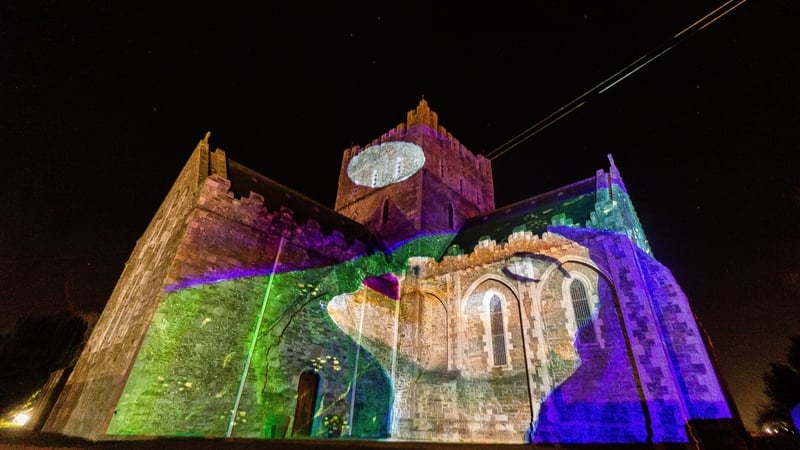

Analysis: An Irish woman who has been dead for over 1,500 years continues to be a source of inspiration for much creativity
By Niamh Wycherley, David Stifter and Tiago de Oliveira Veloso Silva, Maynooth University
Most people are aware of Ireland's reputation for great literature, poetry, storytellers, artists and performers. Much less known is the fact that much of our earliest surviving literature, from as far back as 1,400 years ago, was inspired by Brigit, saint and founder of Kildare. Traditionally considered a patron of poets, many celebrated early Irish writers were credited with compositions about Brigit, including Ultán of Ardbraccan (d. 657), Broccán of Clóen (d. 650) and Ailerán of Clonard (d. 665).
One genealogical poem which praised Brigit as a second Mary is a very early testament to Brigit’s influence on the intellectual and cultural production of medieval Ireland. The Life of Brigit written by Irish monk Cogitosus in the middle of the 7th century, was carried beyond Ireland and copied, read and listened to in huge numbers on the Continent. The text was so influential that it shaped other, perhaps more famous, Irish hagiographies, such as Muirchú's Life of St Patrick.
We need your consent to load this rte-player contentWe use rte-player to manage extra content that can set cookies on your device and collect data about your activity. Please review their details and accept them to load the content.Manage Preferences
From RTÉ Radio 1's Sunday Miscellany, St Brigid by poet Rachael Hegarty
Today, such texts are read and studied only by a privileged educated few in sober and stuffy academic contexts, but they would have been recited out loud for their original larger audiences. A recent request from an artist allowed us in the Department of Early Irish at Maynooth University, to remind ourselves of the performative aspects of these texts and to immerse ourselves in some of this early Irish language poetry praising Brigit.
Artist Natalie Folan sought advice and collaboration for her Maiden. Mother. Saint exhibition at the Rathcroghan Visitor Centre in Co. Roscommon. It's an immersive display including painting and sculpture exploring Brigit as one of Ireland’s most enduring figures. Folan's goal is to bring Brigit alive in her own era. She sought scholarly input to keep Brigit historically rooted, but also invited us to recite and record some appropriate Old Irish texts which she could weave into her soundscape to let people experience Brigit in the language and literature of this early period.
From RTÉ Brainstorm, how St Brigid's Day used to be celebrated in Ireland
We chose poems and extracts renowned for their antiquity, style and association with the famed seventh century poets and authors named above. They survive in versions which can be dated to the eighth and ninth centuries. One poem Brigit bé bithmaith, attributed to Ultán of Ardbraccan, is short and sweet with a melodic lyricism which is lost in the English translation. The poet calls Brigit rígain rígdae ‘royal queen’ and Lethcholbe ḟlatho la Patricc prímde ‘one of the two pillars of sovereignty with pre- eminent Patrick’. We also recorded a famous passage comparing Brigit to Mary from the Irish Life of Brigit, Bethu Brigte and a long hymn associated with the poet Broccán which contains valuable testimony to the authority of Brigit across different parts of Ireland.
In Folan’s exhibition, Prof. David Stifter’s recitation of the Old Irish can be heard and experienced by the wider public in a new, creative context. For those interested, we also produced a bonus episode of The Medieval Irish History Podcast with the Old Irish interspersed with English translations and an explanation of the historical and literary contexts.
We need your consent to load this Spotify contentWe use Spotify to manage extra content that can set cookies on your device and collect data about your activity. Please review their details and accept them to load the content.Manage Preferences
Since the new public holiday was introduced in 2023, a truly remarkable amount of original art and literature is being produced by people like Folan in addition to parades and festivities. These modern artists, poets and writers continue the ancient tradition of honouring Brigit in all her guises. She has become a repository for the experiences, struggles, strengths, and skills of women, especially, for many generations.
For the medievalist, it can be a genuinely emotional experience to observe how Brigit, a flesh and blood historical individual, continues to stimulate such talent and creativity. A historian’s task is often to provide stonily neutral commentary on a past full of dates, facts and figures. Traditionally, we have prized our so-called impartiality and rationale.
But perhaps we should acknowledge the degree of personal connection we inevitably have with our scholarly subjects. Indeed, our scholarly subject is not just that, but has had a real importance to devotees, individuals, communities and creatives from the Middle Ages until the present day. This new outpouring of visual art and writing demonstrates how alive and dynamic our supposedly ancient history remains today.
Follow RTÉ Brainstorm on WhatsApp and Instagram for more stories and updates
Dr Niamh Wycherley is Assistant Professor in Early Irish History across the Department of Early Irish and History at Maynooth University. She hosts The Medieval Irish History Podcast and is a former Research Ireland awardee. Prof David Stifter is Professor of Old Irish at the Department of Early Irish at Maynooth University. Tiago de Oliveira Veloso Silva is a Research Ireland funded PhD researcher at the Department of Early Irish at Maynooth University
The views expressed here are those of the author and do not represent or reflect the views of RTÉ
