


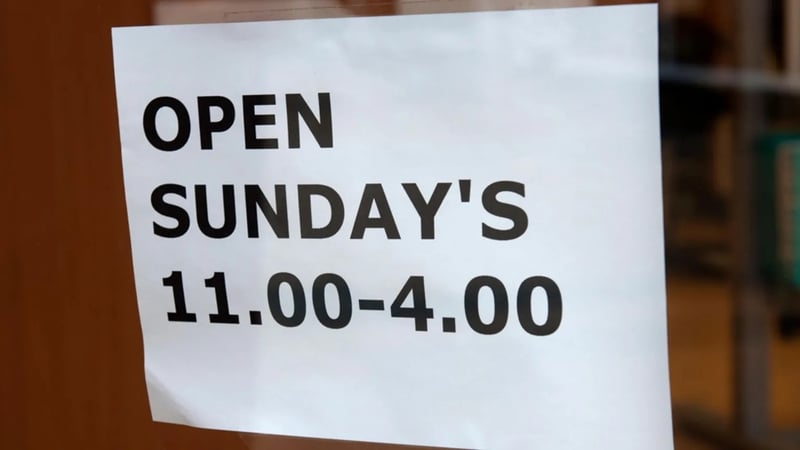
Analysis: This little piece of punctuation has been labelled 'aberrant', 'troublesome' and 'ambivalent' and is regularly embarrassed in public places
By Deborah Tobin, MIC Limerick
The humble apostrophe has had an arduous journey through the English landscape. Labels ranging from 'aberrant' and 'ambivalent' have been levelled at this poor little piece of punctuation over its 300 year evolution. Linguists like Donald Hook have called it as "a troublesome symbol", while Elizabeth Sklar termed it "a crooked mark".
What did the apostrophe ever do to deserve this? To understand its predicament, an examination of its origins might help. Despite existing in languages such as Catalan, French and Italian, the apostrophe is widely regarded as unique to the English punctuation system. The 2003 best-selling guide Eats, Shoots and Leaves by Liz Truss highlighted interest among the general public in how this arcane system works, dedicating an entire chapter to ‘The Tractable Apostrophe’.
We need your consent to load this rte-player contentWe use rte-player to manage extra content that can set cookies on your device and collect data about your activity. Please review their details and accept them to load the content.Manage Preferences
From RTÉ Radio 1's Today with Claire Byrne, Bob McCalden from the Apostrophe Protection Society on the battle with Waterstones over the apostrophe
The word itself comes from the Greek "apostrophein," meaning "to turn away", a rhetorical device speakers used to literally turn their bodies from the audience in addressing another person, real or imaginary, hence facing in a different direction. The term hence evolved to describe the physical features of the punctuation mark, with its turned-away shape.
Imported into written English from French in the 16th century via post-medieval Latin, the apostrophe had been used to indicate shortening of a word in some way. In Old English (449-1100 A.D.), punctuation was used in erratic ways. Puritan and post-Restoration writers preferred English as a language of rational discourse over Latin, with its more rhetoric focus. Emphasis on the written word in English, therefore, created increased need for punctuation.
The early 15th century saw the standardisation of written English, with the caret (^) initially used to indicate an omitted letter. English printers in the 16th century then opted for the apostrophe, preferring it to demonstrate omission of a vowel or vowel sound, as in "o'er" for 'over' and "wher’s" for 'where is.’ Throughout the 17th and 18th centuries, it evolved to mark omission in many contexts, especially in past tense verbs, such as ‘lov’d’, ‘forc’d,’ and ‘teem’d.’
We need your consent to load this rte-player contentWe use rte-player to manage extra content that can set cookies on your device and collect data about your activity. Please review their details and accept them to load the content.Manage Preferences
From RTÉ Radio 1's The Business, how a missing apostrophe in a Facebook post has seen an Australian estate agent facing a court case
While use of the possessive singular form (e.g., the man's wife) was recorded by the end of the seventeenth century, notably in Shakespeare’s Fourth Folio of Works (1685) inconsistencies prevailed through the early 1700s. The same 's form was confusingly suggested for both singular and plural examples
In 1771, the linguist Luckcombe felt that the apostrophe should be used for plural nouns, for instance: "Comma’s are used to distinguish ...". This set a historic precedent for perhaps the most striking, contemporary example of apostrophe offence, found in the modern ‘greengrocer’s apostrophe’ phenomenon. First observed in fruit and vegetable stores, this involves the insertion of an apostrophe in plural nouns with no possessive reference, as in sales of ‘banana’s’, ‘apple’s’, and ‘tomatoe’s’. Thus, earlier inconsistencies have fossilised in modern, everyday English, with linguist Elizabeth Sklar noting it is still "regularly embarrassed in public places".
Why should this still be the case?
Arguably, it is due to conflicts between readily available prescriptive, textbook grammar and ordinary, everyday descriptive language. By today's standards, an apostrophe is added before the 's' ending (the boy’s bicycle, the children’s playground) for the expression of singular possessive forms of regular nouns, (e.g., boy) and for irregular plural nouns not ending in 's' (e.g., children). For possessive forms of regular plural nouns, an apostrophe is recommended after the ‘s’ ending (the boys’ bicycles).
If getting inked with the apostrophe, be sure the tattooist double-checks Eats Shoots and Leaves
This form extends to time expressions (last week’s concert, in two months’ time). For contracted forms of words, insert it at the point where letters have been omitted (I’ll = I will, we’d = we would or had). Further examples are in contracted dates (the summer of ‘68), longer words (Jo’burg for ‘Johannesburg’), and Irish surnames (‘O’Neill’, ‘O’Casey’ shortened from ’Of the Clan/Family’), as well as highlighting that ‘its’ is used for possession, while ‘it’s’ is a contracted form of ‘it is’.
But confusion prevails despite these prescriptive guidelines: a website advertising a grammar course for children promised to examine "nouns and apostrophe's". More mysterious is its disappearance where it should be present: 'Citizens Advice Bureau’, ‘mens toilets’, ‘Starbucks’ etc.
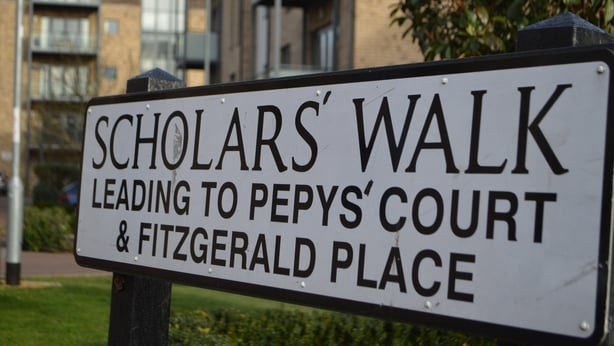
Non-standard apostrophe usage in plural nouns, possessive forms and contractions or total absence when prescriptively required, has led to condemnation of the mark’s very existence and calls for its total removal. In March 2013, Devon local authority planned to do away with apostrophes entirely in new street signs. However, this act of sabotage was thwarted by champions committed to apostrophe preservation, including members of the Plain English Campaign.
They sided with Exeter University's Sian Harris’s belief that "the best way to teach about punctuation is to show practical examples of it". The apostrophe’s chequered history poses enormous challenges not only for learners of English, but clearly for native speakers too. The final word? If getting inked with the apostrophe, be sure the tattooist double-checks Eats Shoots and Leaves.
Follow RTÉ Brainstorm on WhatsApp and Instagram for more stories and updates
Dr Deborah Tobin is a Lecturer in English Language and Literature and Academic Support Tutor at MIC Limerick
The views expressed here are those of the author and do not represent or reflect the views of RTÉ
