


Analysis: A 30 minute walk while taking the time to notice birdsong could reduce your stress, blood pressure, heart rate and cortisol levels
By Christoph Randler, University of Tübingen
There's no question that being in nature is good for well-being. Research shows that experiencing nature and listening to natural sounds can relax us.
A key reason for these benefits may be because of the appeal of birds and their pleasant songs that we hear when in nature. Studies show that people feel better in bird-rich environments. Even life satisfaction may be related to the richness of the bird species in an area.
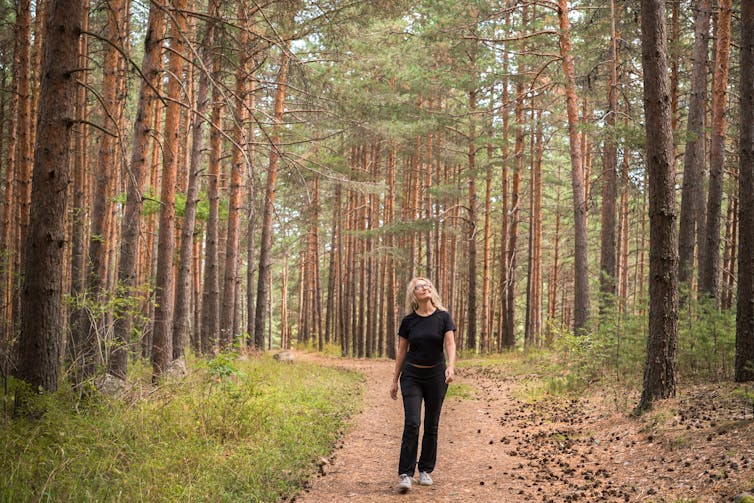
My colleagues and I wanted to better study the relationship between well-being and birdsong. We conducted an experiment in which 233 people walked through a park (the University of Tübingen's botanical garden), a walk which took about half an hour.
We need your consent to load this rte-player contentWe use rte-player to manage extra content that can set cookies on your device and collect data about your activity. Please review their details and accept them to load the content.Manage Preferences
From RTÉ Radio 1's Mooney Goes Wild, how birdsong become more and more noticeable with each passing day of the spring season
Participants filled out questionnaires on their psychological well-being both before and after their walk. We also measured blood pressure, heart rate and cortisol levels (in their saliva) to get a better understanding of the physiological effects the walk had on well-being. Cortisol is considered an important stress hormone that can change within just a few minutes.
In order to get a good understanding of the effect birdsong had on well-being, we also hung loudspeakers in the trees that played the songs of rare species of birds, such as the golden oriole, tree pipit, garden warbler or mistle thrush. To decide which additional bird songs should be played by the loudspeakers, we looked at the results of a previous study we had conducted. In that study, volunteers listened to more than 100 different bird songs and rated them based on how pleasant they found them to be.
We used the bird songs that had been most liked by participants in that experiment. However, to avoid annoying the birds living in the garden, we only chose bird songs that did not disturb the environment. We also mapped all resident species in the area and avoided broadcasting their songs.
We need your consent to load this rte-player contentWe use rte-player to manage extra content that can set cookies on your device and collect data about your activity. Please review their details and accept them to load the content.Manage Preferences
From RTÉ Radio 1's The Business, Siofra Mulqueen talks to people who work with birdsong
Participants were randomly split into five distinct groups. The first and second groups went for a walk through the garden with birdsong being played on loudspeakers. The second group was also instructed to pay attention to birdsong.
The third and fourth groups also walked through the garden, but this time they only heard natural birdsong – we did not have additional speakers playing birdsong in the area. The fourth group was also instructed to pay attention to the natural birdsong.
The fifth group was the control group. These participants went for a walk through the garden while wearing noise-cancelling headphones.
Benefits of birdsong
In all groups (even the control group), blood pressure and heart rate dropped – indicating that physiological stress was reduced after the walk. Cortisol levels also fell by an average of nearly 33%. Self-reported mental well-being, as measured by the questionnaires, was also higher after the walks.
The groups who focused their attention on the birdsong saw even greater increases in well-being. So while a walk in nature had clear, physiological benefits for reducing stress, paying attention to birdsong further boosted these benefits.
However, the groups who went for a walk with the loudspeakers playing birdsong did not see any greater mental and physiological well-being improvements compared to the other groups. This was a surprise, given previous studies have shown birdsong enriches well-being. Bird species diversity has also been shown to further improve restoration and relaxation.
We need your consent to load this rte-player contentWe use rte-player to manage extra content that can set cookies on your device and collect data about your activity. Please review their details and accept them to load the content.Manage Preferences
From RTÉ Radio 1's Mooney Goes Wild, how to make your own nature reserve
One possible explanation for this finding may be that participants recognised the playback sounds as being fake, whether consciously or unconsciously. Another explanation could be that there might be a threshold – and having a higher number of bird species singing in an area does not improve well-being any further.
Appreciating birdsong
Our results show that a walk in nature is beneficial in and of itself, but the sounds of natural birdsong can further boost these well-being benefits, especially if you make a concerted effort to pay attention it. You don't even need to know a lot about birds to get these benefits, as our study showed. The positive effect was seen in everyone from casual birdwatchers through to bird nerds.
Our study's results are a good message for everyday life. You don't need a visit to bird-rich environments to make you happy. It seems more important to focus on the birds that are already there, listen to them and enjoy them.
The results also have implications for park design, showing that the sound of birdsong in general – rather than the number of species living there or how rare they are – is of key importance when it comes to well-being. Even just a half hour walk outside while taking the time to notice birdsong could reduce your stress and improve well-being.
Follow RTÉ Brainstorm on WhatsApp and Instagram for more stories and updates
Christoph Randler is a Professor in the Department of Biology at the University of Tübingen. This article was originally published by The Conversation.
The views expressed here are those of the author and do not represent or reflect the views of RTÉ
