


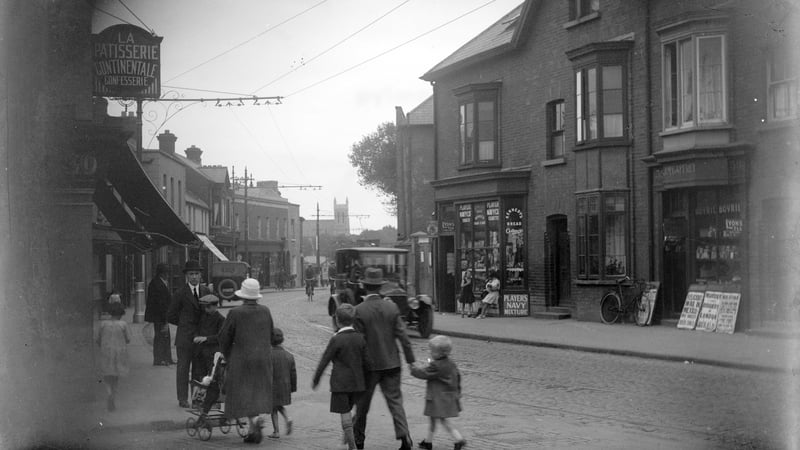
Analysis: The first major administrative act by an independent Irish government, what was involved in compiling the census 100 years ago?
By Gregory Walls, National Archives
On the night of Sunday 18 April 1926, people across the 26 counties of the new Irish Free State were asked to take part in a census organised, for the first time, by an independent Irish government. While filling out a census form was routine on one level – listing names, ages, occupations and so forth – the event was anything but.
The first major administrative act carried out nationwide by the new state, it was a quiet, yet powerful assertion of its authority after more than a decade of war and revolution. The 1926 Census was not simply about numbers; it was about evaluating a society emerging from upheaval and building for the future.
We need your consent to load this rte-player contentWe use rte-player to manage extra content that can set cookies on your device and collect data about your activity. Please review their details and accept them to load the content.Manage Preferences
From RTÉ Radio 1's Today with David McCullagh, Director of the National Archives Orlaith McBride discusses plans for the rollout of 1926 census data in April
A tradition disrupted by war
Ireland had a long tradition of census-taking under British rule, with one taken every decade from 1821. That rhythm was broken by political violence, with the 1921 Irish census postponed due to the War of Independence. By the time peace returned, the political landscape had been transformed, partition had altered the map and the Irish Free State had come into existence in December 1922.
On 12 August 1925, the Executive Council, led by W.T. Cosgrave, decided that a full census of population should be held the following April. New legislation, the Statistics Act 1926, was introduced. It was an expansive piece of legislation that empowered the state to collect data on people, agriculture, industry, banking and even ancient monuments. The 1926 Census of population was its first major test.
Policing the count
The practical challenge was immense: enumerating nearly three million people dispersed across a predominantly rural landscape. Population density was low, with almost two million people living outside of urban areas, in a country with few motor vehicles. To carry out the census, the government relied on one of the few organisations with a nationwide presence: An Garda Síochána.
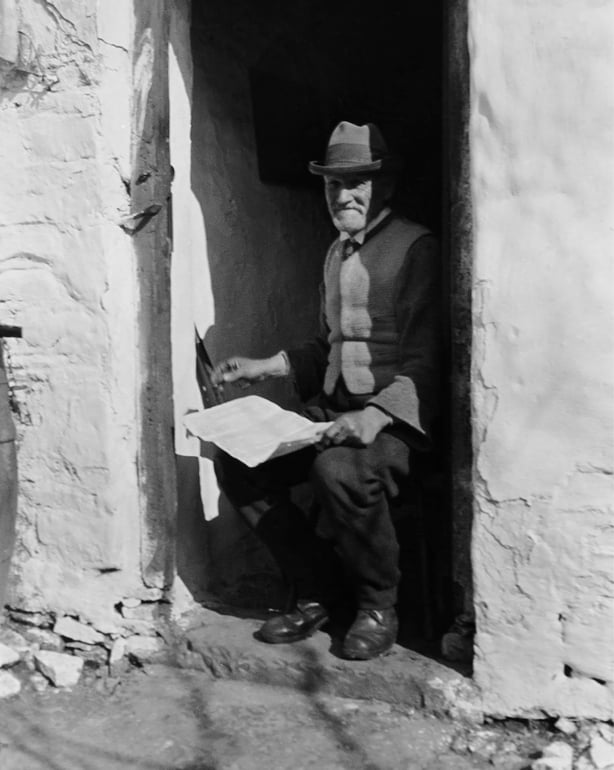
Approximately 2,000 Gardaí were assigned as enumerators over a six-week period. Although police had previously acted as enumerators in 1901 and 1911, this decision was significant. The gardaí were a new, unarmed police force, establishing legitimacy in communities shaped by decades of fraught relations with uniformed authority. The instructions issued to them reflected this sensitivity.
Enumerators were told to plan routes carefully using Ordnance Survey maps, accounting for buildings constructed since 1911. They could not legally compel anyone to provide information; cooperation was essential. Enumerators were reminded to be courteous and conciliatory at all times.
Defining Irish life
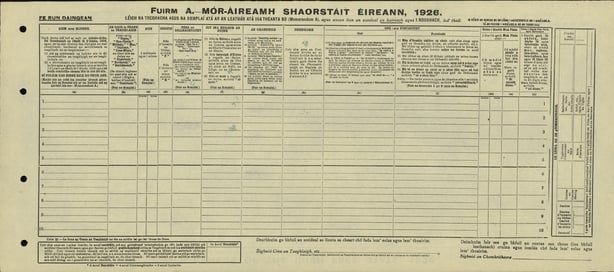
Before any form was filled out, the state had to decide what, exactly, it was counting. Specific definitions were devised for the key terms on the census form. A "family" included everyone present in a dwelling on census night, including servants and visitors. A "dwelling" was defined as the rooms occupied by a "family", regardless of structural separation. This meant that a single-room tenement counted as a dwelling in its own right. Kitchens, bedrooms and sitting rooms were included; sculleries, bathrooms and hallways were not.
People living outside private households were categorised as residing in "institutions", a broad term covering hotels, hospitals, county homes, boarding schools and prisons. In these cases, responsibility for completing the census return fell to the person in charge.
The night of the big count
Ahead of the census, there was an extensive publicity campaign explaining the process to householders. Circulars urged clergy, business leaders, and union officials to promote the census publicly, while teachers were authorised to instruct pupils on how to complete the forms. Alongside press advertisements and public lectures, instructions were broadcast by wireless on both the eve of the census and the night itself.
Between 5 and 17 April, bilingual Irish and English census forms were delivered to every household. Some forms were stamped with the slogan "Make Our First Census a Success". The head of household completed Form A, listing everyone present on census night and their personal details.
How the National Archives have prepared the 1926 Census of the Irish Free State for upcoming public release on 18 April 2026
New categories in the 1926 census were recorded: land ownership, status of orphanhood, and employment details. Notably, the 1926 census removed the "disability" and "read and write" sections included in 1901 and 1911.
In 1926, enumerators often had to complete forms on behalf of householders who could not write, recording a signature as a simple mark. In Gaeltacht areas, some forms were completed in English even though households were recorded as Irish speaking only. Enumerators often amended forms, adding extra details about people's employers or family dynamics, preserving local knowledge in official ink.
A statement of statehood
The 1926 Census was recorded across 734,462 forms, comprising 562,633 household returns. Census forms were to be collected as soon as possible after 18 April 1926. Forms for institutions and hotels were prioritised for collection after 18 April, to ensure those visiting from overseas were accurately recorded.
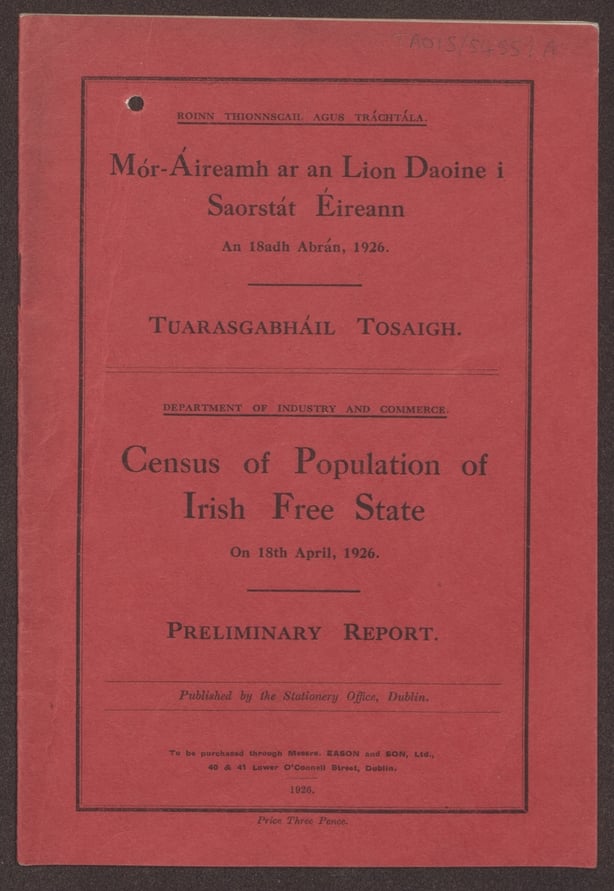
The forms were then gathered by the Statistics Branch of the Department of Industry and Commerce, based in Dublin Castle’s lower yard. Census data was compiled using statistical machinery. Information was coded on punch cards, which were run through sorting and counting machines to produce the final statistical tables. Officials annotated the census forms in green ink, a distinctive feature still visible on the forms today. The project employed 83 staff at its peak, concluding its work in 1934.
A deeper story
By organising and executing a nationwide census, the Irish Free State demonstrated that it could govern, measure, and plan for its population. A century later, the 1926 Census is one of the most valuable records of newly independent Ireland. It captures a society in transition, revealing its housing conditions, occupations, religious affiliations and linguistic realities. But it also tells a deeper story. The census captures glimpses of everyday life and tells stories of the places and people of Ireland in 1926.
Follow RTÉ Brainstorm on WhatsApp and Instagram for more stories and updates
Gregory Walls is a social historian on the National Archives' Census 1926 project and is a PhD student on the the Taighde Éireann–Research Ireland-funded Witnessing War, Making Peace project at Trinity College Dublin.
The views expressed here are those of the author and do not represent or reflect the views of RTÉ
