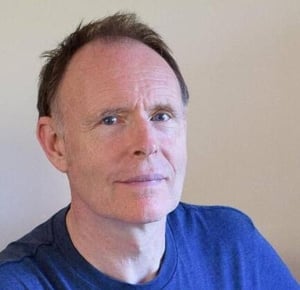

Analysis: Hundreds of people appeared over the years on the RTÉ quiz show, including a then teenage Brainstorm contributor
The RTÉ TV quiz show Quicksilver was so popular that it ran for 15 years and almost 480 episodes were broadcast. Unlike many of today's popular quiz shows, it was a home-grown idea from an RTÉ employee, and was a consistent ratings-winner from launch in 1965 until the end of its run in 1981. Indeed, teh show’s catchphrase, "stop the lights", became part of the national vocabulary.
It was family-friendly, designed for a wide audience, gentle and unpretentious. If some people in Ireland felt that RTÉ had a Dublin accent and focus, Quicksilver discriminated positively in favour of rural Ireland. The station acknowledged that Quicksilver was part of its outreach to the people who lived beyond the country’s urban locations. In 1967, Controller of Programmes Michael Garvey talked about a deliberate policy to challenge "the Dublin bias that we are supposed to have." As part of that strategy Quicksilver travelled to locations including Belfast, Cork, Sligo, Dundalk and the Ursuline Convent Hall in Waterford.
The show was hosted by its creator, Bunny Carr. Mick MacConnell in The Kerryman later remembered how Carr 'looked like a cross between a genial uncle and an about to be canonised saint.’ He was unusual in his approach to being a quizmaster: he wanted everyone to do well and he would sometimes persuade the contestants to change their incorrect answers.
We need your consent to load this rte-player contentWe use rte-player to manage extra content that can set cookies on your device and collect data about your activity. Please review their details and accept them to load the content.Manage Preferences
From RTÉ Archives, an episode of Quicksilver from October 1980 where contestant Elaine Harrington goes on to win £10 in cash and £200 in prize bonds
Quicksilver also featured a musician, Limerickman Norman Metcalfe, who attempted to guide contestants to the winning answers by playing musical clues. He looked like a man you’d see reading a bible at a science fiction convention - or reading a sci-fi book in church - and his cinema organ hints could often perplex the contestants.
In a clear-sighted appraisal of key historical trends in broadcasting, the television critic, Ed Power, wrote that Quicksilver is ‘generally regarded as the first family quiz show in Irish television.’ Power noted how the show depicted ‘the plain people of Ireland as they really were’ with the men often wearing Fr. Dougal-style jumpers. This was a show with jeopardy but no glamour. Instead, as Power noted, there was a ‘sweetness’ and ‘innocence’ to Quicksilver and ‘nobody was manipulated.’ By contrast, in many modern television programmes the contestants are carefully styled and prepared for lucrative futures as influencers. Part of the fun is that everyone is being manipulated.
Naturally, Quicksilver didn’t stay fresh forever. Ireland was changing rapidly between 1965 and 1981 and a new generation was finding ways to express itself by the end of its run. They didn’t want innocence or quaintness. Quicksilver’s light had dimmed and it now had many detractors. In 1979, the Irish Press TV reviewer acknowledged how the show was ‘compulsive viewing for the Irish nation’; but it was described as ‘a parochial programme of the worst parish pump variety.’
We need your consent to load this rte-player contentWe use rte-player to manage extra content that can set cookies on your device and collect data about your activity. Please review their details and accept them to load the content.Manage Preferences
From RTÉ Archives, musician Norman Metcalfe talks to Around the Town presenter Sean Mac Reamoinn about the people who attend his performances and the standard of dancing
The incorrect answers had become legendary. The paper printed a sample:
Q: Where did the Blessed Virgin Mary appear to St. Bernadette?
A: Athlone
Q: What was Hitler’s first name?
A: Heil
Q: What is Fleet Street famous for?
A: The E.S.B.
You couldn’t fault the geographical accuracy of the last response at the time, but many people watched the show to laugh at the contestants rather than cheer them on. As the critic said, Quicksilver was ‘perfect material for an Irish Monty Python.’
We need your consent to load this rte-player contentWe use rte-player to manage extra content that can set cookies on your device and collect data about your activity. Please review their details and accept them to load the content.Manage Preferences
From RTÉ Radio 1's Sunday Miscellany, Des McHale's Georgie Boy recalls a disastrous night on Quicksilver
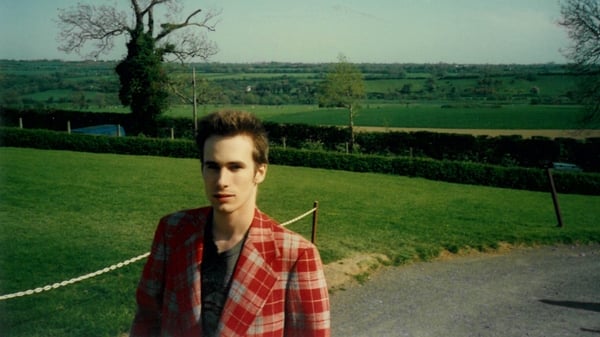
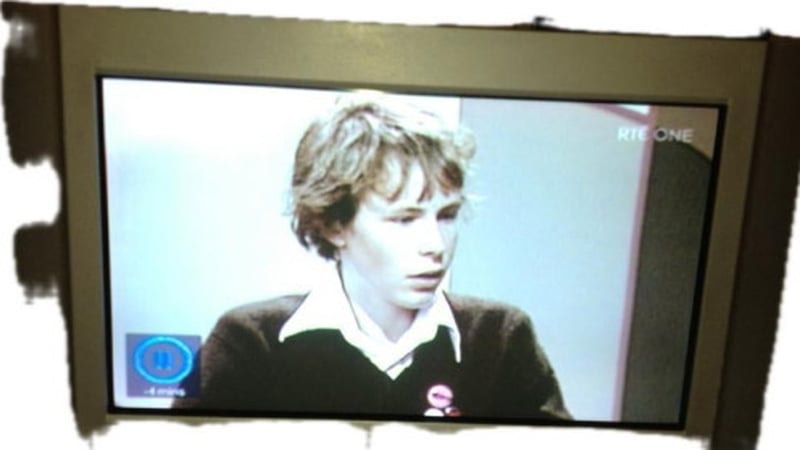
In September 1980 I was one of those people who watched Quicksilver for a laugh. I had recently turned 17 and had just finished the Leaving Cert. By pure luck, I got a ticket for the show that was meant for a parish in Tipperary. It was funny watching the show at home and I figured it would be even funnier watching it in the RTÉ studios.
But the joke was on me. In soothing tones which suddenly sounded threatening, Carr called out my ticket number. I froze. I wasn’t expecting to be selected from the audience to face the music (or the questions). I made my way from my cosy seat to the distinctly uncomfortable spot in front of the cameras and the red light turned to green. I knew the type of people who watched the show: people like me, unelected members from a nation of scoffers.
I was wearing a v-neck jumper with badges pinned to it that proclaimed my music taste, namely The Clash, The Skids and The Rezillos. This was the modern world, but that didn’t protect me from the sensation that time had stopped. I was under the microscope.
We need your consent to load this rte-player contentWe use rte-player to manage extra content that can set cookies on your device and collect data about your activity. Please review their details and accept them to load the content.Manage Preferences
From RTÉ Archives, a charity edition of Quicksilver from 1981 with Marian Finucane answering questions on Abba, politics, the Magi, spices and Simone de Beauvoir.
To this day, I don’t recall many of the details of what happened when the cameras were rolling. I know I instinctively muttered "stop the lights" whenever Norman Metcalfe cranked up the keyboards and tried to help me, but I was beyond help at that stage. And I was afraid that his tunes would transport me down a tunnel to some version of 1950s Ireland.
And then, with lightning speed, it was all over. If I didn’t embarrass myself completely, it was because the national broadcaster had a place where people were encouraged to participate in the fun. The airwaves were open in a very genuine and inspiring way. The camera crew were friendly and encouraging. A very kind RTÉ lady took my name and address for their records. Bunny Carr was encouraging and alert. And soon I was on my bicycle on the way home.
Quicksilver existed in a place between kindness and technology, in a vital social space between professionalism and amateur have-a-go antics.
Oh, and I won the maximum amount of prize money possible. A very welcome £300. I couldn’t do it again.
Follow RTÉ Brainstorm on WhatsApp and Instagram for more stories and updates
The views expressed here are those of the author and do not represent or reflect the views of RTÉ