




Analysis: The Irish Parliamentary Party MP, Home Rule activist and Irish Free State senator's diaries reveal his despair at the intensifying Civil War
On 18 December 1922, one of the newly appointed Senators of the Irish Free State, Sir Thomas Henry Grattan Esmonde, rose to speak in the chamber of Seanad Éireann. A veteran Home Rule politician, he had just helped pass the very first Act of the new Parliament — the Adaptation of Enactments Act — which adapted pre-independence legislation so that references to the Crown, British offices, or institutions would instead refer to the new Free State equivalents.
With pride, Esmonde told his colleagues: 'We have passed the first Act of an Irish Parliament for 123 years. We have done what generation after generation have lived and died to do, and we may thank God we have lived to see this day.'
Less than two weeks earlier, on 7 December, the same week his name was announced among the first Free State Senators, his diary also revealed his mourning of the death of his wife of 31 years, Alice. He wrote: 'The names of the Senators of the Irish Free State were announced. Mine among them. If only my darling wife could have congratulated me. But she lay fair, & still & in white peace in the sanctuary of our home...The anguish of this last night is too great for words.’
It was typical of the two sides of Esmonde: the hopeful Senator in public life and the heartbroken widower in private, echoes of which run side by side throughout the diaries he kept during the Civil War and which can also be gleaned from his speeches in the Senate. Preserved today in the National Library of Ireland, Esmonde’s diaries offer a rare, human perspective on how political duty collided with personal loss, just as Ireland itself was balancing the optimism of statehood with the devastation of civil conflict.
A life in politics
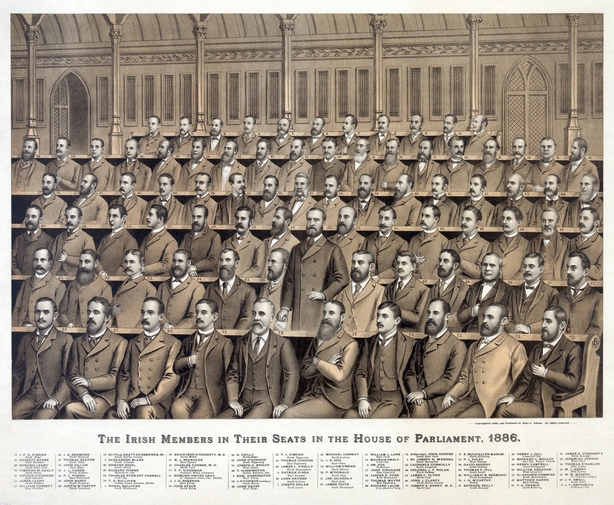
Born in 1862, Esmonde was heir to one of Wexford’s Catholic landed families and the great-grandson of Henry Grattan, the famed 18th-century statesman. In 1885, at just 23, he became the youngest member of the British parliament, elected as an Irish Parliamentary Party MP. He remained a MP for more than three decades, and an ardent campaigner for Home Rule.
Like most Irish Parliamentary Party MPs, he was swept aside in Sinn Féin's 1918 landslide victory, but re-emerged in 1922 when W.T. Cosgrave, President of the Executive Council, nominated him to the first Free State Senate. The Seanad was designed to represent Ireland’s minorities, and Esmonde, both nationalist and aristocratic, was an obvious choice.
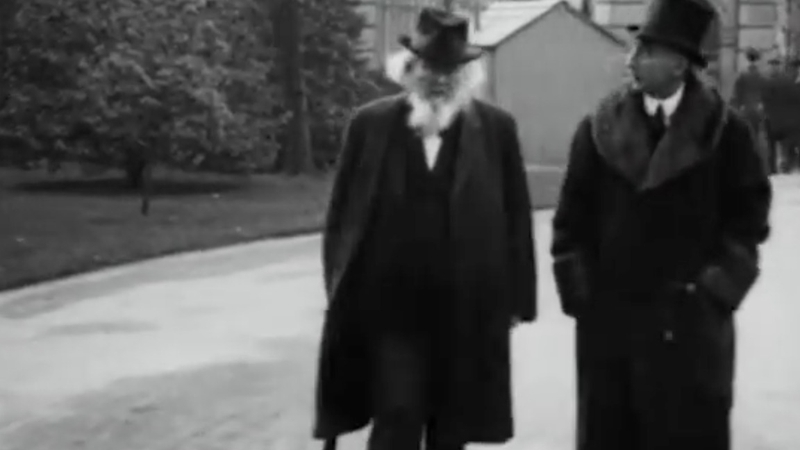
From British Pathé, senators, including Sir Thomas Esmonde, arriving at the first meeting of Seanad Éireann
While his nomination restored his public role, it was at a time when his diary reveals a profound sense of private loss. Two weeks following his appointment, Esmonde confided: ‘Tuesday 10 Dec. 1922. I feel dazed, like a man stumbling in the dark, and lonely, with an appalling loneliness.’
Christmas offered no comfort. He wrote: ‘We stirred our plum pudding for the first time in 31 years without my Darling. How she used to delight in the little ceremony…And now, never, never, no more.’
While he publicly projected composure and optimism in the Senate, his private writing reveal an individual attempting to simply get through each day. By January 1923, Esmonde’s diary entries grew longer and more anxious, reflecting both the deepening pain of his private loss and his despair at the intensifying Civil War.
On 15 January he described dismantling Ballynastragh, his ancestral home, removing portraits, heirlooms and papers in case it was attacked: 'At 8 a.m. I was at work taking down the hall portraits…Henry Grattan's chair, the long oak stairs, Queen Anne Chairs, the old alcoves…the miscellanea of Grattan's Parliament.’
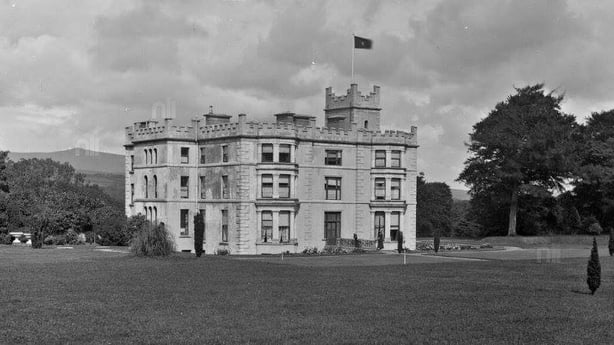
This entry described more than just the physical removal of objects, it suggested a sense of impending loss and an awareness that his home might not survive the conflict. As he listed each item, Esmonde documented not only their material value but also their personal and historical significance. These were not just possessions; they were tangible links to his family’s past and to generations of Irish political and social history. A few days later he confessed to returning to ‘an empty house’, a phase that not only captured the absence of Alice, but also the desolation following the removal of content from his home.
The fire at Ballynastragh
On 9 March 1923, Esmonde’s worst fears were realised. While he was in London, anti-Treaty forces set Ballynastragh ablaze in retaliation for Free State executions. For months leading up to this, Esmonde had been documenting his growing sense of anxiety and helplessness in his diary, grappling with the overwhelming tension and uncertainty surrounding him. After hearing the news of the fire, he desperately tried to contact his family but received no reply. His frustration and powerlessness reached a breaking point.
For months leading up to the burning of Ballynastragh, Esmonde had been documenting a growing sense of anxiety and helplessness in his diary
His brother Laurence, who was at Ballynastragh at the time, sent a telegram, which Esmonde noted in his diary entry for that day under the heading of ‘The Burning of Ballynastragh’. This is the only heading which appears in the diary, every other entry begins with a date. Laurence’s telegram simply read: ‘Tout est perdu sauf l’honneur – All is lost except honour’.
After the fire, the diary falls silent. For months he had filled its pages with daily observations and outpourings of grief. In many ways, the empty pages speaks louder than any entry, reflecting a man overwhelmed by the loss of his wife, his home, his possessions, his sense of place in the new Ireland. It was a feeling shared by many members of the former aristocracy at the time.
Esmonde remained a Senator until 1934, spending nearly 50 years in Irish politics, and died the following year. After a long and protracted battle to secure compensation from the same Free State government Esmonde represented, Ballynastragh was eventually rebuilt in 1936, and members of the Esmonde family continued to represent North Wexford in Irish politics until 1977.
Follow RTÉ Brainstorm on WhatsApp and Instagram for more stories and updates
The views expressed here are those of the author and do not represent or reflect the views of RTÉ
