

Analysis: Hamnet differs from its big screen predecessors in putting Shakespeare's wife Agnes at the heart of the film and depicting the writer as a family man
If I asked you to picture William Shakespeare in a film, it would probably be Shakespeare in Love that popped into your head. For the last quarter-century Joseph Fiennes has been the definitive big-screen Shakespeare. But with the release of Hamnet, Kildareman Paul Mescal will become Shakespeare for a whole new generation.
Hamnet is based on the 2020 novel of the same name by Maggie O'Farrell. Using the few facts known about Hamnet – he was born in 1585, was a twin, died aged 11 and was the only son of Shakespeare and Anne Hathaway – O’Farrell weaves a story of a couple in love and in grief. Hamnet was a critically acclaimed bestseller, winning prestigious awards including the Women's Prize for Fiction. A stage adaptation by the Royal Shakespeare Company was a hit in the UK and will tour in the US this year.
We need your consent to load this rte-player contentWe use rte-player to manage extra content that can set cookies on your device and collect data about your activity. Please review their details and accept them to load the content.Manage Preferences
From RTÉ Radio 1's The Book Show in 2020, Rick O'Shea talks to Maggie O'Farrelll about her book Hamnet
It was no surprise then when a film adaptation was announced, with Academy Award-winner Chloé Zhao directing, and co-writing the screenplay with O’Farrell. For Irish audiences, the film’s cast has plenty of interest, with Mescal and Kerry woman Jessie Buckley playing the lead roles and Irish actors Louisa Harland and Justine Mitchell in the supporting cast. Hamnet has been nominated for several Golden Globes, with Buckley up for Best Performance by a Female Actor and Mescal for Best Supporting Male Actor. Buckley won Best Actress at Critics Choice Awards this week and Oscar nominations are sure to follow.
The film is the latest in a long line of Shakespeare biofictions. These build on the known facts about an individual, often drawing on historical research or archival material, and reimagines these details to create a compelling portrait. Sometimes the subject of the biofiction is little known or has been forgotten by history, but the protagonist is typically famous. In fictionalising the life of an actual person, biofiction strives not for accuracy, but to get at some larger truth, to tell a meaningful story, or to draw parallels between the protagonist’s world and our own.
Biofiction has been a growing trend across media since the turn of the millennium. Think of films like Oppenheimer or Elvis, a musical like Hamilton, a series like The Crown or the BBC sitcom Upstart Crow, or books like Hilary Mantel's Wolf Hall and Colm Tóibín's The Master, and you will get a sense of the increasing popularity of biofiction.
We need your consent to load this rte-player contentWe use rte-player to manage extra content that can set cookies on your device and collect data about your activity. Please review their details and accept them to load the content.Manage Preferences
From RTÉ Radio 1's Brendan O'Connor Show, interview with Paul Mescal and Jessie Buckley about Hamnet
From the earliest days of cinema, viewers were interested in Shakespeare’s personal and professional life. In fact, The Life of William Shakespeare, a silent film produced in Britain in 1914, was pioneering in the genre of the biopic. Released at the cusp of the 21st century, Shakespeare in Love was a box-office hit and it remains popular, inspiring a host of Shakespeare biofictions on the page, stage, and screen.
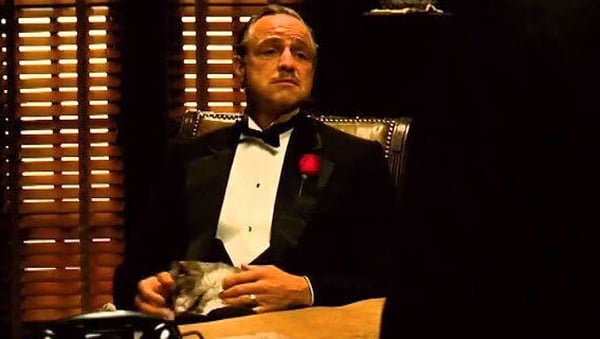
Shakespeare has been the focus of films as varied as Roland Emmerich’s conspiracy thriller Anonymous, the family adventure comedy Bill! (made by the team behind Horrible Histories), and Kenneth Branagh’s star-studded period drama All Is True. In these films and in Hamnet, Shakespeare is imagined to be a flawed man but a great writer, inspired by his romances and his experiences.
Where Hamnet differs from its big screen predecessors is in depicting Shakespeare as a family man. Early on in Hamnet, Mescal’s William is much like Fiennes’ Will: a young man in love. However, for the rest of the film, it is William’s identity as a husband and father that is crucial.
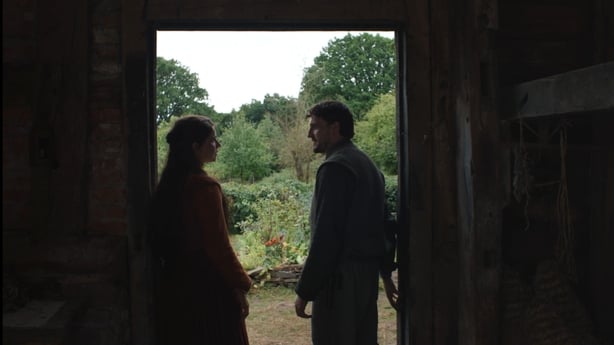
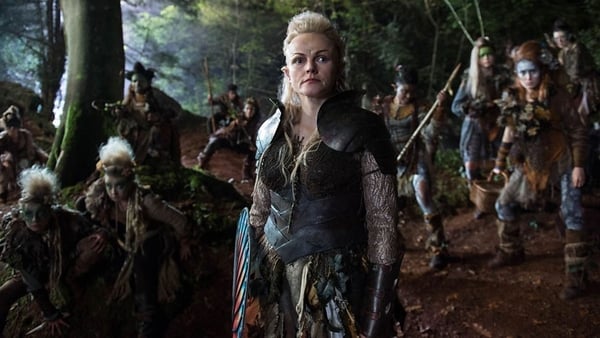
Hamnet is also distinct in the corpus of Shakespeare biofiction on screen because it de-centres Shakespeare. As in O'Farrell’s novel, it is Shakespeare’s wife – here called Agnes – who is at the heart of the film. In Hamnet, Agnes is both a child of nature and an earth mother. The film’s opening shots show her curled up asleep under a tree, dwarfed by its roots and branches; she keeps a hawk and tends bees; she makes medicines from plants; she gives birth to her first child in the woods. Agnes and William are two sides of the same coin – even their costumes, in the colours of earth and sky, are complementary – and they quickly fall in love, happily marry, and have three children.
In contrast to many Shakespeare biofictions, and indeed some biographies, Agnes is a positive figure and driving force in her husband’s life; it is her idea that William should go to London to fulfil his ambitions as a writer. As the scholar Katherine Scheil observes in Imagining Shakespeare’s Wife: The Afterlife of Anne Hathaway (2018), how Agnes/Anne is depicted inevitably shapes our idea of her famous husband, but she also "has the potential to unleash, authorize, endorse, and promote a wide variety of conceptions of women, motherhood, and marriage".
Much of the power of Hamnet lies in telling Agnes’s story as a woman who is an outsider in her community, a daughter and sister, and a wife and mother. Her whole world, her very identity, is torn apart by the death of her young son.
From Focus Features, trailer for Hamnet
Buckley delivers an extraordinary performance as Agnes. She is mesmerising in happy, everyday scenes (Agnes and William's courting, playing with their kids) and especially when tragedy strikes, her little boy sickens and dies, and she is powerless to save him. William comes too late and, weighed down by grief, a distance grows between the couple.
Because the film’s cinematography is marked by stillness and quiet, it means we sit with the characters and their emotion. Hamnet’s death is heart-wrenching, and the film gives its audience the time and space to feel the devastating loss and its impact on the family.
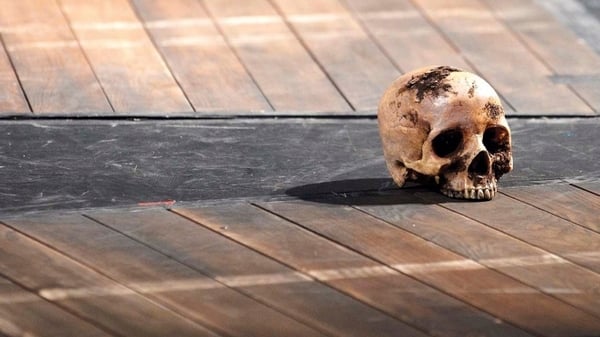
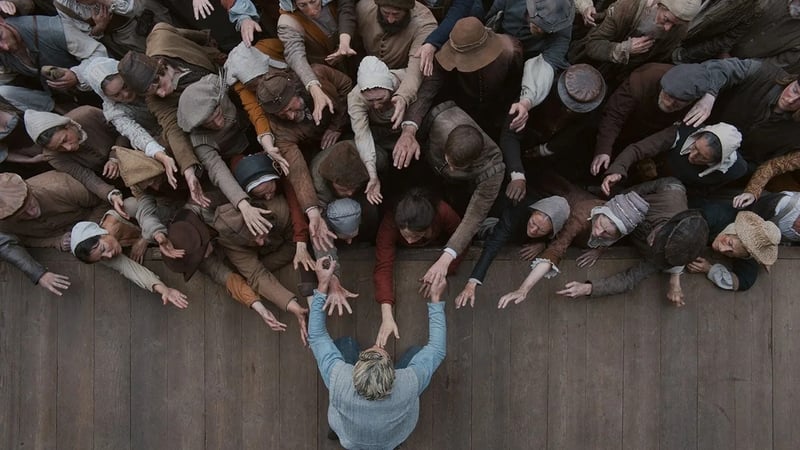
But the film doesn’t end there. Hamnet’s finale takes place in the Globe Theatre, at a performance of Shakespeare’s Hamlet. As the play unfolds, with Agnes in the audience and William on stage, the couple experience a meeting of minds. They gain a new understanding of one another and their shared grief.
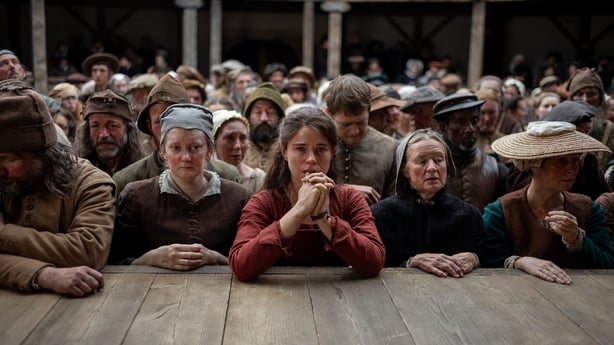
In this final scene, as Austin Tichenor astutely observes, the film "successfully dramatises the novel’s great truth that Shakespeare’s art has the same healing power as Agnes’s herbs and potions." The director Zhao has made similar points about Hamnet in interviews; she passionately believes in "the alchemical power of storytelling", and that a collective experience is vital to movies.
This story of a real-life little boy called Hamnet and his parents is cathartic, an effect best felt when shared with other people in the cinema. To my mind, this is one of the larger truths that Hamnet tries to communicate: stories in a book or on a stage or on a screen can bring people together and help us through the toughest of times.
Follow RTÉ Brainstorm on WhatsApp and Instagram for more stories and updates
The views expressed here are those of the author and do not represent or reflect the views of RTÉ