




Analysis: The 1973 decision by the Supreme Court created a Catholic and conservative justification for access to contraception
In 1973, the Irish Supreme Court held that married couples had a right to decide on methods of family planning. While the Court kept the sale of contraceptives illegal, it allowed their importation under strict circumstances. Before the judgement in the case of Mary McGee v. The Attorney General and The Revenue Commissioners, both purchases and imports were banned and contraception was only fully legalized in 1992.
In public memory, the case is sometimes assumed to have "effectively overturned" the Irish contraceptive ban, but its scope was far narrower: While it was a groundbreaking ruling in Irish history, the eventual removal of the ban required legislative change that went against the boundaries set by the Court.
A landmark decision
The social climate of 1970s' Ireland might be hard to imagine for those who did not live through it and historian Laura Kelly's recent book Contraception and Modern Ireland sheds a light on this era. Her oral history interviews with men and women living in this period reveal both support for morally motivated legislation around sexuality but also a deep sense of helplessness and limitation that such legislation incurred.
We need your consent to load this rte-player contentWe use rte-player to manage extra content that can set cookies on your device and collect data about your activity. Please review their details and accept them to load the content.Manage Preferences
From RTÉ Radio 1's History Show, interview with Laura Kelly about her book Contraception and Modern Ireland
Independent of how we might judge these moral questions today, the recent passing of Mary McGee is a reminder of the bravery it must have taken to expose her private life to public and legal scrutiny at this time. Yet the case is more than a story of individual courage and exemplifies a specific historical moment where there was growing public demand for contraceptives in several Catholic-majority countries in Europe. This came after Pope Paul VI's papal encyclical Humanae Vitae in 1968, which reaffirmed the Church's position that any form of artificial contraception was sinful.
Irish and European contraceptive policies
The sale and purchase of contraceptives became illegal in Ireland through the Criminal Law Amendment Act of 1935. While many European countries had restrictions about advertising contraceptives in the 1970s, Ireland was one of a few where contraceptives were banned outright.
France had just legalised contraception in 1967 under the Neuwirth Law, while many former French colonies like Senegal, Algeria, or Niger would keep the French contraceptive ban in place for a generation to come. Italy, shaped by the legacies of fascism and the Catholic Church, legalised the contraceptive pill only in 1971 and Spain, still under rule of the authoritarian Franco regime, wouldn’t legalize contraceptives until 1978.
We need your consent to load this rte-player contentWe use rte-player to manage extra content that can set cookies on your device and collect data about your activity. Please review their details and accept them to load the content.Manage Preferences
From RTÉ Radio 1's Liveline, listeners remember the late Mary McGee
"Intrinsically wrong": Vatican and contraception
The lives of Catholics worldwide were shaped by the Church’s restrictive moral teaching, but change was expected. In the 1960s, during the Second Vatican Council, the Church sought to adapt to new social realities and advance ecumenical dialogue. Within this context, the Vatican established an advisory commission to scrutinise its position on birth control.
While the majority of commission members wanted liberalisation, Pope Paul VI clamped down on the Church’s position. In Humanae Vitae (1968), he argued that "each and every marital act must of necessity retain its intrinsic relationship to the procreation of human life", concluding that the separation of sexuality and reproduction violated human dignity and was in "opposition to the plan of God and His holy will".
Supporters of the encyclical feared that contraception would encourage promiscuity and moral decline but the prohibition even applied to married couples with children. It would be, the pope argued, "a serious error to think that a whole married life of otherwise normal relations can justify sexual intercourse which is deliberately contraceptive and so intrinsically wrong."
We need your consent to load this rte-player contentWe use rte-player to manage extra content that can set cookies on your device and collect data about your activity. Please review their details and accept them to load the content.Manage Preferences
From RTÉ Archives, Pat Sweeney reports for RTÉ News in 1972 on changing public opinion on the subject of access to contraception
Irish Supreme Court and conservative reasoning
While concerns about promiscuity were widespread, support for Catholic doctrine weakened when it concerned married couples with children. This is also true for Ireland in the 1960s and 1970s. Irish families were still large but fertility rates dropped significantly in these two decades.
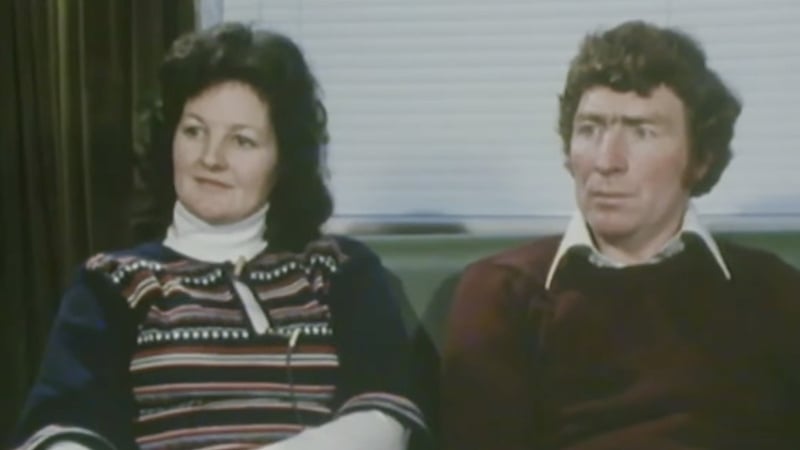
Mary McGee was an ideal candidate to advance this case. She represented a woman committed to marriage and children, having two sons and two daughters with her husband Seamus. In addition, her doctors advised that another pregnancy would put her life at risk why her case forced the court to negotiate Catholic doctrine against the risks faced by women who lacked access to contraception.
The Supreme Court decided in McGee’s favour but within a conservative framework. First, it adamantly endorsed state control over sexuality, arguing that "the protection of morals through the deterrence of fornication and promiscuity is a legitimate legislative aim and a matter not of private but of public morality. Second, it stated that another pregnancy might cause McGee’s death, potentially preventing her from fulfilling her female duties in her "life within the home" (Article 41 of the Irish constitution).
We need your consent to load this Facebook contentWe use Facebook to manage extra content that can set cookies on your device and collect data about your activity. Please review their details and accept them to load the content.Manage Preferences
Mary McGee as featured in No Country For Women, 2018 documentary by Anne Roper for RTÉ
In this morally guarded and gendered framework, the Court offered a repudiation of Humanae Vitae. Whereas the Pope claimed that contraceptives reduced sexuality to pleasure and was hence undignified, the Court suggested the opposite. It emphasised that having marital relations under permanent threat of another pregnancy and possible death would in fact be against McGee’s dignity.
The McGee case became a landmark in the history of contraception and the wider Battle to Control Female Fertility. While the Vatican did not distinguish between alleged promiscuity and marital sex, the Irish Supreme Court introduced this distinction and thereby created a Catholic and conservative justification for access to contraception. While the case was important in the history of contraception in Ireland, the unrestricted legalisation of contraception in Ireland had to be advanced by social movements and legislators not within but against the Court’s conservative framework.
Follow RTÉ Brainstorm on WhatsApp and Instagram for more stories and updates
The views expressed here are those of the author and do not represent or reflect the views of RTÉ
